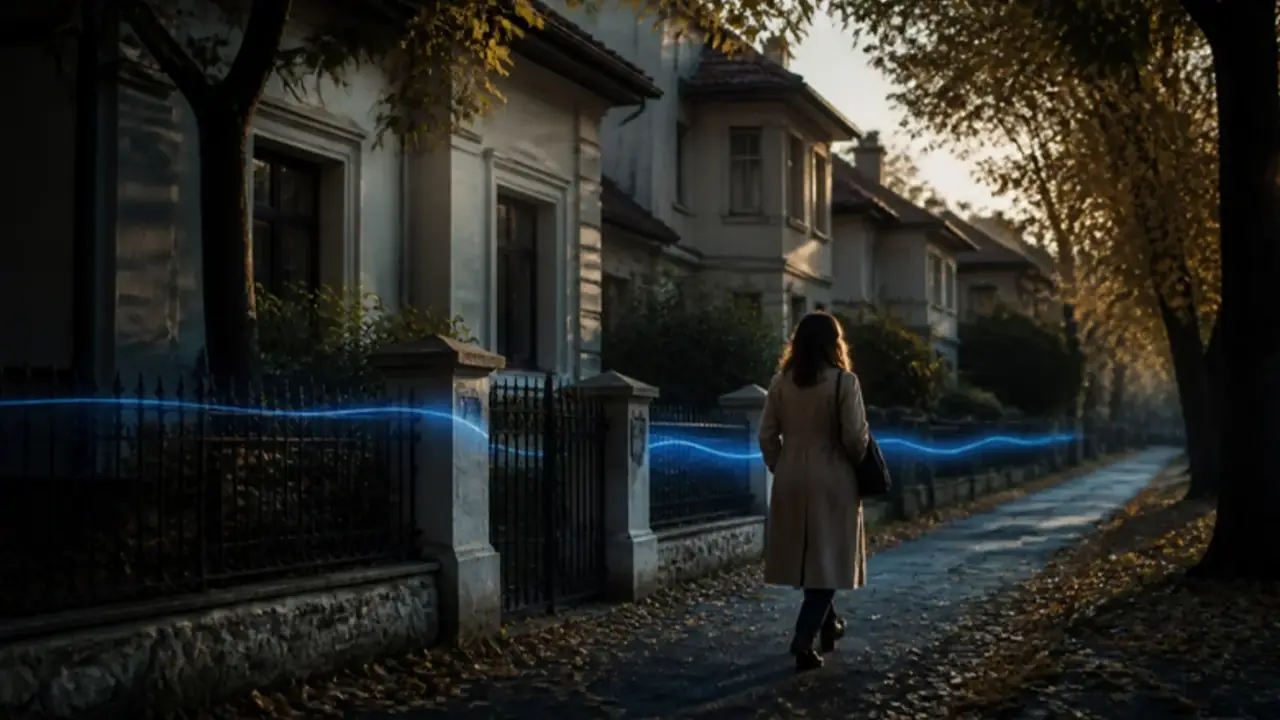
Bucharest City Hall regulates Cotroceni as protected zone no. 45, with maximum protection: no merging of plots, height capped at 10 m plus one set-back floor.
Șerban Cantacuzino founded a monastery here in 1679–1681. The palace for the heir Ferdinand followed in 1893–1895. Today it houses the Presidential Administration and a museum.
On the AMCCRS list updated on 6 October 2026, about 40 addresses in and around the protected zone appear; 7 are in class RsI.
Cotroceni: the short answer
Cotroceni is a residential quarter west of central Bucharest, between Piața Eroilor, Șoseaua Panduri and the Cotroceni palace. Most of its villas were built between the two world wars on regulated plots, with gardens in front and a uniform line along the street. Bucharest City Hall treats it as protected zone no. 45, "parcelarea Cotroceni", with the highest degree of protection.
That status shapes everything. It is why the streets still look the way they do, and it is also why buying here is different from buying a new house. Plots cannot be merged, new buildings are capped at about 10 metres, any building permit needs the approval of the Ministry of Culture, and many of the houses are 90 years old. Several of them appear on the city's seismic risk list.
In plain words: Cotroceni offers a rare, quiet villa neighbourhood a few metro stops from the centre, but every house there must be checked as a protected, old building, not as an ordinary property.
Where Cotroceni is, and what is in it
Cotroceni sits on a hill on the right bank of the Dâmbovița. The quarter straddles two sectors: the palace (Bulevardul Geniului 1) and the Botanical Garden (Șoseaua Cotroceni 32) have Sector 6 addresses, while most of the villa streets to the east, such as Doctor Lister, Louis Pasteur or Sfântul Elefterie, are in Sector 5.
Many of the streets are named after doctors and scientists: Carol Davila, Victor Babeș, Iuliu Teodori, Nicolae Staicovici. The reason is history. The Botanical Garden was founded in 1860 by Carol Davila next to the Faculty of Medicine, and the medical world has been part of the area ever since. The Bucharest University Emergency Hospital, one of the city's largest, is at Splaiul Independenței 169, in Sector 5, on the quarter's edge.
The palace and the museum
According to the National Cotroceni Museum, the site has more than 400 years of history. Between 1679 and 1681, the ruler Șerban Cantacuzino founded a monastery here. A new palace for the heir to the throne, Ferdinand, was built in 1893–1895. In 1918, the treaty known as the Peace of Bucharest was signed at Cotroceni. After 1949 it housed the Pioneers' Palace; it was badly damaged in the 1977 earthquake and largely rebuilt, and a new wing was added, which today houses the Presidential Administration.
The National Cotroceni Museum was set up by government decision in July 1991 and opened its old wing to the public in December 1991. Visits are by appointment, and an original identity document is required at the entrance.
The Botanical Garden
The "Dimitrie Brândză" Botanical Garden belongs to the University of Bucharest. It moved to its present site after an 1884 decree, with the first greenhouses modelled on those in Liège. For a family living nearby, it is the quarter's park.
| Ticket, from 1 August 2025 | Full price | Reduced |
|---|---|---|
| Outdoor areas, 16 March to 15 October | 15 lei | 10 lei |
| Outdoor areas, 16 October to 15 March | 8 lei | 5 lei |
| Botanical museum | 15 lei | 8 lei |
| Greenhouses and tropical forest pavilion | 15 lei | 8 lei |
| Monthly pass, one adult with children under 7 | 150 lei |
Source: the garden's official price list. Pensioners, pupils, students and people with disabilities pay the reduced price.
The protected zone: what the rules say
The City Hall regulation for protected zone no. 45 describes the quarter as a series of regulated plots that share a few basic rules: a uniform setback from the street, detached villas, and a maximum height at the cornice. It names the main threat as new apartment buildings that ignore those rules. Here is what that means for an owner:
Every house in Cotroceni must be checked as a protected, old building, not as an ordinary property.
| Rule | What the regulation says |
|---|---|
| Merging plots | Forbidden, to prevent large buildings |
| Height | Between 7 and 10 metres, plus one set-back floor of 3 metres |
| Plot coverage (POT) | Up to 65%, with at least 30 m² left free |
| Floor area ratio (CUT) | Up to 1.8 |
| Parking | Only inside the plot; no multi-storey car parks |
| Fences to the street | Transparent, up to 2 metres, on a low solid base |
| Air conditioning units | Not on street facades |
| Shops and offices | Allowed only under conditions; small cafés up to 50 seats |
| Building permit | Requires the approval of the Ministry of Culture |
Two practical consequences follow. First, an older house can be restored and modernised, but not replaced by something much larger. Second, works that would be simple elsewhere, a new fence, a facade change, an extra floor, need more approvals and more time. Always check the current rules in the urbanism certificate (certificat de urbanism) for the specific address, because it is the document that applies.
Seismic risk: check the address
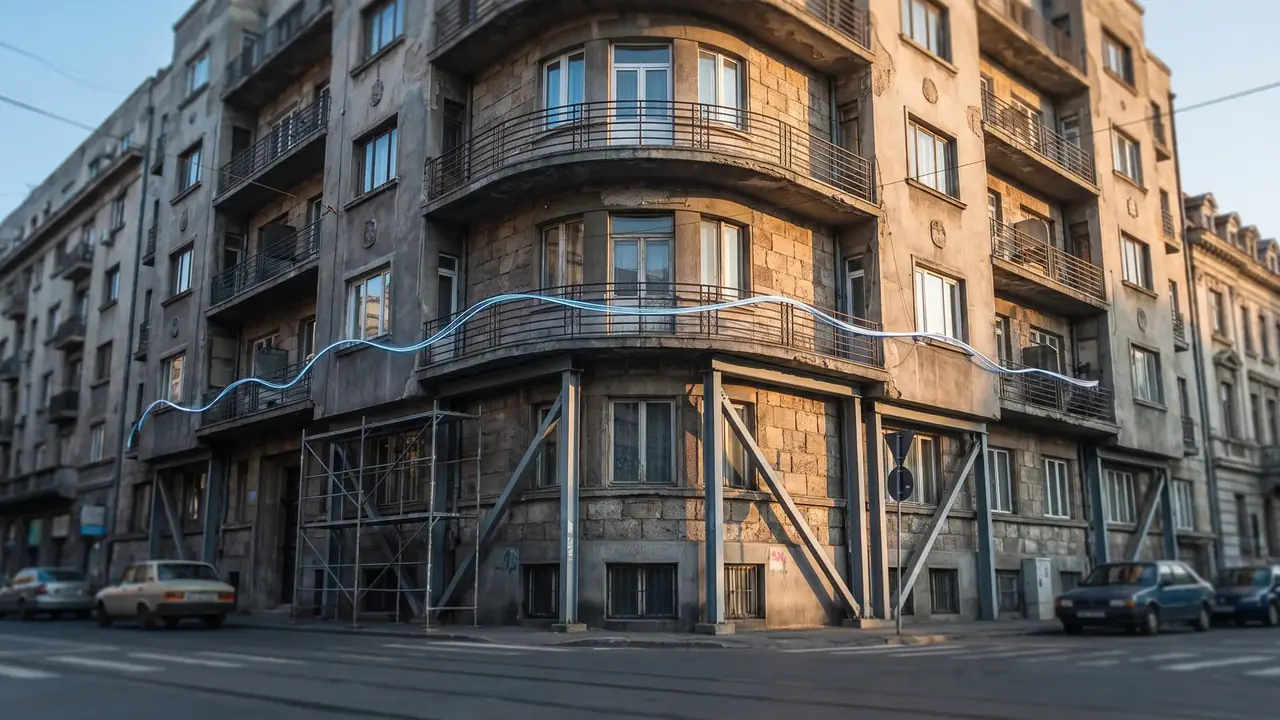
Bucharest's Municipal Administration for the Consolidation of Buildings with Seismic Risk (AMCCRS) publishes the official list of assessed buildings. In the version updated on 6 October 2026, we counted about 40 addresses on streets in and around the Cotroceni protected zone. Seven are in class RsI, the highest risk, and eight in class RsII. Two have been consolidated. Most of the others were assessed under an older system of emergency categories (U1 to U3) and have not been given a risk class.
Most of these buildings date from the 1920s and 1930s. Our guide to earthquake risk in Bucharest explains what each class means. A house that is not on the list has not necessarily been found safe; it may simply never have been assessed. For any older house, ask whether a technical assessment (expertiză tehnică) exists, and have a structural engineer look at it before you sign.
Getting around
Metro. Eroilor station, at Piața Eroilor on the quarter's edge, serves lines M1, M3 and M5. Academia Militară, on M5, and Politehnica, on M1 and M3, are also close by. Check the walking distance from the exact street.
Cars. Under the protected-zone rules, parking is allowed only inside the plot. Check whether the house has its own parking space before you count on a car. Cotroceni also lies inside the first stage of the planned low-emission zone, which we described in our article on Bucharest's low-emission zone. Our guide to parking and car ownership in Bucharest covers the rest.
A Cotroceni villa or a new villa outside the city?
| Interwar villa in Cotroceni | New villa in Ilfov | |
|---|---|---|
| Distance to the centre | A few metro stops | A drive of 20 to 40 minutes or more |
| Age of the building | Mostly 1920s–1930s | New |
| Seismic standard | Check the AMCCRS list and any assessment | Designed under the current P100 code |
| Changes to the house | Ministry of Culture approval, strict limits | Under the local plan, usually simpler |
| Garden | Small front and back gardens | Usually larger plots |
| Parking | Only on your own plot | Usually on the plot |
Neither is better. One gives you the city and its history, the other space and a new structure. If you lean towards the second, our guide to villas in north Bucharest for families is a good next step.
Before you buy in Cotroceni: a checklist
- Confirm the zone. Ask for the urbanism certificate and check whether the address is inside protected zone no. 45 and whether the building is a listed monument.
- Search the AMCCRS list for the exact address, and ask for any technical assessment.
- Hire a structural engineer to inspect older houses, especially if walls were removed or floors added.
- Check every past change. An attic or extension without a permit and Ministry of Culture approval is a legal problem you would inherit.
- Check the parking space on the plot.
- Read the land register extract from ANCPI for owners, charges and the built area.
- Budget for restoration with an architect who knows protected zones.
- Hire an independent lawyer to check the title and the permits.
Frequently asked questions
Which sector is Cotroceni in?
The quarter straddles Sectors 5 and 6. The palace and the Botanical Garden have Sector 6 addresses, while most of the villa streets, such as Doctor Lister and Louis Pasteur, are in Sector 5.
Can I build an extra floor on a house in Cotroceni?
Only within the protected-zone rules. The regulation caps height at 10 metres, plus one set-back floor of 3 metres, and a building permit needs the approval of the Ministry of Culture. Check the urbanism certificate for the address.
Are the houses in Cotroceni safe in an earthquake?
It depends on the building. On the AMCCRS list updated on 6 October 2026, about 40 addresses on streets in and around the protected zone appear, seven of them in class RsI. Search the exact address and ask for a technical assessment.
Can you visit the Cotroceni palace?
Yes, the National Cotroceni Museum, in the old wing, can be visited by appointment. An original identity document is required at the entrance.
Which metro stations serve Cotroceni?
Eroilor (M1, M3, M5), at Piața Eroilor, is the main one. Academia Militară (M5) and Politehnica (M1, M3) are also close by, depending on the street.
The bottom line
Cotroceni is one of the few places in Bucharest where you can live in a villa with a garden and still take the metro to the centre. The same rules that protect its character also limit what you can change, and the age of its houses makes the seismic check essential. Buy here with an architect and an engineer at your side, not only a lawyer.
If you are weighing a house in the city against a villa outside it, book a half-hour call with me. We will go through the options and the checks together, even if you end up buying elsewhere.
Moti Azulay, Compass Group Romania
Sources: Bucharest City Hall, regulation for protected zone no. 45, parcelarea Cotroceni (PDF, archived copy) · AMCCRS, list of buildings assessed for seismic risk, updated 6 October 2026 · National Cotroceni Museum, history of the palace (archived copy) · National Cotroceni Museum, about the museum (archived copy) · Botanical Garden "Dimitrie Brândză", history · Botanical Garden, prices · Bucharest University Emergency Hospital
This article is for general information only and is not legal, tax, engineering or financial advice. Rules and figures are current as of 22 October 2026. Protected-zone rules are applied through the urbanism certificate for each address; check it with the city hall, and consult an independent lawyer and a structural engineer before any transaction.
Now you know more.
This article is general information, not legal, tax or financial advice. Consult local professionals before any transaction.

