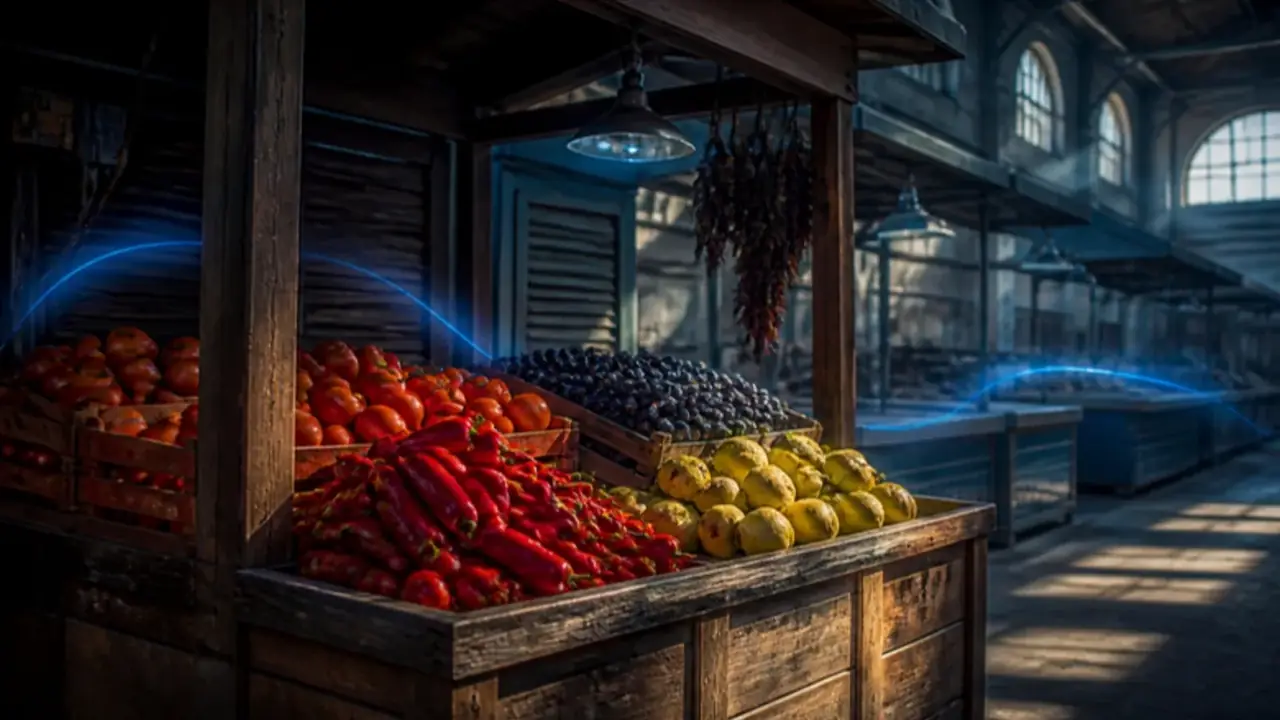
Law 145/2014, in its original text, requires markets to set aside distinct selling spaces for farmers with a producer certificate: at least 40%.
Product name, locality of origin, date obtained and price. The label is how you tell a farmer from a reseller.
The EU organic logo needs at least 95% organic ingredients and the control body's code next to it. "Natural" on a sign is not a certification.
Bucharest food markets: the short answer
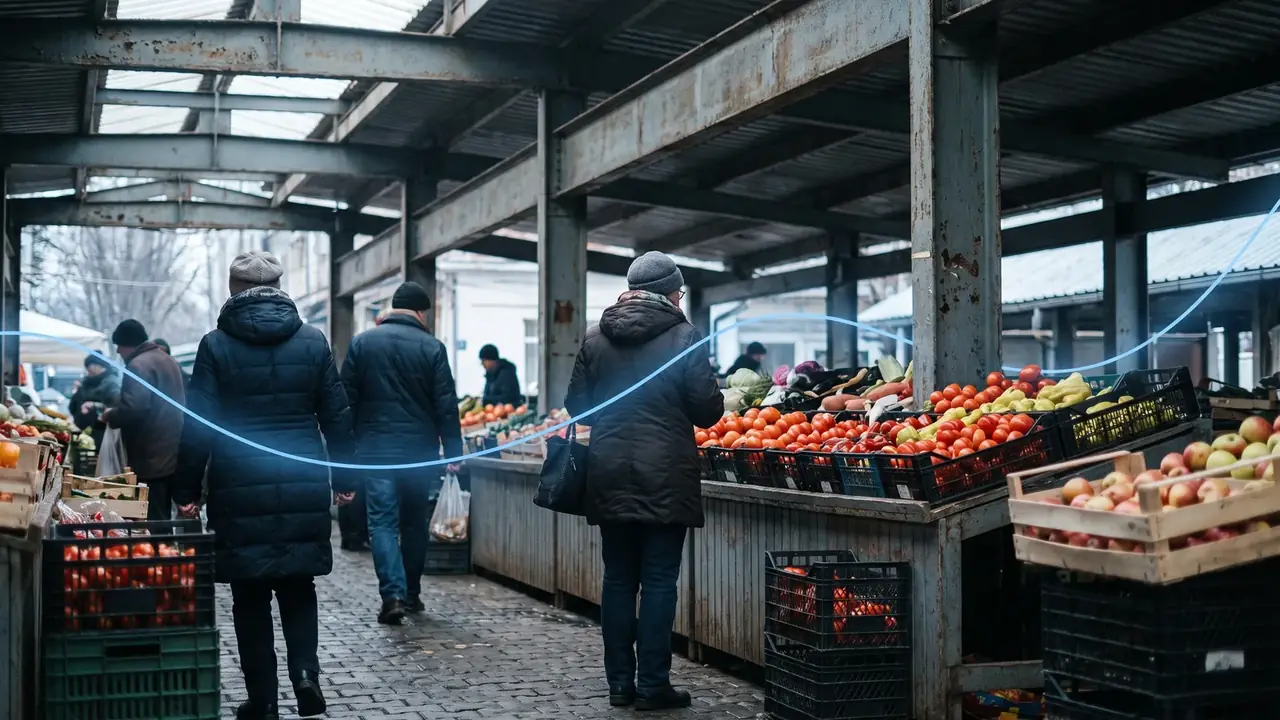
Bucharest still shops at the market. The city's agri-food markets (piețe agroalimentare) are public places, owned and run by the sector administrations. In Sector 2, the Markets Administration is a public service under the local council, and it runs the Obor hall on Strada Ziduri Moși. In Sector 1, the city hall manages markets such as Matache, Amzei and Dorobanți. Inside each market you find two kinds of sellers: farmers selling their own produce, and traders selling bought-in goods.
Romanian law separates them. Under Law 145/2014 on the market for agricultural products, a farmer who sells as a private person holds a producer certificate (atestat de producător) and a sales book (carnet de comercializare). Markets must set aside distinct selling spaces for these producers, at least 40% in the law's original text, and the producer must display a label with the product name, the locality of origin, the date it was obtained and the price.
In plain words: the market is where you meet the people who grew your food. Read the label for the village of origin, buy what is in season, and look for the organic logo only when it really matters to you.
For the wider picture of household spending, see our guide to the cost of living in Bucharest.
The markets you will hear about
| Market | Where | What to know |
|---|---|---|
| Obor | Sector 2, the "Hala Terminal" on Strada Ziduri Moși | The city's best-known large market, run by Sector 2's Markets Administration. The council approved repairs to the hall in 2024 |
| Amzei | Sector 1, in the centre, near Piața Romană | A historic central market. Sector 1 announced in 2020 a 30-year concession for operating and maintaining the hall, and has hosted weekend producers' markets on the square |
| Matache | Sector 1, the Buzești–Berzei area | The local council approved in December 2023 a project to rebuild the Matache hall, keep it as a food market and integrate elements of the original building |
| Dorobanți | Sector 1, the Dorobanți area | Since spring 2026 a pilot "Local Producers' Market", in partnership with the Forța Fermierilor association, open Monday to Sunday with themed weekend fairs |
| Floreasca | The Floreasca area, north | A neighbourhood market in the north of the city; check current hours locally |
Opening hours, stall rules and works change. Check the sector's site before you plan a visit, especially for Matache and Amzei, which have been the subject of rebuilding and concession projects. On the areas themselves, see our guide to Floreasca and Dorobanți.
Sector 1 also runs mobile markets (piețe volante) in different neighbourhoods, where registered producers come for a few days at a time. Watch the city hall's announcements.
Farmer or trader: how to tell
- Look for the label. A producer must show the product name, the locality of origin, the date obtained and the price. A village name you can place on a map is a good sign.
- Ask where it comes from. "De unde sunt?" ("Where are they from?") is a normal question at a Romanian market.
- Check the season. Local tomatoes in February are not from the field. Produce that is out of season locally is usually imported or from greenhouses, and that is fine, as long as you know.
- Watch for uniformity. Identical crates and perfectly matched sizes usually mean a wholesaler, not a smallholding.
- Ask for the producer documents if it matters to you. A producer selling as a private person should hold the certificate and the sales book.
What to buy, season by season
This is a general guide to what local markets typically offer. Weather moves every date by a few weeks.
| Season | What fills the stalls | Notes for a family kitchen |
|---|---|---|
| Spring (March to May) | Green onions, radishes, lettuce, nettles and wild garlic (leurdă), first fresh sheep's cheese, lamb before Orthodox Easter | Spring greens are short-lived; buy them weekly |
| Early summer (May to June) | Strawberries, cherries, new potatoes, young courgettes, peas | Peak of the fruit season starts |
| Summer (July to August) | Tomatoes, peppers, aubergines, cucumbers, watermelons, melons, sweetcorn, apricots, peaches | The best time for salads and grilling |
| Autumn (September to November) | Grapes, plums, apples, pears, quinces, walnuts, pumpkins, cabbage, long red peppers for roasting | The season for preserves: pickles (murături), roasted pepper salad, zacuscă |
| Winter (December to February) | Apples and root vegetables from storage, sauerkraut, pickles, honey, smoked and cured meats, cheeses | Pork dishes before Christmas; fresh produce is mostly stored or imported |
Two Romanian habits worth knowing. In autumn, families buy cabbage, peppers and tomatoes in bulk for preserves, and markets get busy. Before Easter and Christmas, demand for lamb, pork, eggs and cheeses peaks, so go early. Public holidays also change opening times; see our guide to public holidays in Romania.
The market is where you meet the people who grew your food.
Cheese, meat and eggs
- Cheese. Look for telemea (a brined white cheese, from cow's or sheep's milk), fresh cheese (brânză proaspătă), caș (a young unripened cheese) and smoked cheeses. Ask which milk it is and when it was made.
- Meat. Large markets have covered halls with butchers. Ask for the cut you want; many butchers will prepare it while you wait.
- Eggs and honey. Often sold by the producer directly. Honey is a good place to ask about origin and type: acacia, linden, polyflora.
If you keep kosher or halal, a general market is not where certified products are sold. See our guide to kosher food in Romania.
Organic and farmers' produce: not the same thing
| What you see | What it means |
|---|---|
| The EU organic logo (the leaf of stars) | The product is certified organic by an authorised control body. On pre-packaged EU organic food it is mandatory, at least 95% of the ingredients must be organic, and the control body's code must appear next to it |
| The Romanian "ae" logo (agricultură ecologică) | A national mark for certified organic products, used alongside the EU logo |
| "De la țară", "natural", "bio" written by hand | A description, not a certification. It may be true, but no one has checked it |
| A producer label with a village name | Tells you who grew it and where, under Law 145/2014. It says nothing about pesticides or organic methods |
So "from a farmer" and "organic" are different promises. A smallholder may farm in a very traditional way without paying for certification. A certified organic product may come from a large farm. If organic matters to you, look for the logo and the control body code; if knowing the grower matters to you, talk to the producer.
A practical routine for a new family
- Pick one market near home and one large market, such as Obor, for occasional big shops.
- Go in the morning. The best produce goes first, and on weekends markets fill up.
- Bring bags and some cash. Many stalls also take cards, but not all.
- Shop in small amounts at first, then return to the stalls you trust. Regular customers get the best advice and, often, the best pieces.
- Learn ten words: cât costă (how much), un kilogram, jumătate (half), de unde (from where), proaspăt (fresh), de sezon (in season), bio, brânză (cheese), roșii (tomatoes), mere (apples).
- Wash fruit and vegetables well, as you would anywhere.
If you live in the northern suburbs, many villages have their own smaller markets and roadside stalls in summer. We describe life in the northern areas in our guide to Aviatorilor and Primăverii.
Frequently asked questions
Who runs the food markets in Bucharest?
The sector administrations. In Sector 2, the Markets Administration is a public service under the local council and runs Obor. In Sector 1, the city hall manages markets including Matache, Amzei and Dorobanți.
How do I know I am buying from a farmer at a Romanian market?
Look for the producer's label with the product name, locality of origin, date and price, which Law 145/2014 requires. Farmers selling as private persons hold a producer certificate and a sales book.
Is market produce in Bucharest organic?
Not automatically. Only products with the EU organic logo, or the Romanian "ae" mark, and a control body code are certified organic. "Natural" or "de la țară" written on a sign is not a certification.
When is the best season for Romanian market produce?
Summer and early autumn, from July to October, when tomatoes, peppers, fruit and grapes are local and plentiful. Spring brings greens and fresh cheese; winter relies on stored and preserved food.
Can I pay by card at Bucharest markets?
Many stalls accept cards, but not all. Bring some cash, especially for small producers.
The bottom line
A Bucharest market is one of the quickest ways to feel at home: it follows the seasons, it puts you in front of the people who grow the food, and it is public, run by the city's sectors. Read the producer label, buy what is in season, and treat "organic" as a certified logo, not a word on a sign.
If you are planning a move to Bucharest and want to talk through neighbourhoods and daily life, book a 30-minute call with me.
Moti Azulay, Compass Group Romania
Sources: Law 145/2014 on the market for agricultural products, as published (Monitorul Oficial 794/2014), Art. 13–14 · Sector 2 Local Council, Decision 107/2024 on the Obor terminal hall · Sector 1 city hall: Dorobanți becomes the Local Producers' Market, 3 March 2026 · Sector 1 city hall: rebuilding the Matache market · Sector 1 city hall: Amzei market concession, April 2020 · European Commission: the EU organic logo
This article is for general information only and is not legal, tax or financial advice. Information current as of 22 October 2026. Opening hours, works and stall rules change; check with each sector's city hall before you visit.
Now you know more.
This article is general information, not legal, tax or financial advice. Consult local professionals before any transaction.

