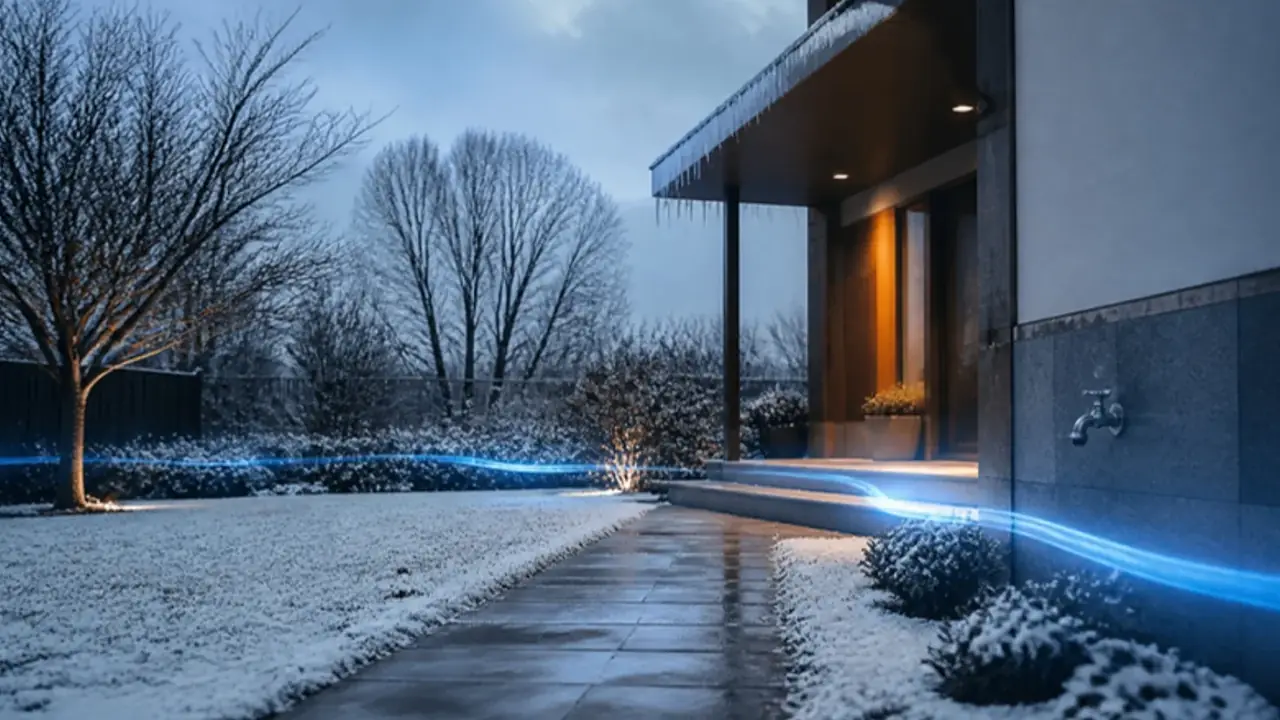
Climate data cited in a Sector 6 technical report put Bucharest's first frost between 21 October and 1 November, and the last up to 11 April.
The Romanian standard STAS 6054/77 gives Bucharest a frost depth of 0.80–0.90 m in natural ground. Buried water lines are laid below it.
Individuals must clear snow and ice from the pavement in front of the property they own, under local council rules. Deadlines and fines are set locally.
Winterizing a villa in Romania: the short answer
Around Bucharest, frost is a normal part of the year. A technical report filed with the Sector 6 city hall, citing long-term climate data, puts the first frost day between 21 October and 1 November and the last between 1 and 11 April. The same report, citing the Romanian standard STAS 6054/77, gives a frost depth in natural ground of 0.80–0.90 m. So the work is predictable: drain and protect everything that holds water outside, clear the roof drainage, have the heating and chimney checked, and know who handles snow.
Most winter damage in a house comes from water, not from cold itself. A pipe that freezes can split, and you only find out when it thaws. A gutter full of leaves turns into ice and pushes water under the roof edge.
In plain words: winter preparation is a one-day job in October and a phone number for January. Water outside the house is drained, heat inside is checked, and someone is named for snow and for emergencies.
This article is the practical checklist. The yearly maintenance calendar is in our guide to villa upkeep costs, and the choice of heating system in our comparison of heat pump and gas.
When to do what: the winter calendar
| When | What to do | Why |
|---|---|---|
| Early to mid October | Drain outdoor taps and irrigation, store hoses, clean gutters after most leaves fall | First frost can come from 21 October |
| October | Heating and chimney checked by an authorised firm, filters cleaned | The law requires heating systems to be checked before the cold season |
| November | Winter tyres, snow shovel and de-icing salt at home, roof and gutters checked again | Late leaves and the first snow |
| December to February | Snow off paths and the pavement, roof checked after heavy snow, house checked after every cold spell if empty | Snow, ice, power cuts |
| March to April | Reopen outdoor water only after the last frost | The last frost can come up to 11 April |
The dates move with the weather.
Water outside the house: taps, irrigation and the meter
This is where most of the damage starts. Do it once, properly, before the first frost:
- Close the inside valve that feeds each outdoor tap, if your house has one, then open the outdoor tap so the pipe empties. Leave it open over winter.
- Disconnect and store hoses. A hose left attached keeps water in the tap.
- Drain the irrigation system. Close the supply, open the drain points and, for buried lines, follow the installer's instructions; some systems need to be blown out with compressed air. Store the controller indoors if it is not rated for frost.
- Protect the water meter chamber. If your meter sits in a chamber in the yard, check that the lid closes and that it is insulated. Romanian water operators, ApaVital in Iași among them, warn that freezing usually starts at the meter chamber. Check your own contract for who pays if the meter freezes.
- Look at pipes in unheated spaces. A garage, a technical room or a pipe along an outside wall may need insulation or heating cable.
- Pools and fountains: a pool needs its own winter routine: lower the level, drain the equipment and cover it, following the builder's manual.
The frost depth matters for anything buried. Water pipes in the yard are normally laid below it. If you add a garden tap or an irrigation line yourself, ask the installer at what depth it is laid.
Roof, gutters and snow on the roof
| Check | When | What to look for |
|---|---|---|
| Gutters and downpipes | After the leaves fall, and again in November | Leaves and moss; water must flow freely to the ground or the drain |
| Roof covering | October, and after strong wind | Loose or broken tiles, flashings around chimneys and skylights |
| Flat roof | October | Clear drains and outlets; standing water that freezes damages the membrane |
| Snow on the roof | After heavy snowfall | Overhanging snow and icicles above doors, paths and parking spots |
| Attic or roof space | Once in winter | Damp patches or frost on the underside, a sign of a leak or condensation |
Strong wind is part of the season. Under the joint order on coding weather warnings (Order 245/2012), a yellow code for strong wind is issued when roofs and chimneys may be damaged, and an orange code when they will be. Before a yellow or orange code, secure garden furniture, trampolines and anything loose on balconies. You can follow warnings on the National Meteorological Administration (ANM) site.
Heating: the checks before the first cold night
Romanian fire rules require heating systems in homes, including stoves, chimneys and flues, to be checked before the cold season and any defect fixed. We cover the legal side in our article on fire safety in a villa. In practice:
Winter preparation is a one-day job in October and a phone number for January.
- Gas boiler: keep the periodic boiler check and the gas installation check up to date, through authorised firms. Keep the papers.
- Chimney and fireplace: have them cleaned and checked by an authorised firm before winter, and keep the receipt.
- Heat pump: clean the filters, keep the outdoor unit free of leaves and snow, and make sure melt water can drain away from it.
- Radiators and underfloor heating: bleed air from radiators, check the system pressure, and test every room's thermostat.
- A backup plan: a winter power cut stops a heat pump and most gas boilers too, because their pumps and controls run on electricity. Know where the main switch is and keep a torch and a charged power bank.
Snow on the paths, the pavement and the road
Under Government Ordinance 21/2002 on the cleanliness of localities, individuals must clear snow and ice from the pavement in front of the property they own, under rules set by the local council. Deadlines and fines are set locally. In Bucharest, press reports cite a deadline of 24 hours after the snow stops and fines for individuals of 200 to 500 lei. Check your commune's local rules.
Three practical points:
- Don't throw snow into the road or onto the pavement from your yard. Local rules usually forbid it.
- Keep salt and a shovel at home before the first snow, not after.
- In a gated complex, ask who clears the internal road. On a private road the owners, usually through the association, organise and pay for it. We explain this in our article on private roads and snow in gated villa complexes.
The garden in late autumn
- Bring frost-sensitive plants in pots into a bright, unheated space.
- Mulch young shrubs and new beds.
- Cut back only what the gardener recommends; many plants are pruned in late winter.
- Store garden furniture and cushions, or cover them firmly.
- Leave the lawn short but not scalped before winter.
When you are abroad: the empty house in winter
An empty house in January has two risks: water and heat. A few rules cut both:
- Never turn the heating off completely. Leave a low setback temperature so no room falls below freezing.
- Close the main water valve if the house will be empty for weeks, after asking your installer whether the heating circuit is separate.
- Name one person nearby with a key, who checks the house after every cold spell, storm or power cut, and after heavy snow.
- Use remote monitoring. A smart thermostat, a temperature alert and a water-leak sensor send you a message before a small problem becomes a flooded floor.
- Read your insurance policy. Compulsory PAD covers earthquake, flood and landslide, not burst pipes. Optional policies cover water damage, but often under conditions for a house left empty. Ask the insurer in writing. Details in our guide to home insurance.
- Leave written instructions: where the valves and fuse box are, who the plumber and heating technician are, and the emergency number, 112.
If you would rather hand all this to someone, a property manager can do the checks; put the visit schedule and emergency steps in the contract.
Your winter checklist
- Outdoor taps drained and left open, hoses stored.
- Irrigation drained, controller stored.
- Meter chamber closed and insulated.
- Gutters and downpipes clean.
- Roof checked, loose items secured.
- Boiler, gas and chimney checks done, papers filed.
- Heat pump filters clean, outdoor unit clear.
- Shovel and salt at home.
- A person nearby with a key, and remote alerts if the house will be empty.
- Insurance read for water damage and empty-house conditions.
Frequently asked questions
When should I winterize a villa near Bucharest?
In early to mid October. Climate data for Bucharest put the first frost between 21 October and 1 November, so outdoor water should be drained before then. Reopen it after the last frost, which can come up to 11 April.
Do I have to clear the snow in front of my house in Romania?
Yes. Under Ordinance 21/2002, individuals must clear snow and ice from the pavement in front of the property they own, under local council rules. Deadlines and fines are set by each locality.
Should I turn off the heating when I leave the villa in winter?
No. Leave a low temperature so no room falls below freezing, and use a temperature alert. A house left unheated in a cold spell risks frozen pipes.
Does compulsory home insurance cover burst pipes?
No. PAD covers only earthquake, flood and landslide. Water damage from pipes requires optional insurance, and the policy may set conditions for a house left empty.
Is a heating check mandatory before winter?
Romanian fire rules require heating systems in homes, including stoves, chimneys and flues, to be checked before the cold season. Gas installations and boilers also have periodic checks by authorised firms.
The bottom line
A villa near Bucharest handles winter well when it is prepared once a year: water out of everything outside, heat checked inside, snow and emergencies assigned to a named person. Owners abroad add one layer: remote alerts and someone with a key.
If you are thinking about a villa north of Bucharest and want to talk through what owning one from abroad involves, book a 30-minute call with me.
Moti Azulay, Compass Group Romania
Sources: Technical report for a Sector 6 project, citing STAS 6054/77 frost depth and frost dates for Bucharest (primarie6.ro) · Meaning of weather warning codes under Order 245/2012 (Sector 1 city hall) · National Meteorological Administration (ANM) · Digi24, February 2026: snow-clearing duties under Ordinance 21/2002 · BZI: ApaVital advice on protecting water meters from frost
This article is for general information only and is not legal, tax or financial advice. Information current as of 22 October 2026. Local snow-clearing rules differ by commune; follow the instructions of your installers and equipment manufacturers.
Now you know more.
This article is general information, not legal, tax or financial advice. Consult local professionals before any transaction.

