
Romania joined the Schengen Area in full on 1 January 2025, completing its shift into a financial and logistics hub.
The stock of foreign direct investment in Romania has passed €125 billion, a resilience that is hard to ignore.
1,329 km of motorway are operational and another 724 km are under construction, making business access a growth engine.
Bucharest averages €2,236 per m², about 30% cheaper than Cluj-Napoca and significantly cheaper than Brașov.
80% of Bucharest's short-stay guests are international, mainly from the UK and the US, with October the peak month.
And how Compass Group maximises the opportunity for you
A European capital on the rise: discover how Romania's full accession to Schengen in 2025 put Bucharest at the centre of the CEE map.
Looking at the global investment map for 2026, it is hard to ignore Bucharest's mesmerising dynamism. At a time when Europe's classic capitals are grappling with regulatory stagnation and high prices, Bucharest is emerging as one of the continent's most interesting capitals – a market that combines the resilience of the European Union and Schengen with the dynamism of an emerging market. For the Israeli investor, this is far more than buying property; it is an opportunity to own a tangible asset at the heart of a logistics and financial hub undergoing an unprecedented infrastructure boom. In this article we analyse Bucharest's rental market, its neighbourhoods and its tenant groups, and what professional property management under the Compass Group umbrella means for anyone thinking of going from onlooker to property owner.
Romania 2026 – the economic and infrastructure leap
2026 marks the most dramatic turning point in the economy of Central and Eastern Europe (CEE). With Romania's full accession to the Schengen Area on 1 January 2025, the country completed its transformation from an emerging market into a leading financial and logistics hub. With a stock of foreign direct investment (FDI) that has passed the €125 billion mark and GDP per capita expected to reach €23,500 by 2028, Romania displays a resilience that is hard to ignore.
For the Israeli investor, the most important figure in 2026 is the combination of high inflation (9.9% as of end-2025) and the VAT increase to 21%. In such an environment, real estate is a tangible asset backed by real housing demand. Accelerated infrastructure development – including 1,329 km of operational motorways and another 724 km under construction – makes business accessibility a powerful growth engine and brings the suburbs closer to the city centre.
Analysis of Bucharest's STR market: demand, seasonality and regulation
While Europe's classic capitals are stifling short-term rentals (STR) with heavy regulation, Bucharest maintains a "low regulation" policy that offers maximum operational flexibility. AirROI data for 2026 reveal a market in unprecedented momentum:
Key performance indicators (KPIs) for 2026:
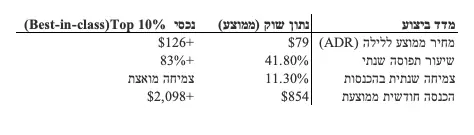
The strategic "So what?": These numbers tell a story of demand. The decisive figure is that 80% of guests are international (mainly from the UK and the US), which calls for dynamic management. The peak comes in October, while January is the weakest month, so professional management with dynamic pricing aligned with the seasons is an integral part of running such a property.
Bucharest vs. the CEE capitals: entry price and demand
The Israeli investor compares the capitals of Central and Eastern Europe. In 2026, Bucharest stands out on two counts:
Bucharest is emerging as the continent's last arbitrage, combining the resilience of the EU and Schengen with the growth of an emerging market.
- Demand and infrastructure: Romania's accession to Schengen, foreign investment and tech parks such as Pipera create steady demand for quality housing from professionals and families.
- Entry price: With an average price of €2,236 per m², Bucharest is 30% cheaper than Cluj-Napoca and significantly cheaper than Brașov. An ynet report by Hila Tzion (in Hebrew) described the same gap from the Israeli side.
Pipera Tech Park, Romania
The strategic map: which neighbourhood for which tenant?
In 2026, choosing a location means choosing a target audience:
- Old Town: The historic hub. Here, tourist demand and nightlife create strong demand all year round.
- Pipera: The business heart. It appeals to digital nomads and relocation clients (business travellers). Here the ADR is stable and less affected by seasonality.
- Herăstrău: Luxury and leisure. It appeals to the premium segment and to families looking for the "Bucharest Riviera".
Guest profile: Around 50% of the market is dominated by Gen Z and Gen Alpha. They demand cutting-edge connectivity, fast Wi-Fi and tech-driven management. The fact that 80% of guests are international makes connectivity to Western markets (the US and the UK) critical to success.
The Compass Group framework: management services for project clients only – professional navigation in a changing environment
Investing in Romania in 2026 requires a partner who understands the fine print of taxation and operations. Compass Group (www.compassgroup.ro) is your bridge to calm, professional management of your property.
We provide personalised reports ("your way") and manage the tax complexity for you:
- Tax planning: Navigating between the 16% corporate tax and the 1% turnover tax for micro-enterprises. Where a property is owned by an individual (privately, not through a company), tax on rental income is 10% of net income after a flat 20% deduction, which is about 8% of gross rent.
- Preparing for dividend tax: From 1 January 2026, dividend tax rises to 16%. Our expertise lies in structuring the holding so that it fits the fiscal changes.
Bucharest 2026 is not just an investment destination – it is a market with real housing demand. Join the story with Compass Group and explore a property in a dynamic market, with full professional support.
Frequently asked questions
Why are international buyers turning to Bucharest in 2026?
Romania became a full member of the Schengen Area on 1 January 2025, foreign direct investment has passed €125 billion, and the motorway network has reached 1,329 km in operation with another 724 km under construction. Together, these make Bucharest a financial and logistics hub inside the EU.
How much does a square metre cost in Bucharest?
The article cites an average of about €2,236 per m², around 30% less than Cluj-Napoca and significantly less than Brașov. Before signing, check comparable sales in the same neighbourhood.
Which Bucharest neighbourhood suits which tenant?
Old Town relies on tourism and nightlife, Pipera serves business travellers, digital nomads and relocation clients, and Herăstrău appeals to the premium segment and to families. In 2026, choosing a location means choosing a target audience.
Who are the short-term rental guests in Bucharest?
About 80% of guests are international, mainly from the UK and the US, and around half belong to Gen Z and Gen Alpha. October is the peak month and January the weakest, so pricing has to follow the seasons.
Which taxes should a buyer in Romania know about?
VAT on a new home is 21%, corporate tax is 16% (or a 1% turnover tax for micro-enterprises), and dividend tax rose to 16% from 1 January 2026. When you sell, the tax is 3% or 1% depending on how long you held the property, so plan the holding structure with a local adviser.
Summary: looking ahead to 2027 and beyond
The economic data point to a housing market built on real demand: high employment, a shortage of new homes and a growing tech-sector middle class. For an Israeli buyer, the combination of a local euro mortgage, clear taxation and low holding costs makes Bucharest an option worth examining closely, with an independent lawyer of your own at your side.
Food for thought: Will you keep waiting for the day the Israeli market returns to "economic logic", or will you look today at an alternative in which your equity buys a real property, with a local mortgage and full financial and tax flexibility?
This article is for general information purposes only and does not constitute tax, legal or financial advice.
Before entering into any transaction, we recommend consulting local experts.
Now you know more.

This article is general information, not legal, tax or financial advice. Consult local professionals before any transaction.