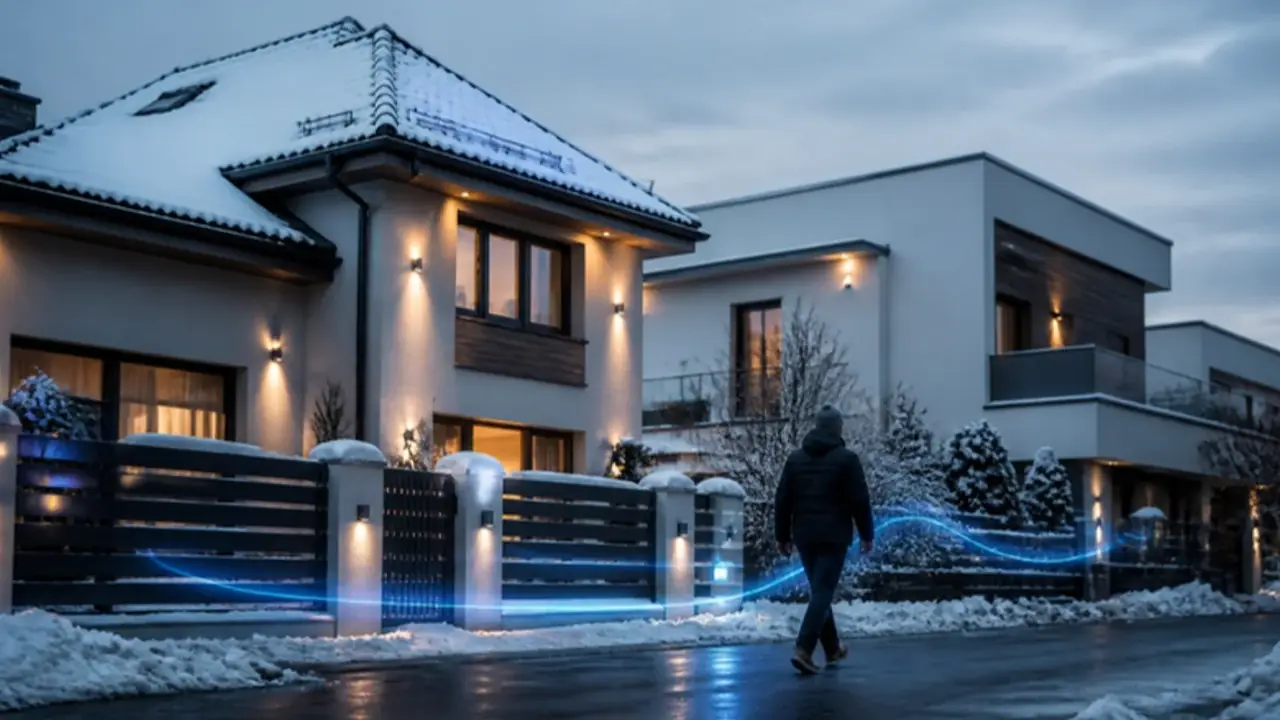
CR 1-1-3/2012 gives a characteristic ground snow load of 2.0 kN/m² for Bucharest and the Ilfov towns in its table, such as Otopeni and Buftea.
A pitched roof up to 30 degrees gets the same snow coefficient (0.8) as a flat roof. Only above 30 degrees, and without snow guards, does the load fall.
Under Law 169/2026, roof repairs that keep the shape and appearance need no permit or notification, outside protected areas.
Flat or pitched roof in Romania: the short answer
Both roof types are built and used safely all over Romania. The question is not which one is "allowed" but which one is designed and built properly for the site. Every roof is designed for snow under Romania's snow code, CR 1-1-3/2012. Around Bucharest, the code's table gives a characteristic ground snow load of 2.0 kN/m² for the towns of Ilfov county, such as Otopeni, Buftea and Voluntari.
What surprises most buyers: under the code, a flat roof and a pitched roof of up to 30 degrees carry the same basic snow coefficient. Only steeper roofs, where snow slides off, are designed for less. The real difference between the two types lies elsewhere: in how water leaves the roof, how the insulation is protected, and how much attention the roof needs every year.
In plain words: a pitched roof forgives small mistakes, because water runs off it. A flat roof can be excellent, but it depends on the details: the membrane, the slope to the drains, and someone who checks them every season.
What the snow code says, in numbers you can follow
The code calculates the snow load on a roof with one formula: the ground snow load multiplied by a few coefficients. For an ordinary house, most coefficients equal 1.0, so two numbers do the work: the ground snow load (2.0 kN/m² in the Ilfov towns listed in the code) and the roof shape coefficient.
| Roof angle | Shape coefficient (μ1) | Snow load on the roof, Ilfov example |
|---|---|---|
| 0 to 30 degrees (flat roofs and most low-pitched roofs) | 0.8 | 1.6 kN/m², roughly 160 kg per m² |
| 40 degrees | 0.53 | about 1.07 kN/m² |
| 45 degrees | 0.4 | 0.8 kN/m² |
| 60 degrees or more | 0 | the code assumes snow slides off |
A few points from the code that matter in practice:
- The 50-year snow. The ground snow load is the value with a 2% chance of being exceeded in any one year, that is, a mean recurrence interval of 50 years.
- Snow guards change the picture. If a pitched roof has snow guards (parazăpezi) or a parapet that stops snow from sliding, the reduction for steep roofs does not apply, and the coefficient stays at 0.8.
- Drifts. The code also covers uneven, wind-drifted snow, and local drifts next to parapets, walls and other obstacles on the roof. On a flat roof with parapets, these drifts are often the case the engineer has to check most carefully.
- Balotești itself. The code's table lists towns. A commune such as Balotești takes its value from the zoning map. Ask the structural engineer which value was used for your plot.
On a flat 100 m² roof, 1.6 kN/m² is about 16 tonnes of design snow. This is not a reason to fear flat roofs. It is a reason to ask to see the calculation.
Water: where most roof problems start
Snow is a structural question. Water is a question of detail, and most roof complaints come from there.
A pitched roof sheds water by gravity. The tiles or metal sheets are the first layer. Under them, a well-built roof has an underlay membrane that catches whatever passes the first layer, and a ventilated gap that lets moisture escape. The weak points are known: valleys, chimneys, roof windows, the joint with walls, and gutters blocked by leaves or ice.
A flat roof is never truly flat. It needs a slope towards drains or gutters, and a continuous waterproofing membrane (bitumen, PVC, TPO or EPDM, depending on the design). Water that stays on the roof finds every weak seam. The weak points: the drains, the upturns at parapets, penetrations for pipes and equipment, and any spot where the membrane was damaged during later work, for example when solar panels or an air conditioning unit were installed.
In both cases, a leak in a new home can appear months after handover, in the first winter with heavy snow followed by a thaw. That is why the documents matter as much as the materials.
A pitched roof forgives small mistakes. A flat roof can be excellent, but it depends on the details.
Insulation and condensation
Romania requires every new building on a permit issued from 31 December 2020 to be a nearly zero-energy building (nZEB), under Law 372/2005. The roof is one of the largest surfaces through which a house loses heat, so it carries a large part of the insulation.
- Pitched roof. Insulation sits either between and under the rafters, when the attic is lived in, or on the attic floor, when the attic is a cold space. In both cases a vapour control layer on the warm side and ventilation on the cold side keep moisture from condensing inside the roof.
- Flat roof. The usual options are a "warm roof", with insulation under the membrane, or an "inverted roof", with insulation boards laid over the membrane and protected by ballast. Each has its own rules for vapour control and drainage.
We don't quote a thickness here, because the right value comes from the energy calculation of the specific house. Ask to see it, together with the energy performance certificate. More in our guide to an energy-efficient home in Romania.
Flat and pitched, side by side
| Pitched roof | Flat roof | |
|---|---|---|
| Snow design (up to 30 degrees) | Same coefficient as flat; less above 30 degrees without snow guards | Coefficient 0.8, plus drifts at parapets |
| How water leaves | By gravity, over tiles or sheets, into gutters | Over a slight slope to drains or gutters |
| Main risk | Valleys, flashings, blocked gutters | Membrane seams, drains, upturns, damage from later work |
| Insulation | Under rafters or on the attic floor, with ventilation | Warm roof or inverted roof |
| Use of the roof | Attic space, if designed for it | Terrace, green roof or equipment, if designed for it |
| Routine upkeep | Gutters, tiles after storms, snow guards | Drains, membrane, parapets, at least twice a year |
Maintenance through the year
A roof does not need much, but it needs it on time.
- Autumn, after the leaves fall: clean gutters, downpipes and flat-roof drains.
- Winter: watch for icicles and ice dams at the eaves. On a flat roof, never let snow block the drains. Do not walk on a snow-covered membrane with sharp tools.
- Early spring, after the thaw: check the ceiling under the roof and the walls under parapets for damp stains.
- After a storm: look for displaced tiles or metal sheets, and for lifted membrane edges.
- After any work on the roof: have whoever installed panels, antennas or air conditioning show you how they sealed each penetration.
Under Law 169/2026, roof repairs that do not change the roof's shape or appearance can be carried out without a permit or notification, outside protected areas (Article 299). Changing the shape of the roof is a different matter: check with the town hall first. Our villa upkeep costs guide covers the yearly budget.
Checklist: 8 questions to ask the developer
- Which ground snow load and which shape coefficient did the structural engineer use, and where is it written?
- Are there snow guards or parapets, and was the load calculated with them?
- On a flat roof: what is the slope to the drains, and is there an overflow if a drain is blocked?
- Which waterproofing membrane is used, and who installed it?
- Was the flat roof tested for watertightness before handover, and is there a record?
- Where is the insulation, how thick is it according to the energy calculation, and where is the vapour control layer?
- On a pitched roof: is there an underlay membrane and a ventilated gap under the tiles?
- Which roof documents go into the building's technical book (cartea tehnică), and what maintenance does it prescribe?
For the record: the villas of Compass on the Lake in Balotești have a pitched roof. The questions above apply to them as to any other project.
Frequently asked questions
Is a flat roof a bad idea in a country with snow?
No. A flat roof is designed for a higher share of the ground snow than a steep roof, and for drifts at parapets. When the structure is calculated correctly and the drains are kept clear, it performs well. The risk is in poor details and neglected maintenance, not in the shape.
What snow load is used around Bucharest?
The table in CR 1-1-3/2012 gives a characteristic ground snow load of 2.0 kN/m² for Bucharest and for the Ilfov towns it lists, including Otopeni, Buftea and Voluntari. Communes take their value from the code's zoning map. The engineer's calculation for your house is the document to check.
Does a steeper roof always carry less snow?
Not always. Up to 30 degrees, the code uses the same coefficient as for a flat roof. Above that, the load falls, but only if snow can slide off. With snow guards or a parapet at the eaves, the coefficient stays at 0.8.
Who is liable if the roof leaks after handover?
Against the seller, the Civil Code requires a hidden defect in a building to appear within 3 years of handover (Article 2531). Against the designers and contractors, Law 169/2026 sets 10 years from acceptance for hidden defects. Report in writing, with photos, as soon as you find it. Details in our guide to new home warranty and defects.
Do I need a permit to repair my roof?
Not for repairs that keep the roof's shape and appearance, outside protected areas (Law 169/2026, Article 299). Changing the shape, adding a terrace or raising the roof needs the usual approvals.
The bottom line
The choice between a flat and a pitched roof is partly about architecture and taste. Safety comes from the calculation and the details: the right snow load, a membrane or underlay installed correctly, insulation without condensation, and drains that someone clears.
If you are looking at a villa in Romania, with us or anywhere else, book a 30-minute call with me. We will go through the roof documents together, from the snow calculation to the maintenance instructions.
Moti Azulay, Compass Group Romania
Sources: CR 1-1-3/2012, design code for snow action on buildings (text with Annex A table), sections 3 to 5 and Table A.1 · AGIR: CR 1-1-3/2012, approved by Order 1655/2012 · Law 169/2026, Code of planning and construction, Monitorul Oficial no. 661 of 10.08.2026, Articles 299, 424, 451 · Law 372/2005 on the energy performance of buildings, consolidated text, Article 17 · Civil Code, consolidated (legislatie.just.ro), Article 2531
This article is for general information only and is not legal, tax, financial or engineering advice. The rules are correct as of 22 October 2026. For a specific house, rely on a qualified structural engineer and an independent lawyer.
Now you know more.
This article is general information, not legal, tax or financial advice. Consult local professionals before any transaction.

