Law 169/2026, Articles 424 and 451 (replacing Article 29 of Law 10/1995): designers, contractors and supervisors are liable for hidden defects discovered within 10 years of acceptance.
Structural defects resulting from breach of design and construction standards: liability for the life of the building.
Under Article 2531 of the Civil Code, a hidden defect in a building must appear within 3 years of handover, unless a longer period was set.
Article 1709: late notice to the seller cancels the right to ask for cancellation of the sale. Document and notify in writing, quickly.
The seller under the Civil Code, and the builders under the building code (Law 169/2026). Each has its own period.
Construction defects in Romania: the short answer
Romania has two layers of liability. Against the seller, under the Civil Code, a hidden defect in a building must appear within 3 years of handover or final acceptance, unless a longer period was agreed. Against those who designed and built, under the new Code of Planning and Construction (Law 169/2026), liability for hidden defects is 10 years from acceptance of the building, and for structural defects resulting from breach of standards, for the life of the building. You report in writing, quickly, and file a claim within 3 years of discovery.
This article starts where our handover guide ends. On handover day you check what you can see. Here we are talking about what comes to light in the first winter, in the third year, or after a decade.
How it works in Israel, and why Romania is different
In Israel, the Sale (Apartments) Law (in Hebrew) gives the buyer an "inspection period" set in the schedule to the law according to the type of defect, followed by a three-year "warranty period". There is one framework, and one address: the contractor who sold to you.
Romania has no dedicated apartment sale law. There is the Civil Code, which applies to every sale, and there is the Code of Territorial Planning, Urbanism and Construction, Law 169/2026, which has applied since 25 August 2026 to those who designed, supervised and built, and on this point replaced Law 10/1995 on construction quality. In Romania there are two clocks, and each has a different address. Anyone who understands this in advance knows whom to sue and when.
The first clock: the seller, under the Civil Code
Article 1707 of the Civil Code provides that the seller is liable for hidden defects that make the property unfit for use, or reduce its value to such an extent that, had you known, you would not have bought it or would have paid less.
"Hidden" is defined precisely there: a defect that a careful and diligent buyer could not have discovered on handover day without professional help. A crack you saw and kept quiet about is no longer hidden.
Under Article 1710, you can demand:
- Repair of the defect by the seller or at the seller's expense.
- Replacement with an identical property without the defect, which for real estate is hardly relevant.
- A corresponding reduction in the price.
- Cancellation of the sale.
And under Article 1714, the same rules apply when the property does not match the qualities agreed in the contract. In other words, a written technical specification is a legal tool, not just a marketing brochure.
The second clock: those who designed and built, under the new building code
Until 25 August 2026 this rule sat in Article 29 of Law 10/1995. The new planning and building code repealed most articles of that law, including Article 29 (Article 576), but kept the same clocks:
In Romania there are two clocks, and each has a different address.
- Hidden defects discovered within 10 years of acceptance of the building (recepție): designers under Article 424, and contractors and site supervisors under Article 451.
- Structural defects resulting from breach of the design or the construction standards in force at the time of building, for the life of the building (Article 451).
New in the code: under Article 556, developers and contractors must hold 10-year civil liability insurance for damage that appears after acceptance, and present it at the start of construction. Article 1879 of the Civil Code refers to the special law, and under Article 583 of the new code a reference to the repealed law is treated as a reference to the code. For a building accepted before 25 August 2026, check with a lawyer which text applies. (avocat-tudor.ro, an analysis of Article 29 in the previous text)
Note the wording: the 10-year liability belongs to those who designed and built, and not always to the one who sold to you. When the developer also built, both regimes may apply to them. Romania's supreme court has distinguished between a claim against the seller as seller and the builders' liability under the construction law, each with its own period (CLUJUST, on ICCJ decision 243/2020).
The timetable at a glance
| What happened | Example | Against whom | Period | Basis |
|---|---|---|---|---|
| A defect visible on handover day | Broken tile, a window that does not close | The developer | Recorded in the handover report | The contract and the handover report |
| A hidden defect in the building | Damp under the flooring | The seller | Must appear within 3 years of handover or final acceptance | Civil Code, Articles 1707, 2531 |
| Small routine work | A spot repair | Whoever carried it out | 3 months | Civil Code, Article 2531 |
| A hidden defect in the construction work | Failed roof waterproofing | Designers, contractors, supervisors | 10 years from acceptance of the building | Law 169/2026, Articles 424, 451 |
| A structural defect | Structural cracks from breach of a standard | The same parties | The life of the building | Law 169/2026, Article 451 |
| Filing the claim | Any of the cases | 3 years, usually from the day of discovery | Civil Code, Articles 2517, 2531 |
Two concepts get confused here. The warranty period is the window in which the defect must appear. The limitation period is the time you have to file a claim after you discovered it. Under Article 2531, the Code's warranty periods do not affect special warranty periods in law or in the contract, so a contract that gives you more is better.
What to do on the day you discover a defect
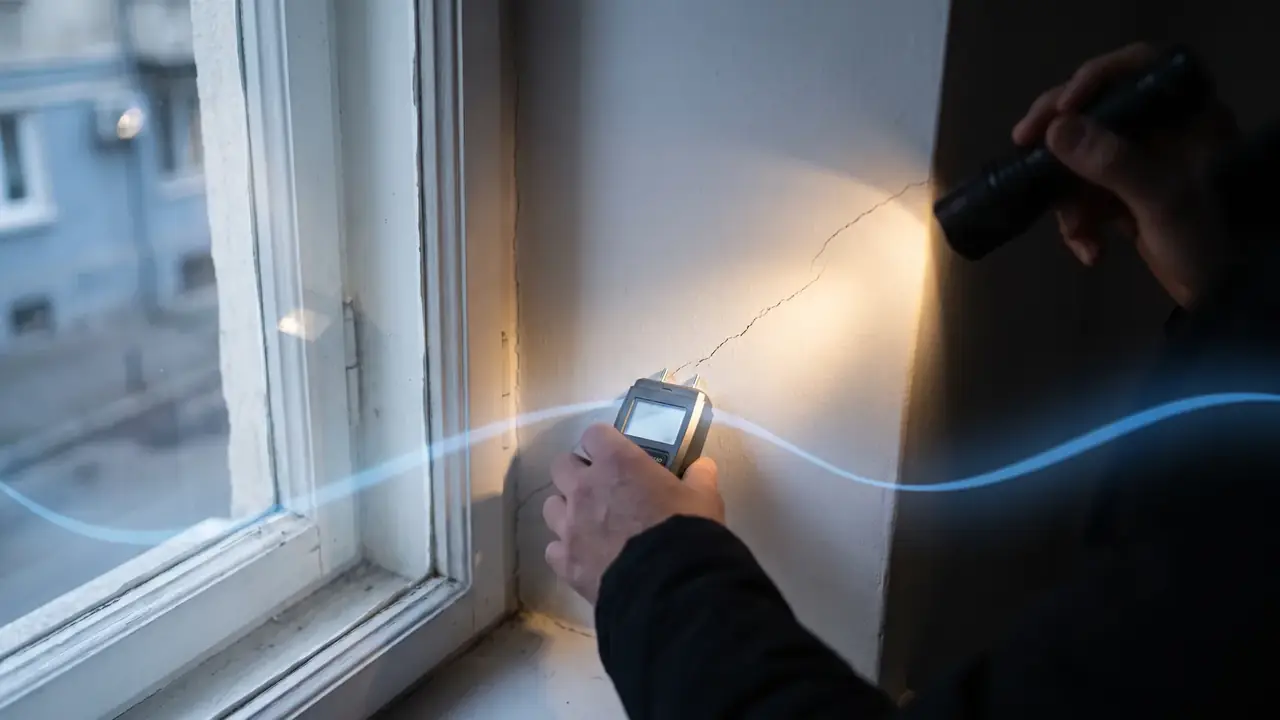
- Document it. Photos, video, the date, and measurements if possible. Photograph damp several times over several days.
- Notify in writing, quickly. Article 1709 requires you to notify the seller "within a reasonable time". Anyone who is late loses the right to ask for cancellation of the sale. A seller who concealed the defect cannot rely on this rule.
- Send it to every address. To the developer, and at the same time ask them for the contractor's and designer's details from the building's "technical book" (cartea tehnică).
- Ask for an expert opinion. A structural engineer who documents the cause. In legal proceedings, the court can appoint its own technical expert.
- Do not fix it yourself before documenting it. A quick repair without documentation erases the evidence.
What to ask for in the contract, before there is a defect
- An explicit warranty period from the developer, by system: waterproofing, plumbing, electrics, heating.
- Response times for an urgent fault and a routine fault.
- The manufacturers' warranties for equipment, such as a heat pump or boiler, transferred into your name.
- The names of the contractor and designer and the building acceptance report, so you know against whom the 10-year clock runs.
And honestly: what this warranty does not cover
Normal wear and tear, damage from improper use, and maintenance that was not done are not construction defects. Hairline cracks in the plaster in the first year, as the house "settles", are common in every new home and do not always indicate a problem. On the other hand, recurring damp, a crack that widens or a door that has stopped closing are signs that call for an engineer.
And the warranty is only worth as much as whoever stands behind it. A project company that closed after the sale will not repair anything, even if the law is on your side. So the question of who stays after handover matters no less than the law. We wrote about this in our article on the developer who stays.
Frequently asked questions
How many years of warranty does a new home in Romania have?
Under the new building code (Law 169/2026, which on this point replaced Law 10/1995), those who designed and built are liable for hidden defects discovered within 10 years of acceptance of the building, and for structural defects resulting from breach of standards for the life of the building. Against the seller, under the Civil Code, a hidden defect in a building must appear within 3 years of handover, unless the contract or the law sets a longer period.
Who do I turn to when a defect is discovered?
First to the developer who sold to you, in writing. At the same time, ask them for the contractor's and designer's details, because liability under the building code rests with them. A Romanian lawyer will help decide whom to sue, and on what basis.
How long do I have to file a claim?
The general limitation period in Romania is 3 years, under Article 2517. For hidden defects it usually starts on the day of discovery. Do not wait until the end of the period: late notice to the seller may cancel the right to ask for cancellation of the sale.
What is the difference between a visible defect and a hidden defect?
A hidden defect is one that a careful buyer could not have discovered on handover day without professional help. A visible defect must be recorded in the handover report. What you saw and did not record will be very hard to claim for later.
Does the warranty pass to the next buyer if I sell the house?
According to legal analyses of Article 29 in the previous law, the right to sue the builders for hidden defects within the set period also passes to subsequent owners. Under the new code this point has not yet been tested in case law, so it is worth checking with a lawyer before selling, because it is part of the home's value.
The bottom line
Romania offers real protection against construction defects, and in one sense it is even broad: a structural defect for the life of the building. But it is split between the seller and the builders, and depends on you reporting in writing and on time.
I will mention it once: in our project in Balotești too, the first thing I recommend to every buyer is to get the warranty periods and the names of the contractor and designer in writing. If you would like to go through the warranty clauses in your contract, with us or with any other developer, book a 30-minute call with me. And before handover, it is worth going through our villa viewing checklist too.
Moti Azulay, Compass Group Romania
Sources and data: Law 169/2026, Monitorul Oficial 661 of 10.08.2026 · Law 10/1995 on construction quality (previous text), legislation portal · Romanian Civil Code, legislation portal · Text of Civil Code articles, legeaaplicata.ro · CLUJUST: limitation for hidden defects, ICCJ 243/2020 · avocat-tudor.ro: hidden defects in construction · State Construction Inspectorate (ISC) · Sale (Apartments) Law (in Hebrew).
This article is for general information only and is not legal, tax or financial advice. The description of Romanian law is a general summary as of October 2026, and the actual periods depend on the contract and the circumstances. Before taking legal action, consult a Romanian lawyer and a structural engineer.
Now you know more.
This article is general information, not legal, tax or financial advice. Consult local professionals before any transaction.