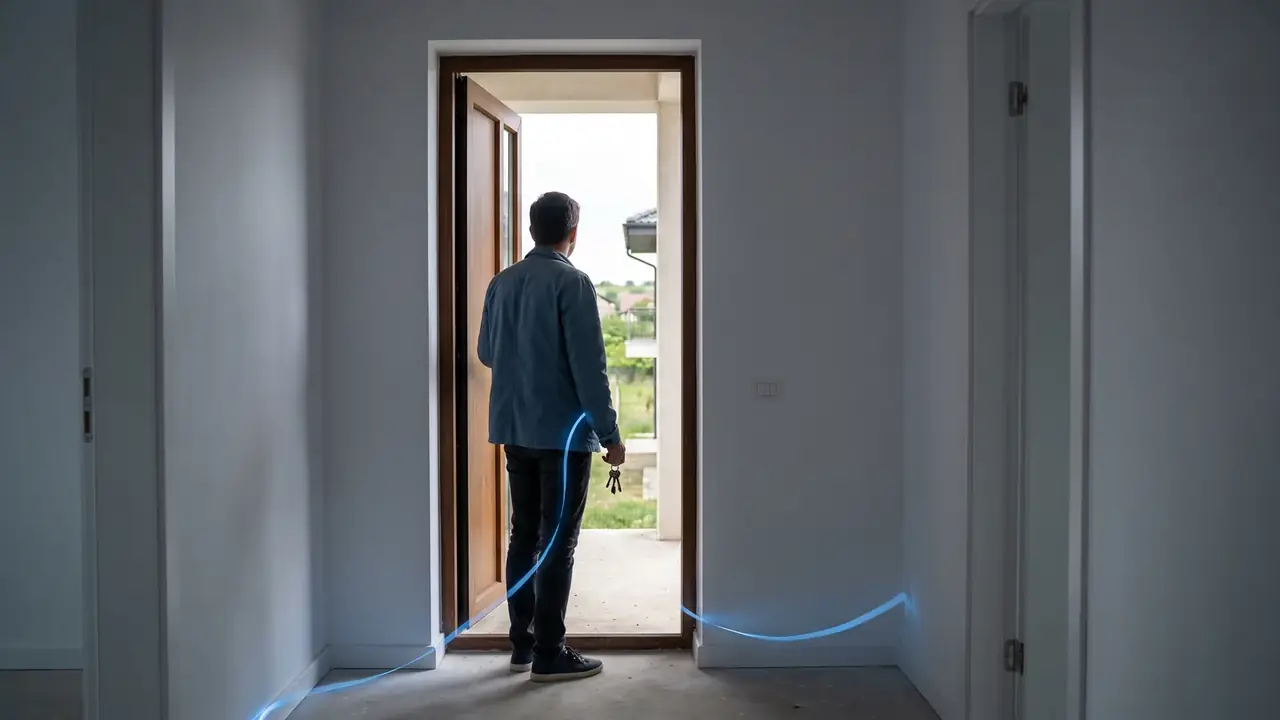
The acceptance on completion of works checks the building; final acceptance comes at the end of the warranty period.
Every defect goes into a written snag list, signed by both sides, with a deadline for each repair.
Under Law 10/1995, hidden defects are covered for 10 years after acceptance, structural defects for life.
Handover report, snag list, energy certificate, technical book extract, warranties, and keys and codes.
A home is legally yours when you are registered in the land register (Cartea Funciară).
New home handover in Romania: the short answer
In Romania, a new building is first accepted on completion of works (recepția la terminarea lucrărilor) under Law 10/1995 on quality in construction, and only then is it handed over to buyers. On handover day, inspect the home room by room, record every defect in a signed snag list, collect the documents, transfer the utility contracts to your name, take out PAD insurance and make sure the home is registered in your name in the land register.
Handover day is the one buyers dream about and prepare for least. Excitement, keys, photos, and suddenly a paper to sign. In Israel there is a well-known ritual around it, the "bedek bayit" home inspection. In Romania, the legal framework is different, and so is the order of things. Here is the full checklist, from the developer's side of the table.
The legal framework: two acceptances
Under Law 10/1995 on quality in construction and its acceptance regulation:
| Stage | What it is | Who takes part |
|---|---|---|
| Acceptance on completion of works | A committee checks that the building was built according to the permit and the design; defects found are recorded with deadlines | The investor (developer), the designer, the contractor, and a representative of the local authority |
| Handover to the buyer | Delivery of the home itself, with a handover report signed by both sides | The developer and you |
| Warranty period | The contractor must remedy defects that appear | Contractor and developer |
| Final acceptance | At the end of the warranty period | The investor and the parties |
| Hidden defects | Liability for 10 years after acceptance | Designer, contractor, other parties |
| Structural defects | Liability for the life of the building | Same |
The difference between the two documents matters. The acceptance report concerns the building as a whole; the handover report concerns your home. Ask to see both.
Before the day: what to ask for in advance
- The acceptance report (procesul-verbal de recepție la terminarea lucrărilor) for the building.
- The date and duration of the handover, so you can come with someone experienced, or a professional inspector.
- The list of finishes in your contract, so you can check what was delivered against what was promised.
- The plans of your home, with its areas.
On the day: the inspection checklist
Go room by room, in daylight, with a torch, a level and a phone camera:
- Walls, ceilings and floors: cracks, stains, uneven surfaces, gaps in the parquet.
- Windows and doors: they open, close and lock; seals are intact; no condensation between the panes.
- Plumbing: run every tap and shower, flush every toilet, look for leaks under sinks.
- Electricity: every socket and switch, the distribution board labelled.
- Heating and air conditioning: turn them on. With underfloor heating, check that each zone heats.
- Roof, balconies and terraces: drainage and slopes; no standing water.
- Outside: fence, gate, paving, garden drainage, the parking spaces.
- Meters: photograph the reading of every meter, with date and time.
Everything goes into a written snag list, signed by both sides, with a deadline for each repair. A defect that is not written down is a defect you will have to prove later.
Documents to receive
| Document | Why it matters |
|---|---|
| Handover report (proces-verbal de predare-primire) | Proves the date of handover and the condition of the home |
| Snag list with deadlines | Your basis for demanding repairs |
| Energy performance certificate | Required for a sale or lease; shows the energy class. See our guide to energy-efficient homes |
| Extract from the building's technical book (cartea tehnică) | Instructions for use and maintenance of the building and its systems |
| Warranties and manuals | Boiler or heat pump, air conditioning, appliances |
| Keys, remotes and codes | Gate, alarm, intercom |
Utilities: putting them in your name
- Electricity. Contract with a supplier of your choice; the distribution operator stays the same. The energy regulator ANRE runs an offer comparison tool.
- Gas, where connected: the same principle, supplier and distributor.
- Water and sewage: a contract with the local operator.
- Waste collection: registration with the local authority or its operator.
- Internet and TV: with the provider of your choice.
Bring your ID or passport, the handover report or the deed of sale, and your meter readings. If you live abroad, a local representative with a power of attorney can do this for you; see our guide to power of attorney in Romania.
A defect that is not written down is a defect you will have to prove later.
Insurance and local tax
- PAD insurance against earthquake, flood and landslide is compulsory for every home. Add optional insurance for fire, water damage and contents. See our guide to home insurance in Romania.
- Local tax: register the home with the local tax office of the town or commune. See our guide to the annual property tax.
Registration in the land register
A home is yours, legally, when you are registered as owner in the land register (Cartea Funciară), kept by ANCPI. In an off-plan purchase, the final contract is signed before a notary once the building is complete and registered, and the notary sends it for registration. Ask for an updated extract showing you as the owner. We explain this in our article on getting the property registered in your name.
When defects appear later
Not every problem is visible on the first day. Under Law 10/1995, hidden defects that appear within 10 years of acceptance, and structural defects for the life of the building, are the liability of the designer, the contractor and the other parties involved. Report every defect in writing, with photos and dates, as soon as you find it. On upkeep after handover, see our guide to villa upkeep costs.
Frequently asked questions
What is the "recepție" of a new building in Romania?
The acceptance on completion of works under Law 10/1995: a committee with the investor, the designer, the contractor and the local authority checks that the building matches the permit and design, and records any defects.
Should I sign the handover report if I find defects?
You can sign it with a detailed snag list attached, with a deadline for each repair. The point is that every defect is recorded in writing.
How long is a builder liable for defects in Romania?
Under Law 10/1995, for hidden defects that appear within 10 years of acceptance, and for structural defects for the life of the building.
Which documents should I receive with a new home?
The handover report, the snag list, the energy performance certificate, an extract from the building's technical book, warranties and manuals, and later an updated land register extract in your name.
Can I receive a new home in Romania without travelling?
Yes, through a representative with a notarised power of attorney, although many buyers prefer to attend the inspection themselves.
The bottom line
Handover day is a legal step, not just a celebration. A signed snag list, a full set of documents, utilities and insurance in your name and an updated land register extract close the purchase properly.
If you are buying off-plan and want to know what your handover will look like, book a 30-minute call with me. We will go through the checklist together, line by line.
Moti Azulay, Compass Group Romania
Sources and data: Law 10/1995 on quality in construction, legislation portal · State Construction Inspectorate (ISC) · Energy regulator (ANRE) · ANCPI land register · PAID, compulsory home insurance.
This article is for general information only and is not legal or technical advice. The terms of your own handover are set by your contract; check them with your lawyer.
Now you know more.

This article is general information, not legal, tax or financial advice. Consult local professionals before any transaction.