In July 2025 the Trump Organization announced a partnership with SDC Imobiliare to build a luxury Trump Tower in Bucharest.
Plans include a tower in central Bucharest, a project in Otopeni and Trump International Cluj-Napoca, approved in principle in March 2026.
Romania has no Branded Residence project today. Trump Tower would be the first, in a segment of 700+ projects worldwide.
Bucharest entered PwC's Emerging Trends in Real Estate: Europe 2026 ranking for the first time, in 30th place.
The Nordis Law's 5% deposit cap, dedicated account and early registration apply to every buyer in Romania.
The smart money is already in: the Trump Organization's move into Romania is not a headline – it is an entry signal into an emerging market just before the rules of the game change.
A market with no branded projects is now getting its first one – and the wave will not stop at a single tower.
Anyone who understands the "spillover effect" knows that international recognition affects the whole market, not just the tower.
The question is no longer whether the market is ripe, but how to enter it safely and with full protection.
When the Trump Organization – the corporation that holds the business interests of the US President's family – announces that it is entering the Romanian real estate market, this is not just another headline. It is a market signal that should interest every investor thinking about Europe in general, and Romania in particular. Why Bucharest is drawing international capital right now is a story of its own, covered in our piece on international investors turning to Bucharest.
Ynet reported that the Trump Organization will partner with the Romanian real estate company SDC Imobiliare to build a Trump Tower in the heart of Bucharest – a luxury residential project that will mark this top international brand's first official entry into the Romanian market. But this story has far deeper layers than a news headline can convey.
Three projects, not one
The Trump Organization's official announcement of July 2025 reveals a broad plan:
Trump Tower Bucharest – a luxury residential tower in central Bucharest. According to G4Media, at least two projects are planned in the capital: one in the central area and one in Otopeni, next to land holdings belonging to businessman Ion Țiriac.
Trump International Cluj-Napoca – the "Transilvania Smart City" project, which received preliminary approval from the city's urban planning committee on 19 March 2026. It includes a 30-storey hotel tower (around 140–150 metres), a residential complex and educational institutions, on a site of around 5.2 hectares. The investment is estimated at around $500 million according to Știri de Cluj – it should be noted that this is a single local source and has not been corroborated by a second source.
Eric Trump, Executive Vice President of the organisation, said in the official announcement published on trump.com: "We are delighted to partner with SDC Imobiliare on this landmark project, which will bring an unprecedented level of quality and service to the Romanian market."
It is important to keep things in proportion: in its coverage, the New York Times noted that Trump's international projects are not immune to failure – pointing to the "Trump Tower" in Belgrade, which was abandoned following a corruption investigation. Romania's political landscape is not simple either: the cancellation of the December 2024 presidential election over suspicions of Russian interference, and the tension with the Trump administration itself over the matter, are a reminder that the Romanian market comes with political uncertainty. That said, the election was re-run in May 2025, Nicușor Dan was elected, and Trump congratulated him – a sign of normalising relations.
The "brand effect" – the data behind the story
This is where the surprising figure comes in. The entry of an international luxury brand into a property market is not just a matter of prestige – it changes the economics of the entire area.
According to Savills' annual Branded Residences report (2024–2025), branded properties command an average premium of 30% over comparable unbranded properties. But the truly important figure is this: in emerging markets where there are no branded projects yet, the premium can reach as much as 54% – and in some cases, a branded project can achieve prices double those of comparable unbranded properties.
Romania today is a market without a single existing Branded Residence project. Trump Tower will be the first. In data terms, this is precisely the scenario that generates the highest premium.
The Romanian market is shifting from a playground for adventurers to an arena for international brands.
Knight Frank reinforces the finding: branded properties enjoy strong rental demand, and research by EHL (the Swiss hospitality management school) shows that branded projects sell up to 30% faster than conventional projects.
The "spillover effect" – what does it mean for those not buying in Trump Tower?
And here is the critical point for the Israeli investor who is not planning to buy in Trump Tower itself: when a luxury project sets a new price benchmark in an area – for example, €3,000–4,000 per sq m – it shapes how the whole area is perceived and the demand for it.
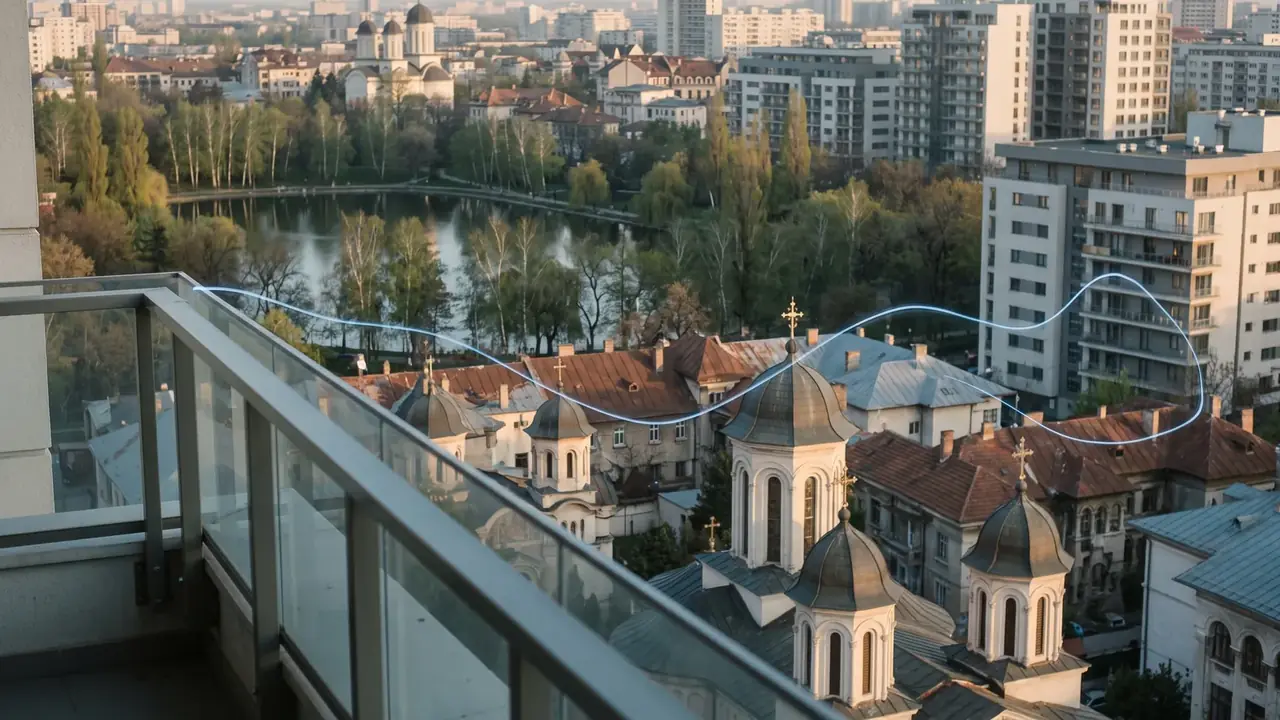
Today, average property prices in Bucharest stand at around €2,200 per sq m according to Imobiliare.ro (December 2025). What is driving Bucharest prices, and where to look, is laid out in our analysis of Bucharest prices.
Trump Tower's arrival reinforces this trend. For anyone buying a property today at a price point below the luxury benchmark, it means a market that is gaining international recognition. A project such as "Compass on the Lake" (covered by Walla Nadlan, in Hebrew), for example, operates in the same Bucharest market that Trump Tower is flagging as "ripe", but at a far more accessible price point, and with the full protections of the Nordis Law.
No coincidence in the timing – the Nordis Law as an accelerator
The Trump Organization's July 2025 announcement of its entry did not happen in a vacuum. It came just ahead of the Nordis Law (207/2025) coming into force in December 2025.
An organisation the size of the Trump Organization, which operates in dozens of countries and manages risk at the highest level, does not enter a market without a legal safety net. The Nordis Law – a deposit of just 5%, funds locked in a dedicated account and released for construction only, land-registry entry with a buyer's caveat as early as the preliminary contract – provides exactly the protection an international investor demands. The Nordis Law may well have been part of what "sealed" the deal. The full mechanism is explained in our article on what the Nordis Law actually does.
These protections apply to every buyer in Romania, not just those buying in Trump Tower. An Israeli investor who buys a villa or an apartment in another project in Bucharest enjoys exactly the same safety envelope. If you are paying a Romanian developer, read also whether your money is actually protected.
Trump Tower Bucharest
Three signals pointing in one direction
Anyone looking at the bigger picture can see three signals converging:
Signal 1: International capital. The Trump Organization is coming in – the first, and probably not the last. According to Savills, there are currently more than 700 Branded Residences projects worldwide, with a similar number in development. The Romanian market, which until now was not on the map for luxury brands, is starting to appear on the radar.
Signal 2: International recognition. Bucharest has entered PwC's "Emerging Trends in Real Estate: Europe 2026" ranking for the first time (30th place), alongside the new M6 metro line (to Otopeni) and the A0 motorway. This is legitimacy that changes how the market is perceived.
Signal 3: Protective regulation. The Nordis Law creates an environment in which both large players and private investors feel protected. Who has been pushed out? Small companies and developers without financial backing. Who remains? Professional players with real capital.
Frequently asked questions
What exactly is the Trump Organization planning in Romania?
According to the official announcement of July 2025, the Trump Organization has partnered with the Romanian developer SDC Imobiliare. At least two projects are planned in Bucharest, one central and one in the Otopeni area, and the "Transilvania Smart City" project in Cluj-Napoca received preliminary approval from the city planning committee on 19 March 2026.
What is the "spillover effect"?
When a luxury project sets a new price benchmark in an area, it also affects how the area is perceived and the demand for the properties around it. That is why the arrival of an international brand matters to anyone buying elsewhere in the city, not only to buyers in the tower itself.
Do the Nordis Law protections apply to buyers outside Trump Tower?
Yes. The Nordis Law (207/2025) applies to every buyer in Romania: an advance of only 5%, funds held in a dedicated account and released for construction only, and a caution notice in the land register from the preliminary contract stage.
Is a big-brand project a guarantee of success?
No. The New York Times recalled the "Trump Tower" in Belgrade, abandoned after a corruption investigation. Romania also carries political uncertainty: the presidential election was annulled in December 2024 and re-run in May 2025.
Do I need to travel to Romania to sign the deal?
Signing before a Romanian notary cannot be done remotely. If you cannot attend, you can give a power of attorney to a lawyer or representative who signs on your behalf.
The bottom line
The Trump Organization's entry into Romania is first and foremost a "smart money signal" – an indication that the smart money has already done its due diligence, analysed the regulation and chosen to come in. It is a recognition of the market's maturity, and it matters to anyone buying in the city, not only to buyers in the tower itself.
For the Israeli investor who is still weighing it up, the message is clear: the Romanian market is shifting from a playground for adventurers to an arena for international brands. Those who get in now, at a price point that is still accessible and with the full protections of the Nordis Law, are entering a market that is more regulated and better protected than ever.
As the saying goes in real estate: "The best time to buy was yesterday. The second-best time is today."
This article is intended for general information purposes only and does not constitute tax, legal or financial advice.
Before entering into any transaction, we recommend consulting local experts.
Now you know more.
This article is general information, not legal, tax or financial advice. Consult local professionals before any transaction.