The developer paid a deposit under a preliminary agreement and undertook to raise the balance. After two extensions, the sellers cancelled and kept the deposit.
The plan: sell apartments in a presale and raise financing. In practice 2 of more than 30 apartments were sold, and demand dried up.
After 7 October, one lender said it would not finance and the other began raising difficulties. The investor would not also fund finishing the building.
Ilan's rule: do not sign before you have secured at least 50% of the first-stage financing, from different sources.
A conservative economic check also asks where the money will come from, and what happens if the presale stalls or the lender pulls out.
The episode in brief
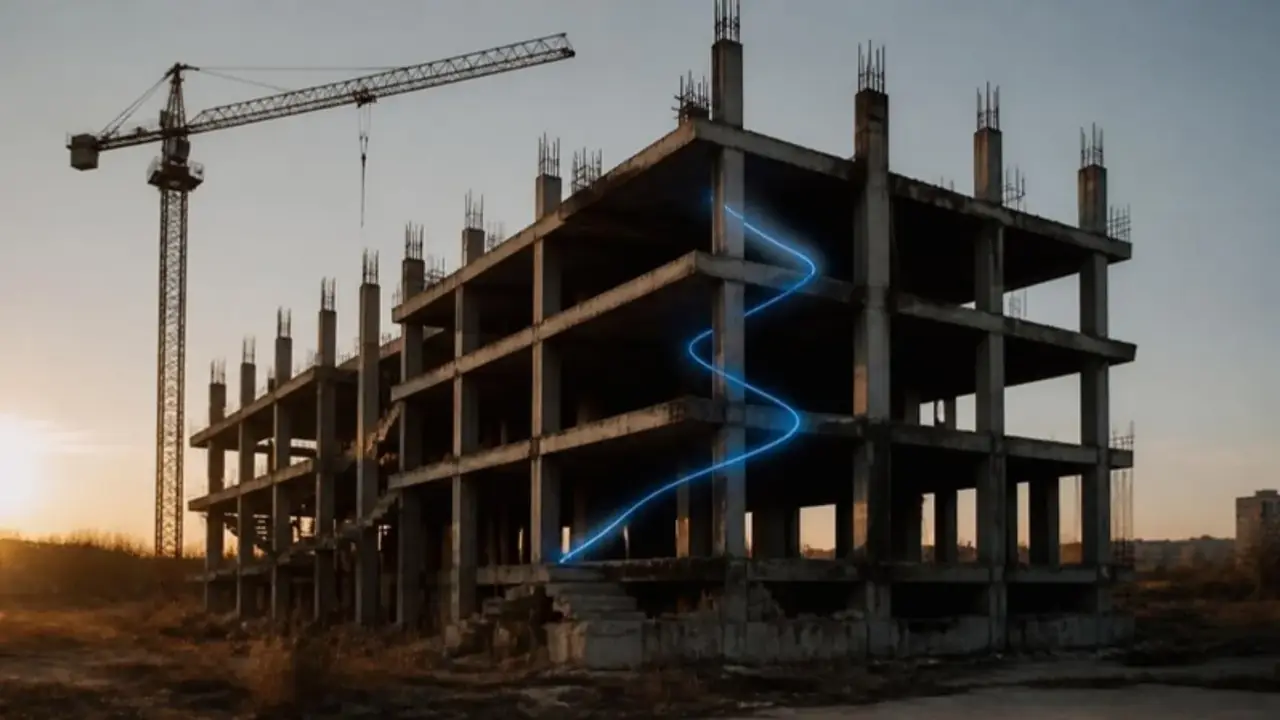
A developer signed a preliminary agreement to buy a building under construction in a European capital. He paid a €10,000 deposit and undertook to raise the balance within six months. The plan was to sell apartments in a presale and raise financing. Sales stalled, the two lenders he was negotiating with pulled back, and after two extensions the sellers cancelled the agreement and kept the deposit.
Put simply: he signed for the purchase, and only then started looking for the money.
This is the third episode of the series "Deals that failed". In each episode we take a real deal from the weekly column of attorney Ilan Leibovitch, "Two international real estate stories a week", and ask: what happened, at what moment it went wrong, and which check would have caught it. Names have been removed, and the original says only that the building was "in a European capital".
What happened
From the column of attorney Ilan Leibovitch (2.3.2024), in brief:
Because of an inheritance dispute between the sons of a local developer, it was decided to sell a building that was under construction. Ilan's client, an Israeli developer, signed a preliminary agreement to buy it. He paid a €10,000 deposit, and it was agreed that he would raise the balance within six months.
Straight after signing he began marketing, and sold two of the more than 30 apartments in the future building in a presale. He was optimistic. Then, as the public debate in Israel over the judicial overhaul began, demand dried up. For several months he could not sell. As the completion date approached the pressure grew, and he began negotiating with banks in the building's country and with other lenders.
When it was clear he would not raise the balance in time, Ilan tried to persuade him to cut his losses: to lose the €10,000 and walk away, because the uncertainty over the fundraising was too high. In the end Ilan was sent to negotiate an extension. In return for two more months, the client paid a further €10,000 on account of the price. He raised that money from an investor. As the extension neared its end, with intensive negotiations under way with two lenders, the investor agreed to add a further sum to buy more time.
Then came 7 October. Both lenders suspended or stopped the talks. One announced it would not finance the purchase, and the other began raising difficulties. They tried to persuade the investor to fund the whole purchase, but he said, "perhaps rightly", Ilan writes, that more money would be needed to complete the construction, and that he could not fund that as well. He feared the client would not be able to complete the project.
On a Zoom call, after two extensions, the sellers' lawyers announced that the sellers would wait no longer, that they were cancelling the preliminary agreement and keeping the deposit. Even an offer to transfer more money on account of the price did not help.
The moment it went wrong
It is easy to blame 7 October, or the situation in Israel. But those events only exposed the problem. The deal went wrong on the day the preliminary agreement was signed, before anyone knew where the money would come from.
The whole plan rested on three things, none of them closed:
He signed for the purchase, and only then started looking for the money.
- Presale sales, which depend on buyers' mood.
- Lenders, whose negotiations had not finished.
- One investor, who in the end also looked at the money needed to finish the building, not only the purchase.
Ilan writes that this is not rare: a good share of the developers he works with go into a deal without knowing all their sources of financing, and without the capital required.
Which filter would have caught it
In a column of 27.7.2024 Ilan set out a method of initial screening in three stages. Here is how this deal looks against each of them:
| The filter | What it checks | Would it have caught this? |
|---|---|---|
| A. Economic feasibility | A business plan with all costs and all income, on conservative assumptions and from several sources | Yes. This is the filter. A conservative plan would have included the sources of money for the purchase and for finishing the building, and asked what happens if the presale stalls |
| B. Planning and physical check | The property's condition, building rights, and real timelines for construction and sale | Partly. A realistic sales timeline would have shown how hard it is to sell enough apartments within six months |
| C. Legal check | The agreements and the property's status | Partly. An option agreement, instead of a preliminary agreement with a deposit, would have limited the damage |
The three lessons Ilan wrote at the end of that column:
- Do not sign an agreement before you have secured at least 50% of the financing for the first stage of the project.
- Always combine several sources of financing, and do not rely on one investor, one lending bank or your own financial capacity alone.
- Afraid to miss an opportunity? Learn to work with an option agreement, and weigh the risk and your own capacity.
What it means in Romania
The original does not say which country this happened in. But in another column, two years later, Ilan told the story of an Israeli developer in Bucharest (23.5.2026) who bought land in cash and only then went to the bank. A Romanian bank agreed in principle to a certain level of financing, then cut it significantly in the middle of the negotiations, and said the land would not count in the calculation. The project went ahead, but with more expensive financing.
When the developer asked Ilan what he should have done differently, the answer was: sit down with the bank before buying the land, with a detailed plan, and get in writing what the bank is willing to finance and on what terms. "Local banks abroad do not cheat anyone," Ilan wrote. "They are simply not bound by what was said in introductory meetings."
In Romania there is another reason to close the financing in advance: under Law 169/2026, off-plan buyers' advances go into a separate developer account dedicated to the project only, and are released as construction progresses and with the site supervisor's approval (Art. 422(10)). In other words, a developer cannot build a plan in which buyers' money funds the start of the works.
And if you are a buyer rather than a developer: ask the developer how the purchase and the construction are financed, and what happens to your money if the financing does not arrive. The four protections a buyer should ask for are set out in our guide.
Checklist: before you sign a purchase that depends on financing
- Map sources and uses. How much for the purchase, how much to finish the building, and where every euro will come from.
- Secure at least 50% of the first-stage financing before signing, as Ilan recommends.
- Get it in writing. A bank's verbal agreement is a starting point, not an approval.
- Do not rely on one source. Not one investor, not one bank, and not presale sales alone.
- Run a bad scenario. What happens if sales stop for six months? If the lender pulls out?
- Consider an option agreement. It gives you time to test the financing without committing to the whole purchase.
- Set an exit point in advance. In the story, Ilan suggested walking away and losing the deposit once the risk was clear. Decide in advance when you stop.
- Count the money to finish the building too. The investor in the story pulled back precisely because of that sum.
Frequently asked questions
What is the difference between a preliminary agreement and an option agreement?
In a preliminary agreement you commit to buy, and you usually pay a deposit you can lose if you do not complete. An option agreement gives you the right to buy within a set period, without an obligation to complete. That is why Ilan recommends learning to work with one when you fear missing an opportunity. The exact terms depend on local law and on the wording of the agreement.
How much financing should be secured before signing?
Ilan's recommendation in the column: at least 50% of the financing for the first stage of the project, from different sources. This is his rule of thumb, not a legal requirement.
A Romanian bank said it will finance. Is that enough?
No. Based on an experience Ilan described from Bucharest, what is said in an introductory meeting is a starting point. Ask the bank in writing what it is willing to finance and on what terms, before you buy.
In Romania, can construction be funded from buyers' money?
Under Law 169/2026, buyers' advances go into a separate project account and are released as construction progresses, with the site supervisor's approval. So a developer needs his own capital and financing to start building.
The bottom line
This purchase did not fail because of a bad property. It failed because the commitment was signed before the money was secured, and the money depended on three uncertain sources.
The check that would have caught it is the economic check, when it also asks where the money will come from and what happens if it does not come.
If you are building a plan for a purchase or a project in Romania, book a half-hour call with me. We will go through the sources of money together, and what needs to be in place before you sign.
Moti Azulay, Compass Group Romania
Sources: The column "Two international real estate stories a week" by attorney Ilan Leibovitch, 2.3.2024 ("Which comes first, the financing or the development?"), 27.7.2024 ("Go/No Go feasibility check") and 23.5.2026 ("He knew how to build. He knew how to sell.") · Law 169/2026, the Planning and Construction Code, Art. 422 (Monitorul Oficial no. 661, 10.8.2026)
This article is general information only and is not legal or financial advice. The stories are based on the column of attorney Ilan Leibovitch, with identifying details removed. Attorney Ilan Leibovitch is a partner in Compass Group Romania, and in the company's transactions he represents the company only. We recommend that every buyer hires an independent lawyer. The rules are correct as of 17 October 2026.
Now you know more.

This article is general information, not legal, tax or financial advice. Consult local professionals before any transaction.

