"What do you earn after I get the keys?" Most developers will stammer, because their real answer is "nothing".
In a one-shot game neither side has an incentive to invest in the relationship. In a repeated game, the other side profits only if you do.
The property works, you sleep well, you recommend. A returning client or a referred friend costs the developer almost nothing.
Contractual anchoring with an SLA, transparent management fees and an orderly exit. A good model is still not a good contract.
The model needs the developer's own equity, years of patience and a size limit: nobody can personally manage a thousand units.
The one question worth asking every developer
In every meeting with investors, including meetings with me, I suggest asking one question. Not about the price, not about the specification.
"What do you earn after I get the keys?"
Most developers will stammer, because their real answer is "nothing". Their profit ends on the day yours begins.
The shared interests model is a completely different answer to that question. For us it translates into one sentence: "our goal is not to sell you a villa". That is not a modest slogan. It is arithmetic, and in this article we will take it apart.
The problem: the deal ends exactly when you need someone most
The biggest risk for a property investor abroad is not the market. It is managing from a distance.
That is exactly where the traditional model breaks. A typical developer makes his money on sale day, and from then on his focus is the next project. Defects? You against the contractor. A tenant who doesn't pay? You against the tenant. (What that looks like in real life, on one February day, is told in our article on the developer after handover.)
One-shot game versus repeated game
Game theory has a name for this. A one-shot game is a situation in which both sides know the relationship ends with a single transaction. Neither side has an incentive to invest in the relationship beyond it.
The well-known fix is to turn it into a repeated game: a structure in which the other side profits only if you profit, again and again, over years.
That is the whole idea. Not blind trust in a developer, but a structure in which even an entirely self-interested developer will do the right thing, because it pays him to.
What is the shared interests model?
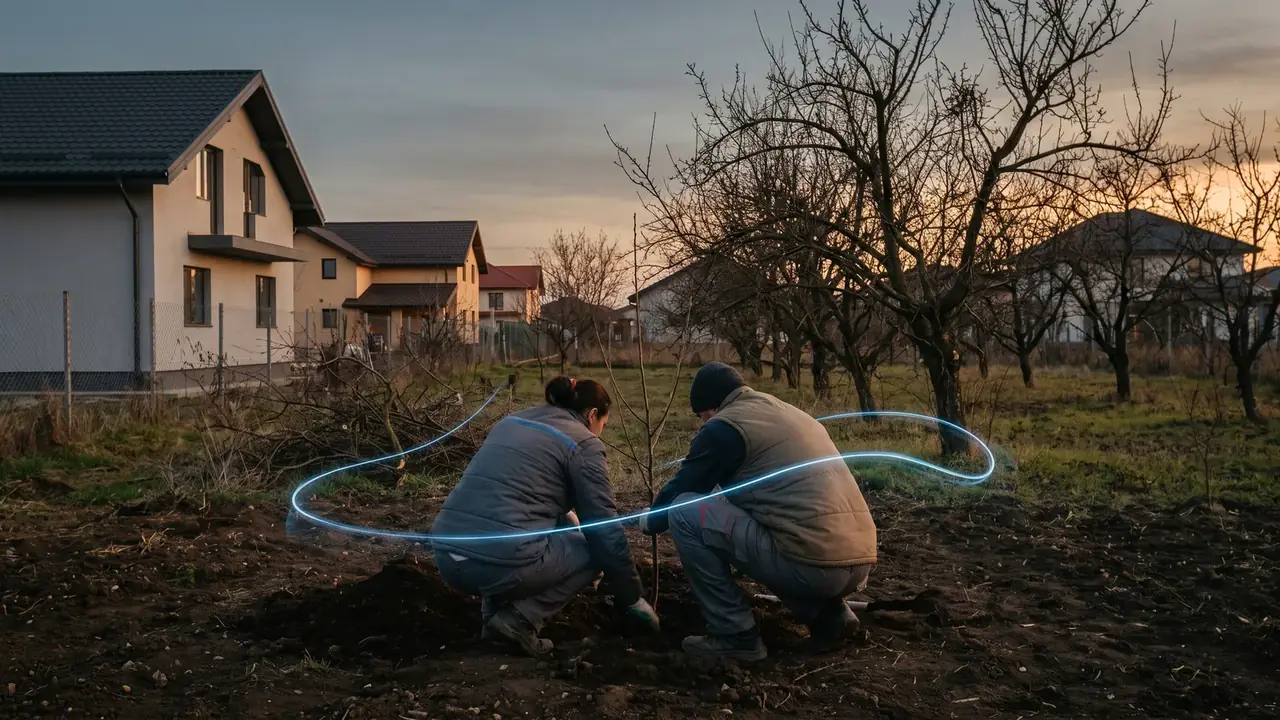
In the Compass Group Romania model, the developer stays in the project after handover, managing it directly rather than through an anonymous outside management company.
The difference is structural. An outside company is a service provider on commission. A developer who manages himself is a stakeholder, whose reputation, ongoing income and next project depend on your property.
Three commitments follow from this:
The most profitable way for a developer to grow is to make sure existing investors do well and sleep well.
- Defects: every repair demand to the contractor is handled by the developer, the contractor's biggest client, with bargaining power a single investor does not have.
- Profit: tenants, occupancy and collection, because the developer's management income only exists when your property is working.
- Peace of mind: one point of contact for everything, in Hebrew, English or Romanian. Not a call centre, but the company that built the house.
The first commitment is the model's hidden asset: during the warranty period, a lone investor facing a Romanian contractor is at a disadvantage of language, distance and leverage. When the developer stays, that leverage works for you.
Traditional model versus the shared interests model
| Traditional model | Shared interests model | |
|---|---|---|
| When the developer earns | Once, on sale day | Over years, from the sale and from management |
| Who manages the day after | An outside company, or nobody | The developer himself, directly |
| Who faces the contractor over defects | The investor, alone, in Romanian | The developer, the contractor's biggest client |
| Where the interest lies after handover | In the next project, the next buyer | In your property being rented and working |
| What the investor gets | A property, plus remote management as an open risk | A property, plus someone who profits from your peace of mind |
The win-win flywheel
How it works in practice, from your point of view:
- The property works. The developer handles defects, tenants and operations, because his ongoing income depends on it.
- You sleep well. The report arrives, and one point of contact answers every question.
- You recommend. A satisfied investor comes back for the next investment and brings friends.
And the economic point, out in the open: acquiring a new client in international real estate is very expensive. Marketing, conferences, months of building trust. A returning client or a referred friend costs almost nothing.
A developer who understands this discovers that the most profitable way to grow is to make sure existing investors do well and sleep well. That is the win-win. Not a slogan, arithmetic.
Three questions to check in any shared interests model
A good model is still not a good contract. Check three things, with us too:
- Contractual anchoring. The management commitments are written into an agreement with an SLA, not left in the sales pitch. The clauses such an agreement must contain are listed in our guide to choosing a property manager.
- Transparent pricing. What the management fees are, what they are derived from and what they include. A healthy model is not afraid of numbers.
- An exit mechanism. An agreement that allows an orderly exit shows the developer's confidence in his own model.
As for our pricing: management costs money, with us and everyone else. The difference is that with an outside company you pay someone who earns the commission regardless, and with us you pay someone who earns only when the property works. You will get the exact figures in writing, before signing.
Why not every developer uses the shared interests model
Because it is slower and more demanding.
A developer who stays to manage needs his own equity, not just buyers' advances. He needs years of patience. And he is limited in size: nobody can personally manage a thousand units.
Most developers prefer to sell, book the profit and move on. That is legitimate. Just know which kind of developer you are buying from. More questions worth bringing to every meeting are in our five questions to ask a developer.
Frequently asked questions
What stops the developer from raising management fees once I'm in?
Two things, both in writing. The fee structure and the terms for updating it are set in the management agreement signed before the purchase, and the exit mechanism lets you leave if a new term is not acceptable to you. A developer who knows you can leave has every incentive not to give you a reason.
The developer chose the contractor and also handles defects with him. Isn't that a conflict of interest?
A sharp question, and the answer lies in the structure. The developer's management income depends on the property being rented and working, and a property with open defects is not working. Every unresolved defect costs the developer money every month. In any case, your statutory warranty rights stand, regardless of the management agreement.
What if I want to manage it myself, or change manager?
The property is yours, registered in your name in the land register, and the choice is yours. The management agreement includes an orderly exit mechanism, and the model is a service, not a lock-in.
Does the shared interests model replace legal due diligence?
No. The model aligns incentives after handover, but before signing you still need an independent lawyer to check the land register extract, the permits and the preliminary contract. The binding terms are those written in the purchase and management agreements.
How can I tell whether a developer really works this way?
Ask what he earns after handover, and ask to see the management agreement before you sign. If his management fees are derived from the rent actually collected, and the agreement has an SLA and an exit mechanism, the model exists on paper and not just in the presentation.
The bottom line
Most investors compare price per m². Few compare incentive structures, and that is the comparison that decides what the ten years after handover will look like.
Adv. Ilan Leibovitch said in his interview that, for him, this is the most important question after registration, and that his personal preference is a model in which the developer himself stays to manage.
If you would like to see how this model is written into our agreement, book a 30-minute call with me. We will go through the management fees, the SLA and the exit mechanism, and you can ask me the question from the opening.
Moti Azulay, Compass Group Romania
Sources and data: Law 10/1995 on construction quality, Romanian legislation portal · National Agency for Cadastre and Land Registration (ANCPI) · Interview with Adv. Ilan Leibovitch, Compass Group Romania investor guide (August 2026).
This article is for general information only and is not legal, tax or financial advice. The description of the management model is general; the binding terms are those set out in the purchase and management agreements. Before any transaction, consult local experts.
Now you know more.

This article is general information, not legal, tax or financial advice. Consult local professionals before any transaction.