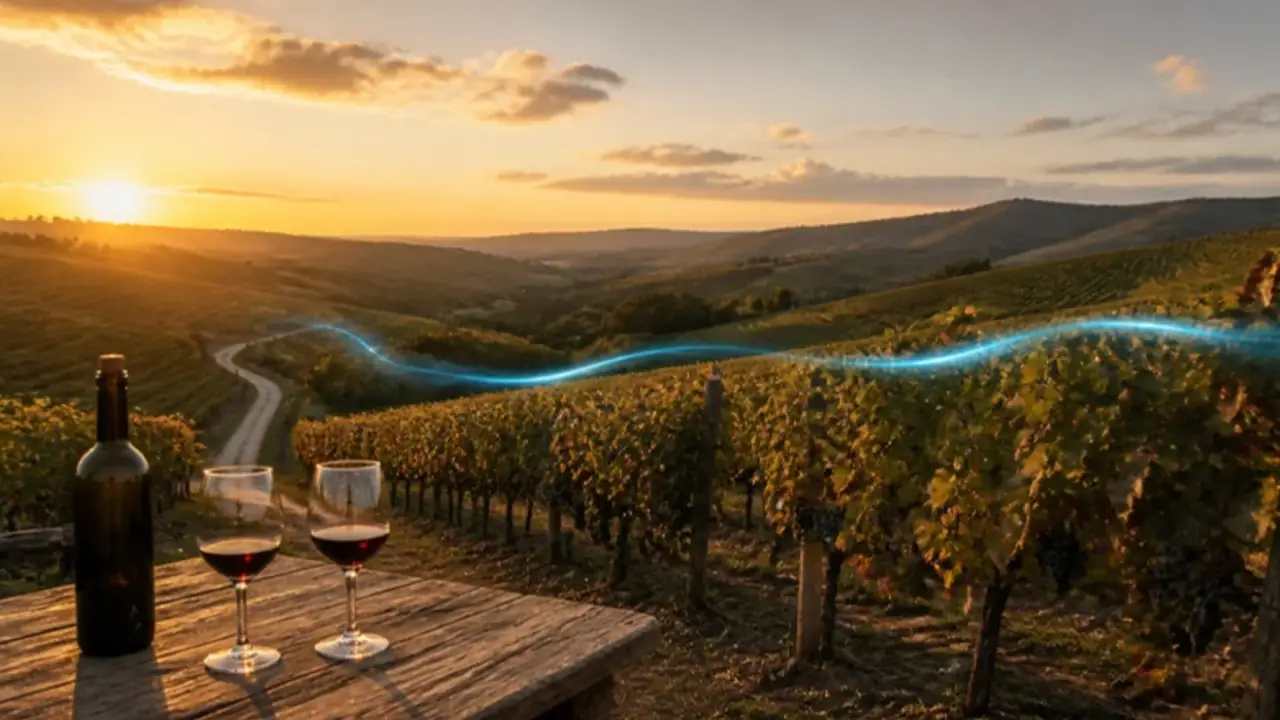
According to the OIV, Romania produced about 3.3 million hectolitres of wine in 2025, sixth in the European Union, and its vineyard area is the fourth largest.
According to the OIV, Romania consumed about 3.5 million hectolitres of wine in 2025, more than the roughly 3.3 million it produced.
According to Wines of Romania based on INS data, in 2023 Romania imported wine worth about €268 million and exported about €72.5 million.
The citadel of Sighișoara, still lived in today, has been a World Heritage Site since 1999. Its Clock Tower rises 64 metres.
According to OpenStreetMap routing, Valea Călugărească in Dealu Mare is about 45 km from Balotești, roughly 50 minutes without traffic.
Wine, freedom and love: the short answer
Romania is a genuine wine country, even if few visitors know it. According to the International Organisation of Vine and Wine (OIV), it produced about 3.3 million hectolitres of wine in 2025, sixth in the European Union. Its vineyard area, 187,000 hectares, is the fourth largest in the EU. And Romanians drink their own wine: in 2025 they consumed about 3.5 million hectolitres, more than the country produced.
Wine is only the beginning. North of Bucharest a wine road of villages and hills begins. Beyond the mountains, medieval towns are waiting, and in the south-west the Danube cuts through the Carpathians. Since 2025 there are no passport checks at the land borders with Schengen neighbours, so you can simply keep driving.
In plain words: Romania is a place where you can drink good wine an hour from home, sleep in a medieval town and set off on a road trip without checkpoints. That is the freedom this article is about.
A wine country that drinks its own wine
The numbers explain why Romanian wine is easy to find in Romania and hard to find abroad. According to an analysis by Wines of Romania based on INS data, in 2023 Romania imported wine worth about €268 million and exported only about €72.5 million. Imports were 3.7 times larger than exports.
In other words, most Romanian wine stays at home: on the family table, in restaurants and at the wineries themselves. For anyone living here, that means a wide choice of local wines you will rarely see on a shelf abroad. On the list you will meet names such as Fetească Neagră, Fetească Albă and Grasă de Cotnari, which World Travel Guide lists among Romania's best-known wines. It is worth asking the waiter for a glass of something local rather than the familiar imported label. We covered the economics of the sector, exports and medals in our article on Romania's food and wine scene.
The Dealu Mare wine road
The closest and simplest option is Dealu Mare, on the hills north-east of Ploiești. The "Wine Road" (Drumul Vinului) of Prahova County is a tourism project the authorities launched in 2004, according to Adevărul. It runs through, among others, Valea Călugărească, Urlați, Ceptura, Tohani and Mizil.
Worth knowing in advance: this is not a polished wine route like Tuscany's. In July 2025 Playtech reported that the signs were rusty and official promotion was still lacking. Mihaela Tyrel de Poix, from the winery family in Ceptura, told the site that when she first heard about the "Wine Road" she asked where the road was. The experience is built one winery at a time, not by following signs.
According to OpenStreetMap routing, Valea Călugărească is about 45 km from Balotești, roughly 50 minutes without traffic. The list of regions, the DOC label and the etiquette for visiting a winery are in our guide to wine regions near Bucharest. The most important rule of all: whoever drives does not taste.
Tasting in the city: Bucharest wine fairs
You don't have to drive to a vineyard to meet the wineries. Bucharest hosts wine fairs where producers pour their wines for tasting. According to the Zile și Nopți events calendar, the RO-Wine fair ran in two editions in 2026 at Fratelli Studios: in spring, 22–24 May, and in autumn, 9–11 October. The organisers describe it as a festival dedicated to premium wines, with tastings, masterclasses and cooking.
The harvest itself usually takes place in September and October. That is when the vineyards are at their liveliest, and the time to book a winery visit in advance.
North of Bucharest, the wine road starts less than an hour from your door.
Places for lovers: Transylvania and the Danube
Sighișoara. The citadel of Sighișoara, in Mureș County, has been a UNESCO World Heritage Site since 1999. According to the county tourism site, it is a citadel people still live in, and its symbol is the 64-metre Clock Tower. Cobbled streets, colourful houses and views over the Târnava valley. This is a long-weekend destination: according to OpenStreetMap, about 270 km from Balotești, roughly four and a half hours' drive.
The Danube Gorges (Cazanele Dunării). In Mehedinți County, near the village of Dubova, the Danube squeezes between the Carpathians in a narrow gorge. According to Spotmedia, the face of the Dacian king Decebal is carved into the rock, a sculpture 55 metres high, and beside it stands Mraconia Monastery, built after 1989 to replace an older monastery that was flooded. River cruises leave from the port of Orșova. It is a long drive, about 410 km from Balotești according to OpenStreetMap, so it deserves at least two nights.
A Romanian wedding: a whole night
In Romania a wedding is a big event, and its customs say a lot about the culture. In June 2026 the site Știri pe surse described several well-known traditions:
- "Stealing the bride" (furatul miresei): guests "steal" the bride, and the groom has to ransom her with a declaration of love, a dance or a bottle.
- The godmother and the hen (nașa și găina): in parts of Muntenia and Oltenia, the godmother dances with a decorated hen and the groom "buys" it in a good-humoured haggle. It once symbolised abundance and fertility.
- The bride's hora (hora miresei): in villages in Moldavia and Muntenia, family and neighbours dance a hora in front of the house before the bride leaves for church.
- Removing the veil at midnight: the godmother replaces the bride's veil with a headscarf, a symbol of the passage into married life.
Notice that the godmother (nașa) appears in several of these customs. Traditions vary from region to region and from family to family, and not all of them are practised at every wedding.
The freedom of the road
Freedom in Romania is also freedom of movement. According to the European Commission, checks at Romania's internal land borders were lifted on 1 January 2025, so a drive to Schengen neighbours no longer stops at a barrier. We told the long story of Romania's road to the EU and Schengen in our history lesson on the EU and Schengen.
The most famous road of all is the Transfăgărășan (DN7C), a seasonal mountain road. In 2026 it opened on 12 June, according to Gândul quoting the national roads company CNAIR, on the stretch between Bâlea Cascadă and Piscul Negru, with traffic allowed from 07:00 to 21:00. CNAIR warned that bears come close to the road and that feeding them is forbidden and fined. We go deeper into the mountains themselves in Nature and mountains.
Where to start: a table
Driving distances from Balotești, according to OpenStreetMap routing, in free-flowing traffic.
| Place | Where | Distance from Balotești | Why go |
|---|---|---|---|
| Valea Călugărească | Dealu Mare, Prahova | 45 km, about 50 minutes | Wineries on the wine road, half a day |
| Urlați | Dealu Mare, Prahova | 66 km, about an hour | The heart of the wine region |
| Drăgășani | Vâlcea | 218 km, about 2 hours 55 minutes | Vineyards in the Olt valley, a weekend |
| Sighișoara | Mureș | 269 km, about four and a half hours | Medieval citadel, UNESCO |
| Dubova, Danube Gorges | Mehedinți | 410 km, about six hours | The Danube between mountains, cruises |
A sample weekend
- Friday afternoon: leave Balotești for Dealu Mare and a winery visit booked in advance. One driver does not taste.
- Saturday: head north to Sighișoara, walk the citadel and climb up to the Clock Tower area.
- Sunday: drive home at an easy pace. If it is summer and the Transfăgărășan is open, consider the scenic route, and check CNAIR's opening hours beforehand.
Frequently asked questions
How much wine does Romania produce?
According to the OIV, about 3.3 million hectolitres in 2025, sixth in the European Union. In the same year Romania consumed about 3.5 million hectolitres, more than it produced.
What is the Dealu Mare wine road?
A tourism route in Prahova County, launched by the authorities in 2004, through the wine villages between Ploiești and Mizil. Signage is patchy, so plan around specific wineries and book ahead.
Which romantic place is worth a weekend?
Sighișoara, a medieval citadel people still live in, a World Heritage Site since 1999. If you have more time, the Danube Gorges near Dubova.
When is the Transfăgărășan open?
Only in the warm season. In 2026 it opened on 12 June, with traffic from 07:00 to 21:00 on the mountain stretch. Dates change with the weather, so check CNAIR's announcements.
The bottom line
Romania offers a kind of freedom that is rare so close to home: good local wine, towns that look like they come from a storybook, a great river between mountains and open roads into Europe. North of Bucharest, the wine road starts less than an hour from your door.
Moti Azulay, Compass Group Romania
Sources: OIV, State of the World Wine Sector in 2025 (May 2026) · Puterea, wine imports and exports 2023 according to Wines of Romania and INS (in Romanian) · Adevărul, the Prahova wine road (in Romanian) · Playtech, "Romania's Tuscany", July 2025 (in Romanian) · Zile și Nopți, RO-Wine Autumn Edition 2026 (in Romanian) · Visit Mureș, the Medieval Fortress of Sighișoara · World Travel Guide, Romania food and drink · Spotmedia, the Danube Gorges (in Romanian) · Știri pe surse, Romanian wedding customs, June 2026 (in Romanian) · European Commission, Bulgaria and Romania becoming fully part of Schengen · Gândul, Transfăgărășan opening, 12 June 2026 (in Romanian) · OpenStreetMap routing (OSRM)
This article is for general information only. Distances and driving times are estimates and assume free-flowing traffic. Event dates, road opening hours and winery programmes change, so check them before you set off. Places are mentioned for information, not as recommendations. The information is correct as of 23 October 2026. Never drink and drive.
The good life in Romania
- Wine, freedom and love (you are here)
- Food, Michelin and everything in between
- Architecture
- Art
- Fashion
- Theatre
- Music
- Nature and mountains
- Spa and wellness
- Cafés, bars and nightlife
Now you know more.
This article is general information, not legal, tax or financial advice. Consult local professionals before any transaction.