According to OpenStreetMap routing, Sinaia in the Prahova Valley is about 105 km by road from Balotești, and Poiana Brașov about 154 km.
According to a study by Transilvania University of Brașov, presented by the Environment Ministry in December 2025, based on about 24,000 genetic samples.
According to the trail's website, 1,600 km from Putna to Drobeta-Turnu Severin, through 10 counties in 85 stages.
The delta has been a World Heritage Site since 1991. According to UNESCO, the biosphere reserve has 312 bird species and about 90 fish species.
Retezat was founded in 1935 and is Romania's first national park. According to the park, it has more than 80 glacial lakes.
Nature and mountains: the short answer
Romania has the longest stretch of the Carpathian arc. According to the Romanian Presidency, that is more than half the area of the mountain range in Europe. Its forests are home, according to a study presented by the Environment Ministry in December 2025, to between 10,657 and 12,787 brown bears. And at the eastern edge, where the Danube flows into the Black Sea, lies the Danube Delta, a UNESCO World Heritage Site since 1991.
From north Bucharest the mountains are closer than you might think. According to OpenStreetMap routing, Sinaia is about 105 km by road from Balotești, and Poiana Brașov about 154 km. The delta is further, about 315 km to Tulcea, so it is a weekend rather than a day.
In plain words: in the morning you are in north Bucharest, and by midday you are in the mountains. Skiing in winter, hiking in summer, and a long weekend in the delta when you want water and birds.
The Carpathians: mountains, lakes and ancient forest
Romania's first national park, Retezat, was founded in 1935. According to the park's website, it has more than 80 glacial lakes, and UNESCO recognised it as a biosphere reserve in 1979. The park originally covered about 13,000 hectares; today it covers more than 38,000. Fifty-four of the lakes are permanent, and according to the park they make up about 38% of Romania's glacial lakes. This is a place for a trip of several days, not an afternoon.
Today Romania has, according to Wikipedia, 14 national parks, among them Piatra Craiului near Brașov, Ceahlău and the Rodna Mountains.
The forests are a story in themselves. In 2017 about 24,000 hectares of ancient beech forests in Romania, across eight sites, were added to the UNESCO World Heritage List as part of a joint site shared by several European countries. Among the sites: Cozia, Domogled-Valea Cernei and Șinca.
Bears: what you need to know
According to a study by Transilvania University of Brașov, funded by the EU and presented by the Environment Ministry in December 2025, between 10,657 and 12,787 brown bears live in Romania. The study was based on about 24,000 genetic samples.
In practice, this means that in the mountains, and sometimes on the edges of towns, you may meet a bear. A few simple rules: don't feed them, don't get close to take photos, don't get out of the car when a bear is by the road, and keep food and rubbish sealed. On trails it is customary to walk in a group and make noise. Pay attention to announcements from local authorities and the parks as well.
The Transfăgărășan: the most famous road
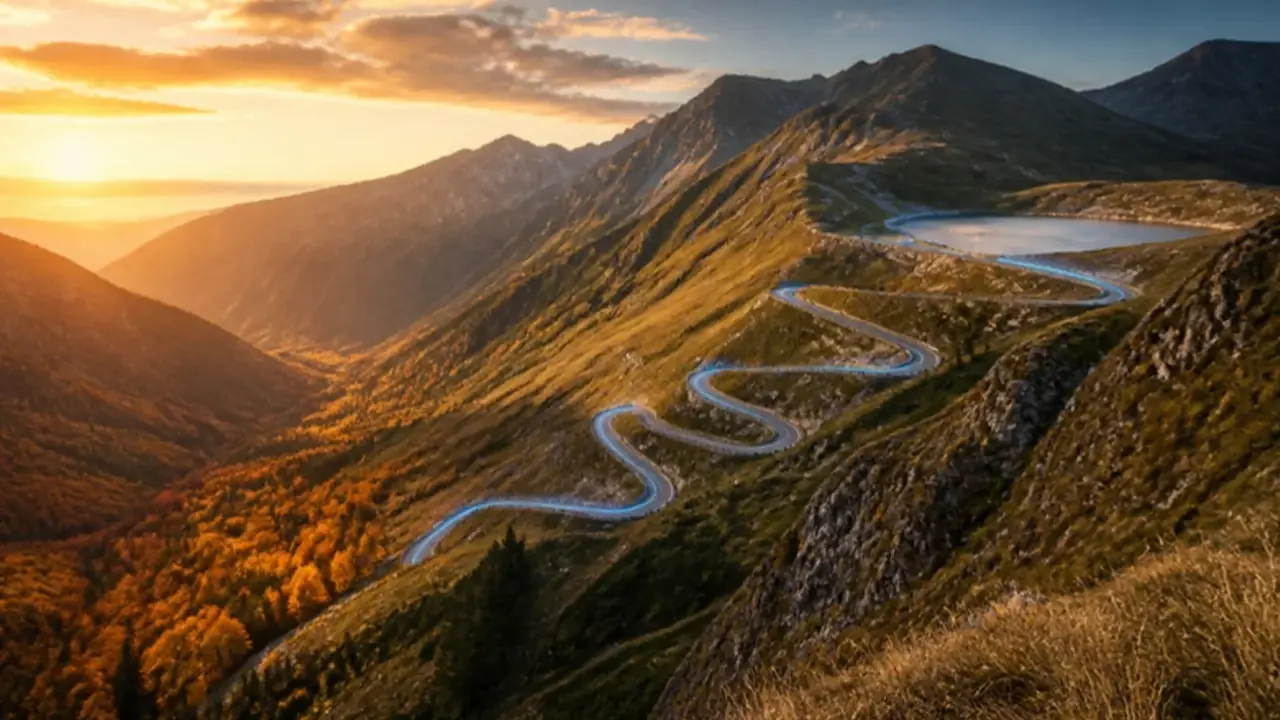
The DN7C, the Transfăgărășan, crosses the Făgăraș Mountains from north to south. The upper section, around Bâlea Lake (Bâlea Lac), climbs above 2,000 metres. This section closes every winter because of snow and avalanches. In 2026 the road had been closed since 20 October 2025. The roads authority CNAIR announced in June 2026 an expected opening on 12 June, with traffic only between 07:00 and 21:00 on the Piscul Negru–Bâlea Cascadă section. When the road is closed, you can go up from Bâlea Cascadă to the lake by cable car.
According to OpenStreetMap, the Vidraru Dam on the southern side is about 200 km from Balotești, and Cârțișoara on the northern side about 242 km. Check CNAIR's website to see whether the road is open before you set off.
Via Transilvanica: walk one stage
Via Transilvanica is a long-distance hiking trail that crosses Romania from Putna in the north-east to Drobeta-Turnu Severin on the Danube. According to the trail's website, it is 1,600 km long, passes through 10 counties and eight historical regions, and is divided into 85 stages.
In the morning you are in north Bucharest, and by midday you are in the mountains.
No one requires you to walk the whole thing. One stage over a weekend is an excellent way to discover Saxon villages, forests and landscapes you never see from the road. The route, the stages and accommodation along the way are on the official website.
Skiing: Poiana Brașov and Sinaia
Poiana Brașov is the largest and best-known ski resort. According to Antena 3, in the 2024–2025 season it had 26 km of slopes, and the season opened on 18 December 2024. About 154 km from Balotești.
Sinaia, in the Prahova Valley, is closer: about 105 km. Since 2016 a gondola has linked Cota 1400 with the Furnica mountain area, and its top station is at 2,062 metres, according to Digi24. In strong winds the lifts sometimes don't run, so check before you travel.
We covered the drive through the Prahova Valley, the trains and the traffic on the DN1 in our guide to day trips from Bucharest. And we wrote about what has been built and what is still missing on the road to Brașov in our article on the A3 motorway.
The Danube Delta: water, reeds and birds
The delta has been a World Heritage Site since 1991, covering 312,440 hectares. It is also a transboundary biosphere reserve with Ukraine, under UNESCO's Man and the Biosphere programme, covering 580,000 hectares. According to UNESCO, it contains Europe's largest area of wetlands and reed beds, 312 bird species and about 90 fish species. About 13,000 people live in small villages, mainly from fishing, reeds and tourism.
The gateway to the delta is the town of Tulcea, about 315 km from Balotești. From there you continue mainly by boat. Plan at least two nights.
When to go where
Romania's mountains change with the seasons, so plan around what you want to do:
- Winter: ski season. The opening date depends on snow, and the resorts announce it anew each year. In 2024 the season at Poiana Brașov opened on 18 December.
- Summer and early autumn: the time for the Transfăgărășan, whose upper section is open only in the warm months, and for walking the high trails.
- In every season: mountain weather changes fast. Check the forecast and the state of trails and roads, take layers and good shoes, and in the delta check in advance when the boats leave.
We wrote about Bucharest's own weather month by month in our article on Bucharest's seasons.
The map: where and how far
Distances are driving distances from central Balotești, according to OpenStreetMap routing on 23 October 2026, without traffic.
| Place | Where | Distance from Balotești | Why go |
|---|---|---|---|
| Sinaia | Prahova Valley | About 105 km | Skiing, gondola to 2,062 metres, summer hiking |
| Poiana Brașov | Above Brașov | About 154 km | 26 km of slopes (2024–2025 season) |
| Zărnești, Piatra Craiului | Brașov County | About 158 km | The northern gateway to the national park |
| Vidraru Dam, Transfăgărășan | Argeș County | About 200 km | The southern side of the road |
| Tulcea, Danube Delta | Tulcea County | About 315 km | UNESCO site, boats and birds |
A sample weekend in the Prahova Valley
- Saturday morning: leave Balotești for Sinaia, about 105 km. Early is better, before the traffic on the DN1.
- Saturday midday: take the cable car to Cota 1400, and from there the gondola to the top station at 2,062 metres. Skiing in winter, hiking in summer. Check first that the lifts are running.
- Sunday: continue north to Poiana Brașov, and drive home in the afternoon, before the weekend rush on the DN1.
Frequently asked questions
How far are the mountains from north Bucharest?
According to OpenStreetMap, Sinaia is about 105 km from Balotești and Poiana Brașov about 154 km. At weekends, traffic on the DN1 can lengthen the drive.
How many bears are there in Romania?
According to a study presented by the Environment Ministry in December 2025, between 10,657 and 12,787 brown bears. In the mountains, keep your distance, don't feed them and keep food sealed.
When is the Transfăgărășan open?
The upper section closes every winter. In 2026 CNAIR announced an expected opening on 12 June, after a closure from 20 October 2025. Check CNAIR's website before you travel.
Can you visit the Danube Delta in one day?
Not recommended. Tulcea is about 315 km from Balotești, and the delta itself is seen mainly from a boat. Plan at least two nights.
The bottom line
Romania is a country of mountains, forests and water: more than half of the Carpathians, a national park from 1935, UNESCO beech forests and a vast delta. And from north Bucharest, the mountains are a morning's drive away. For weekends closer to home, see our guide to a weekend in north Bucharest.
Moti Azulay, Compass Group Romania
Sources: Newsweek România, President Dan at the Carpathian Integration Summit, September 2026 (in Romanian) · Europa Liberă, the bear population study, December 2025 (in Romanian) · Retezat National Park, history (in Romanian) · Wikipedia, Protected areas of Romania · EVZ, the beech forests on the UNESCO list, July 2017 (in Romanian) · Alba24, CNAIR on the Transfăgărășan opening, June 2026 (in Romanian) · Economedia, the upper section of the Transfăgărășan (in Romanian) · Via Transilvanica, official website · Antena 3, ski season opening at Poiana Brașov, December 2024 (in Romanian) · Digi24, the new gondola in Sinaia, 2016 (in Romanian) · UNESCO, Danube Delta Biosphere Reserve · Ramsar, Danube Delta · Wikipedia, Danube Delta · OSRM on OpenStreetMap, driving routes
This article is for general information only. The state of roads, lifts and trails changes with the weather and the season, and the bear count is a scientific estimate. Always check with the authorities and official websites before you set off. The information is correct as of 23 October 2026.
The good life in Romania
- Wine, freedom and love
- Food, Michelin and everything in between
- Architecture
- Art
- Fashion
- Theatre
- Music
- Nature and mountains (you are here)
- Spa and wellness
- Cafés, bars and nightlife
Now you know more.
This article is general information, not legal, tax or financial advice. Consult local professionals before any transaction.

