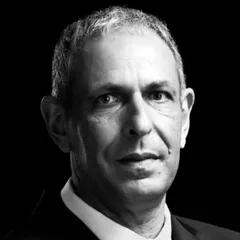
Moti is an experienced developer. He has built quite a few buildings in Israel, and during the big wave of purchases in Romania in the first decade of the century he and his brother bought several plots. I supported them through the purchases back then, and I saw the deliberation before every acquisition, the thorough checks they ran, the questions they asked. I learned a lot from working with Moti. Over the years Moti improved the land he had bought and prepared building plans for each plot, at no small cost.
Over the years Moti received offers for the plots, or for some of them, but the offers seemed too low to him, and so he was left holding the land, some of it standing like a “white elephant” between buildings that had already gone up. Every time a broker brought him a potential buyer, he refused to compromise on the price (even when I showed him, more than once or twice, listings in which other sellers in the area were asking much less than he was). Every few months he calls to tell me how desperate he is to sell the plots and about yet another potential buyer he is negotiating with, but nothing happens.
At our last meeting, Moti came to my office with a folder full of documents and a worried look. “Five years,” he said quietly. “Five years I've been trying to sell, and nothing.”
“Moti,” I said, “you feel you're protecting the value of your property, but what's actually happening is that you're paying a ‘waiting tax’ that just keeps growing.”
Moti looked at me in surprise. “A waiting tax?”
“Exactly. According to a 2022 Harvard University study, properties that developers hold for too long lose value at an average of 4% a year – just from holding costs, taxes and inflation. Add the opportunity cost, meaning the profits you could have made with that money in other projects, and the number reaches 9% a year.”
“But the price they're offering me is too low,” Moti insisted.
“Too low compared to what?” I asked. “Are you comparing it to the price you hoped to get when you bought the land? To the price you think it will be worth in the future? Or to the price you'd like to get?”
His silence was answer enough.
In 2024 the consulting firm Deloitte published a study showing that 78% of Israeli developers working abroad suffer from the “endowment effect” – a cognitive bias that makes us overvalue our assets simply because they are ours.
“Moti,” I went on, “think about the real cost of your decision not to decide. While you wait for the ideal price, your assets aren't just sitting unused – they're also losing value. Meanwhile the market is changing, new competitors are coming in, and new regulations may affect your building plans.”
“My experience shows that successful developers in international markets have ‘strategic flexibility’ – the ability to respond quickly to changes in the market and adjust their strategy accordingly. One of the things that blocks this ability is ‘decision paralysis’ about sale prices.”
“Maybe it's time to think about a different strategy,” I suggested. “Instead of insisting on a price the market probably isn't willing to pay, consider strategic partnerships, phased construction, a land-for-apartments deal, or even a partial sale that frees up capital for other projects.”
Moti was silent for a moment, then said, “But if I sell for less, it'll be a failure.”
“On the contrary,” I replied. “The most successful developers are the ones who know when to enter a market – and when to leave it. They understand that the real return comes from turning capital over, not from clinging to a single deal.”
At that moment I saw Moti looking out the window at the busy city below. A new energy came into his eyes. “So what do you suggest I do now?” he asked.
“Let's start with an up-to-date, objective valuation of the land,” I suggested. “Not what we hope to get, but what the market is really willing to pay today. Then we'll build an exit strategy with clear goals and defined timeframes. We'll set a minimum price you're willing to accept, and a target date for the sale.”
Moti nodded slowly. “You know,” he said, “for years I was sure I was protecting my interests by waiting for the right price. But now I understand that all I was doing was putting off a decision.”
Three months later, Moti signed an agreement to sell two plots at a price 10% lower than he had originally expected. But as he excitedly explained to me, “I freed up almost half a million euros of capital that's already invested in a new project in Slovakia. And just as important – I sleep well at night.”
Developers, and not only Israelis, who work outside their own country suffer from the “procrastination effect” – the tendency to put off hard decisions until they become more and more tangled. As a firm that specialises in supporting Israeli developers in international projects, we know that our job is often not only to give legal advice, but also to help our clients make smart business decisions at the right time.
That is exactly what we did for Moti, and it's what we do every day for Israeli developers around the world: we provide not only legal advice, but also a strategic perspective that helps make the right decisions in real time.
Because in international real estate, a delayed decision is often money wasted.
This story first appeared in Ilan Leibovitch's weekly LinkedIn column, "Two International Real Estate Stories a Week", issue of 24.5.2025, in Hebrew.
More stories: Development, building and finance
- Story 18Is Investing in International Real Estate Really Throwing Money Away?
- Story 26Across the line of fire: what an Israeli developer learned in the eye of the storm – and what it means for your next deal
- Story 27The plane took off, but the project was grounded
- Story 14Real-Estate Romance: Is a Cheap Investment the Right Move?
Have a similar story?
Ilan speaks Hebrew, English and Romanian. Book a half-hour call, or send this story to someone who is about to sign.
This story is general information, not legal, tax or financial advice. Every deal is different; consult professionals before deciding.