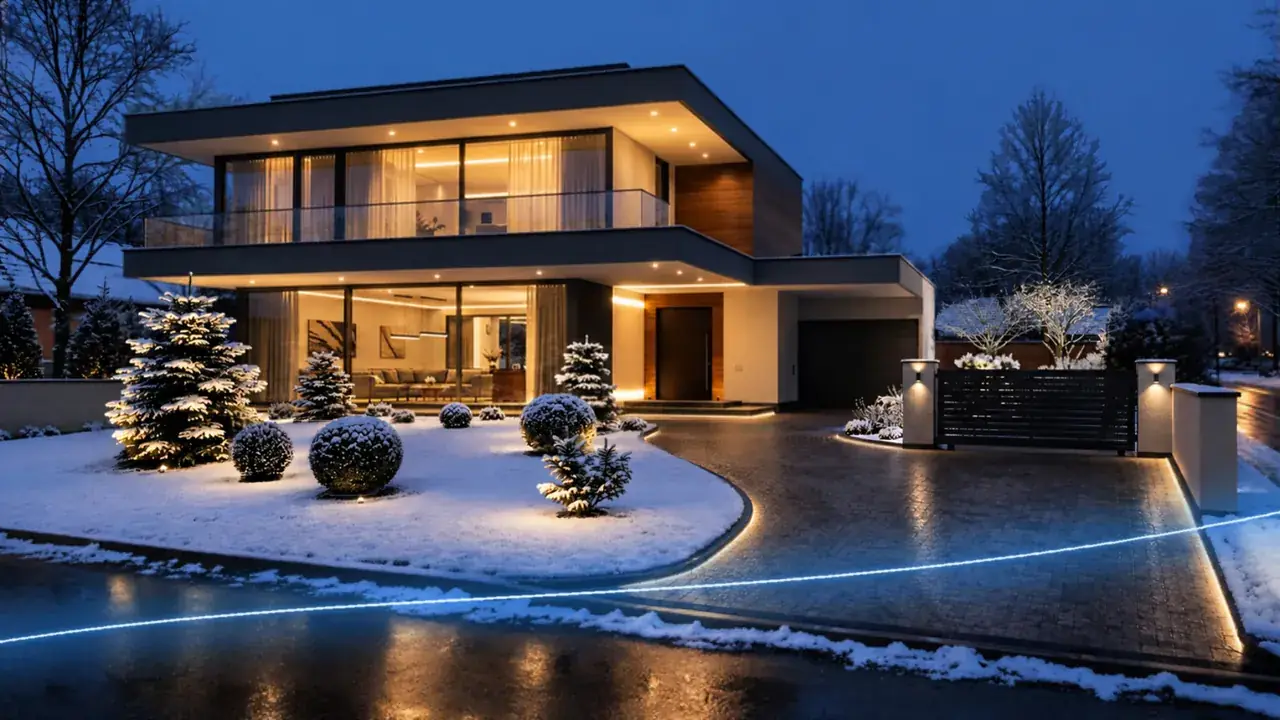
An Israeli without an EU passport can stay up to 90 days in any rolling 180 days, with one counter for all of Schengen. Two or three months a year fit comfortably.
According to climate data in a Sector 6 technical report, the first frost in Bucharest arrives between 21 October and 1 November. Drain the outdoor water before then.
The compulsory insurance covers only earthquake, flood and landslide. A burst pipe in an empty house needs optional insurance, sometimes with conditions for an empty house.
A home for part of the year: the short answer
Yes, and it is one of the most common uses for a house near Bucharest. What decides whether it works is not the house itself, but what happens in it during the nine or ten months you are in Israel. A house that stands empty needs four things: winter preparation so there is no water left in anything outside and the heating never switches off, remote monitoring that alerts you to a leak, cold or a power cut, someone nearby with a key who comes when needed, and insurance that also covers an empty house. On the time side, an Israeli without an EU passport can stay in Romania for up to 90 days in any 180-day period, so two or three months a year fit comfortably within the rule.
On our sales calls we hear this question in the words "I'm not looking for an investment, I'm looking for a home for two or three months a year". It is not an objection. It is a need, and it deserves a proper answer.
In plain words: a part-time villa works when you plan the months you're not there, not only the months you are. One preparation day in October, sensors in the house, someone with a key, and a policy you have actually read.
Who it suits, and who it suits less
A part-time villa suits people who come several times a year, for example for holidays, a long summer break and one winter, and who want a permanent home with their own clothes, books and kitchen, instead of a hotel or a rented flat. It also suits people who want to get to know Romania slowly, with the option of living there more in the future.
It suits less those who come once a year for a week. A private house with a garden needs attention even when no one lives in it: the garden, snow, heating checks, and annual taxes and insurance. Someone who comes very rarely may prefer another solution, and it is better to say so up front.
A practical point in favour of Balotești: from the project to Otopeni airport the drive is about 10–15 minutes without traffic, and a direct flight from Ben Gurion takes about two and a half hours, in the same time zone. A short visit to see to the house, or landing on Thursday and flying back on Sunday, is feasible.
What happens in the house while you're in Israel: a seasonal plan
| Season | What needs to happen | Who does it |
|---|---|---|
| Early to mid October | Drain outdoor taps and irrigation, clean gutters, have the heating and flue checked by a licensed company | You on a visit, or your person nearby following a written list |
| November to March | Heating on minimum, a check after every cold spell, heavy snow or power cut, clearing snow from the pavement in front of the house | Someone nearby with a key, and alerts to your phone |
| April | Turn outdoor water on only after the last frost, check the roof and gutters | You, or your person nearby |
| May to September | Watering and garden, airing the house, a check after storms | A gardener or your person nearby, and in summer usually you |
| All year | Local tax in two instalments, renewal of PAD insurance, electricity, gas and water bills | You, online |
According to climate data cited in a technical report by Bucharest's Sector 6 city hall, the first frost arrives between 21 October and 1 November, and the last can come as late as 11 April. The dates shift with the weather, so the plan is a rule of thumb.
Winter in an empty house: water and heat
Most winter damage in an empty house comes from water, not from the cold itself. A pipe that freezes cracks, and you only find out when it thaws. So the rules are simple:
- Don't switch the heating off completely. Leave it at a low temperature so no room drops below zero. Our villas have underfloor heating, and such systems work better with a steady temperature than with switching off and on.
- No water outside. Outdoor taps drained and left open, garden hoses stored, irrigation drained, and the water meter box closed and insulated.
- Main valve. If the house will be empty for weeks, ask the installer whether you can close the main valve without affecting the heating circuit.
- Power backup. A winter power cut stops most heating systems. A power-cut alert is the first thing worth connecting.
The full checklist is in our guide to winterizing a villa in Romania.
Security and peace of mind: the compound, the alarm and someone with a key
"Is it safe when the house is empty?" is a good question. According to the Ilfov police crime coefficient table for 2025, Balotești scored 31 and is classed at a low level. According to the same police force's annual review, home burglaries in the county fell 13.2% in 2025 compared with 2024. That doesn't mean there is no risk. It means the basics are enough in most cases: good doors and windows, lighting with sensors, an alarm connected to a monitoring centre, and insurance.
Two points worth knowing. Under Law 333/2003, only companies licensed by the police may design, install and maintain a burglar alarm. And in a closed compound, like the 29 villas around the internal street in our project, neighbours know one another and an unfamiliar car stands out. This is an extra layer, not a substitute for the basics. Details in our guide to villa security in the Bucharest suburbs.
And most important: an alert on your phone in Tel Aviv doesn't close a valve in Balotești. You need someone nearby with a key, and at least two people receiving the alerts, so none of them gets lost.
Utilities on standby
A part-time home doesn't "close" when you leave. The contracts stay active and the bills keep coming, even if they are lower.
An alert on your phone in Tel Aviv doesn't close a valve in Balotești. You also need someone nearby with a key.
- Electricity: always stays connected. Without it there is no minimum heating, no alarm and no alerts.
- Gas and water: the contracts in your name stay in force. Gas and boiler inspections by a licensed company must stay valid, and it's worth keeping the documents on file.
- Internet: no internet, no alerts. A router with cellular backup and a small power supply for the router are a small expense that pays for itself.
- Local tax: paid in two instalments, by 31 March and by 30 September, and also online.
- Compound fees: in a compound with a shared internal street, there are shared costs for lighting, drainage, landscaping and snow clearing. On a private road, snow clearing is the owners' responsibility, usually through the owners' association. Ask for the first year's budget in writing, line by line. We explain the structure in our article on fees and management in a gated villa community.
All the annual lines, from building tax to insurance, are gathered in our article what the price does not include.
Insurance: PAD is the floor, and an empty house needs a policy you've read
Every home in Romania must have PAD insurance under Law 260/2008. For a concrete or brick house it costs 130 lei a year and covers up to 100,000 lei, but only against earthquake, flood and landslide. It does not cover a burst pipe, fire or burglary.
So villa owners usually add optional insurance. Here there is a point that matters especially for a part-time home: many policies set conditions for a house that stands empty, such as periodic visits or minimum heating. Ask the insurer in writing what the conditions are, and choose a policy with local assistance services. Details in our guide to home insurance in Romania.
Smart home: seeing the house from Tel Aviv
In a house that stands empty, a smart home is not a luxury. It is how you learn about a small problem before it becomes a flooded floor. Our villas come with a smart home system and full air-conditioning, and that is the base to build the monitoring on:
- Flood sensors under the boiler, sinks and washing machine and in the technical room, preferably with a main valve that closes automatically.
- Temperature sensors with an alert below a threshold you set.
- Smoke and carbon monoxide detectors that send an alert to your phone, not just beep in an empty house.
- Alerts for power cuts and internet outages.
- Remote control of heating and air-conditioning a day before you land, instead of keeping the house warm all week.
As for cameras: point them at your own property only. Under a 2014 ruling of the Court of Justice of the EU, a home camera that also records public space is subject to data protection rules. Details in our guide to a smart home in a villa.
How many days a year you can be in the house
An Israeli without an EU passport can stay in Romania for up to 90 days in any rolling 180-day period, with a single counter for the whole Schengen area. Owning a house doesn't add days. In practice, you can live in the house for up to about 180 days a year in two 90-day windows, provided you haven't stayed in another Schengen country during those periods.
| Pattern | Days a year, approximately | Within the rule? |
|---|---|---|
| Four two-week visits | about 56 | Yes, with a wide margin |
| Two months in summer and one in winter | about 90 | Yes, if you plan the gaps |
| One long summer in a row | 90 | Yes, and then you leave for about 90 days |
| Half a year in two windows | about 180 | Yes, at the upper limit |
Since 10 April 2026 the EU Entry/Exit System (EES) has been fully operational, recording every entry and exit digitally, so an overstay is detected automatically. The full calculation, including the link to the 183-day tax residency threshold, is in our article on the 90/180 rule for home owners in Romania.
The developer's management company: what it does and doesn't do
Here it is important to be precise. The developer's management company is intended for owners who rent out the villa after handover. We are the management company, and we earn only when the house is rented. Management fees and services are set out in the management principles document, and you see it in writing before you decide.
If you buy a home for your own use for part of the year and don't rent it out, you need to arrange looking after the house yourself: a neighbour, a local maintenance company or someone nearby with a key. If you want a caretaking service without rental, ask us, and any other provider, exactly what is included, how often and on what terms, and get the answer in writing before you rely on it. We don't promise here a service that isn't written in the agreement.
If you are considering renting out in the months you are not in the house, you are entering a different world: tax on rental income in Romania, reporting in Israel for Israeli residents, and the rules of the owners' association in the compound. That is a separate decision, worth checking with a tax adviser before you commit to it.
Checklist for remote owners
- A written list in the house: where the main valves and fuse board are, who the plumber and heating technician are, and the emergency number 112.
- Someone nearby with a key, and one more person who receives the alerts.
- Flood, temperature and smoke sensors, with cellular backup for the internet.
- Valid PAD, and an optional policy whose conditions for an empty house you have read and confirmed in writing.
- A calendar of visits that stays within the 90/180 rule.
- An annual budget in writing: local tax, insurance, energy, garden and compound fees.
- Your own independent lawyer before signing. The company lawyer represents the company only.
Frequently asked questions
Can I switch the heating off when I leave the villa in winter?
It is not recommended. Leave a low temperature so no room drops below zero, and connect a temperature alert. A house without heating in a cold spell risks frozen pipes, and many policies require minimum heating in an empty house.
How long a year can an Israeli live in their own house in Romania?
Up to 90 days in any rolling 180 days, that is up to about 180 days a year in two windows, if you don't stay in another Schengen country during those periods. Owning a house doesn't add days. Anyone who wants more needs a residence permit or a passport from an EU country.
Is compulsory PAD insurance enough for a house that stands empty?
No. PAD covers only earthquake, flood and landslide, up to 100,000 lei for a concrete or brick house. Water damage, fire and burglary require optional insurance, and for an empty house it's worth checking in writing what conditions the policy sets.
Will the developer's management company look after the house while I'm in Israel?
The developer's management company is intended for those who rent out the villa. If you don't rent, you arrange someone nearby with a key or a maintenance company yourself, or ask us what is possible and on what terms, and get the answer in writing.
Who clears the snow when I'm not there?
Under Government Ordinance 21/2002, property owners must clear snow and ice from the pavement in front of the property, under the local council's rules. On an internal street in a compound, snow clearing is usually organised through the owners' association. Your own pavement and paths need someone to do it for you.
How quickly can I get to the house from Israel?
A direct flight from Ben Gurion to Otopeni takes about two and a half hours, in the same time zone, and from the airport to the project in Balotești it is about 10–15 minutes' drive without traffic. A short visit to see to the house is possible even over a weekend.
The bottom line
A villa for two or three months a year is a realistic plan, provided you also plan the months when the house is empty. Winter preparation once a year, heating that never switches off, sensors that talk to you, someone nearby with a key, insurance you've read, and a visit calendar that stays within the 90/180 rule. If you settle these things in advance, you get a house that waits for you, not a house that surprises you.
If you are considering a part-time home and would like to go through the calendar and what remote ownership involves together, you can arrange a meeting with us, the developers, on Zoom or in person.
Moti Azulay, Compass Group Romania
Sources: Sector 6 city hall: technical report with frost dates in Bucharest (in Romanian) · Ilfov police: crime coefficients by locality (in Romanian) · Jurnalul de Ilfov: Ilfov police 2025 review (in Romanian) · PAID: compulsory home insurance · Romanian legislation portal (in Romanian) · Digi24: snow-clearing duty under Ordinance 21/2002 (in Romanian) · European Commission: Entry/Exit System EES · European Commission: short-stay calculator · EUR-Lex: judgment C-212/13 (Ryneš)
This article is for general information only and is not legal, tax or financial advice. Information correct as of 18 November 2026. Insurance policy terms, Schengen entry rules and snow-clearing rules may change. Before buying, consult your own independent lawyer.
Now you know more.
This article is general information, not legal, tax or financial advice. Consult local professionals before any transaction.

