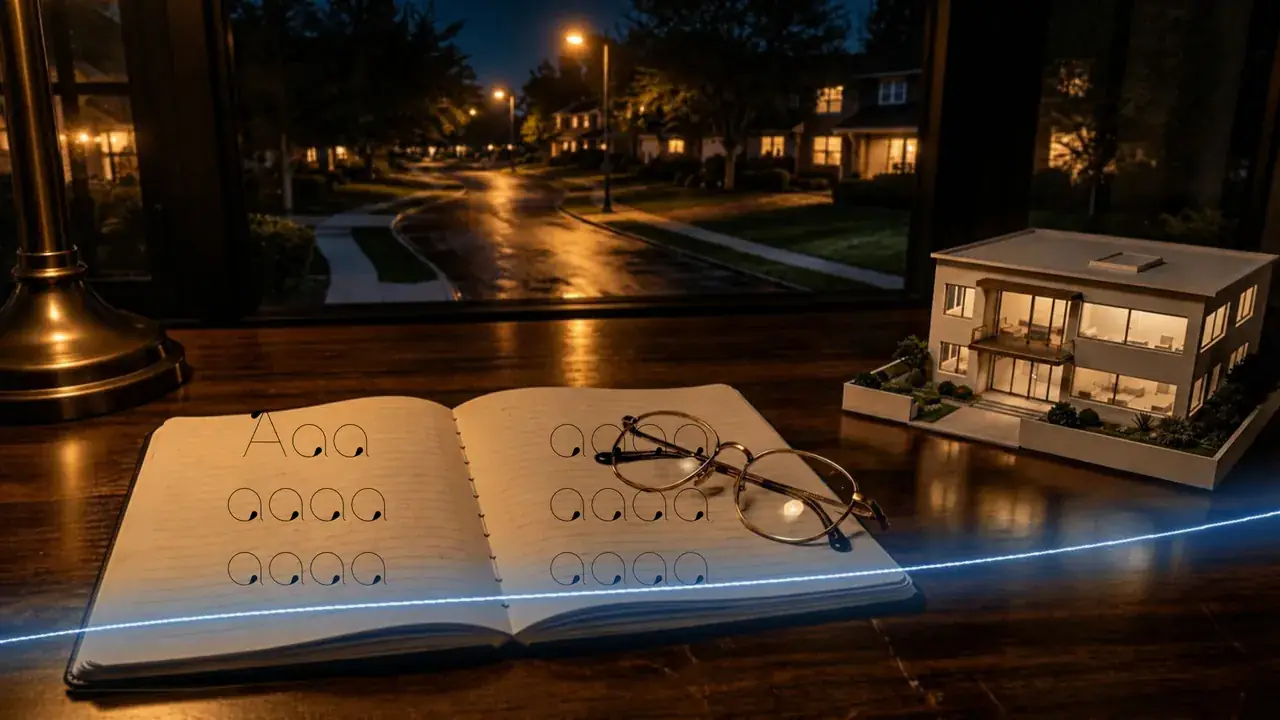
The villa starts at €299,900, and a Romanian bank finances up to 70%. So you need equity of at least 30%, about €90,000, and each buyer is assessed separately.
An Israeli doesn't register land directly in their name, but registers a Superficie right in the land register, for up to 99 years with the option of renewal. It is transferable and inheritable.
A reservation fee of up to 5% and up to 60 days, a preliminary contract only before a notary after the permit is registered, and instalments in a dedicated account with spending caps.
The hard questions: the short answer
The hard questions Israeli buyers ask keep coming back: the price, the comparison with a cheap city flat, wanting to live only in the centre, fear of a mortgage, waiting for a Romanian passport, a worried partner, and the fear of buying abroad at all. Most of them have a factual answer: our villa starts from €299,900, including 21% VAT, land-registry fee, notary and the company lawyer's fees, financing from a Romanian bank is up to 70%, so the required equity is at least 30%, about €90,000. A foreigner doesn't register land directly in their own name, but registers a right of superficies (Superficie) in the land register, and Romanian law limits what a developer may do with buyers' instalments. And for some questions the straight answer is "you're right, this villa isn't for you", and we say so.
This article gathers the 12 questions we hear most on sales calls, in the words of the person asking. Each answer stands on its own, and each ends with a link to the article that covers it in detail.
In plain words: every hard question has an answer on paper. Where there isn't one, or where the answer is "this isn't for you", we'll tell you.
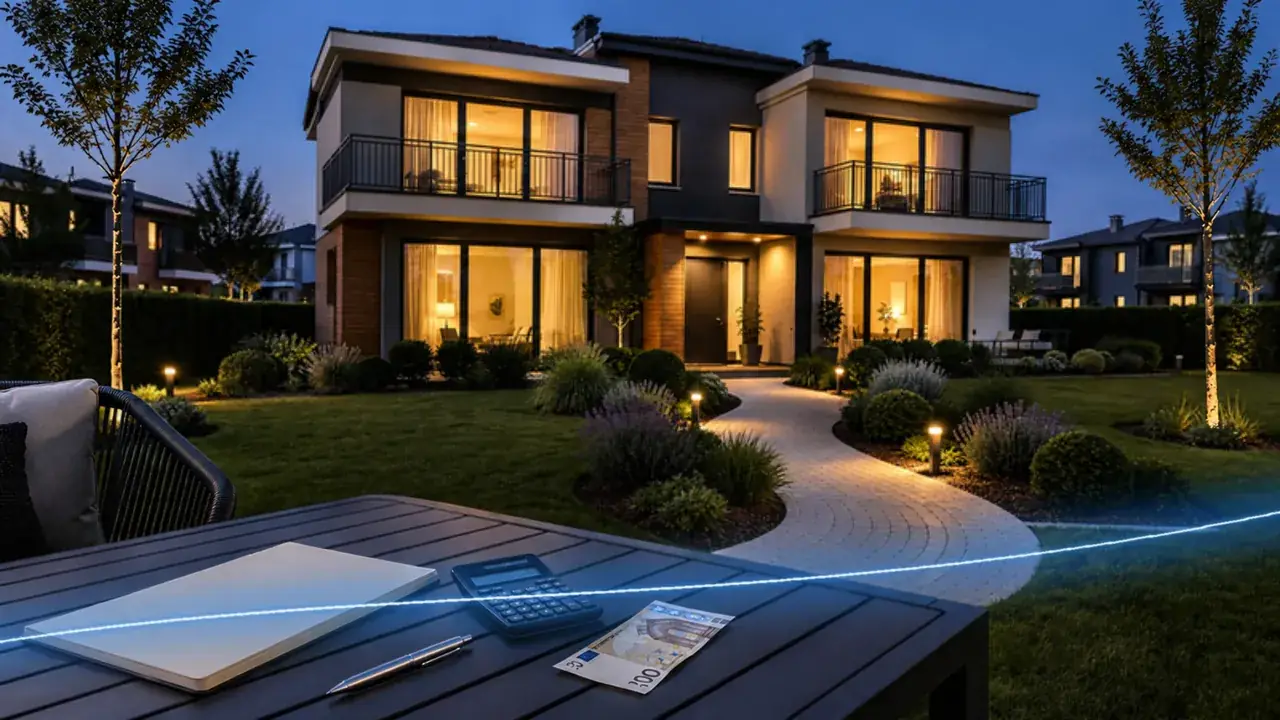
Renderings are for illustration only. The binding price is the price in the company's price list.
The 12 questions at a glance
| # | The question, in the buyer's words | The answer in one line |
|---|---|---|
| 1 | "It's too expensive for me" | Equity of at least 30%, about €90,000, and financing up to 70%. If you won't finance at all, it isn't for you |
| 2 | "I've heard of flats for 150K" | A flat's list price doesn't include what our price already includes |
| 3 | "Only the city centre" | The centre is excellent for some buyers, but you need to check the structure, parking and noise |
| 4 | "I don't want a mortgage" | Partial financing is a tool, not a lifelong commitment |
| 5 | "I'm waiting for my passport" | The passport doesn't change the price, the VAT or the process |
| 6 | "I'll sell my property first" | Staged handover and stage payments give you time to plan |
| 7 | "My partner is worried" | Answer together, on paper, with your own lawyer |
| 8 | "Brașov or Cluj would be better" | Each city is good for something different. Bucharest is the capital and the airport |
| 9 | "Only for two or three months a year" | Possible, if you plan the months the house stands empty |
| 10 | "A foreigner can't own land" | True, which is why there is a registered Superficie in your name |
| 11 | "What if the developer gets stuck" | Law 207/2025 limits reservation fees and the use of instalments |
| 12 | "The area is empty, and how will I sell later" | Ilfov is the fastest-growing county. Nobody promises a future price |
1. "It's too expensive, it's over my budget"
This is the question we hear most, and usually it doesn't mean "I don't have the money". It means "I thought I needed the whole amount in cash". The villa starts at €299,900, and the company price list rises by location: €330,000, €350,000, €365,000, €375,000, detached villas at €450,000 and lakefront villas from €1,000,000. A Romanian bank finances up to 70%, so for the base villa you need equity of at least 30%, about €90,000, and each buyer is assessed separately by the bank. And if your budget is €100,000 in cash and you are not willing to finance in any form, this villa really isn't for you, and that's fine. The full calculation, including an example monthly payment, is in our article "It's too expensive": how much money you really need.
2. "I've heard of flats for 150,000 euros"
Such flats exist, and some of them are good. But the comparison has to be between total price and total price. A new flat's list price doesn't always include 21% VAT, parking, notary and agent's commission, and then you add furniture. Our price already includes 21% VAT, land-registry fee, notary and the company lawyer's fees, and there is no agent's commission because we are the developers, not the marketers. Beyond the money, these are different products: a two-storey villa of about 120 m² built, with a 156 m² garden and two parking spaces registered with the plot, against a flat in a building. The line-by-line comparison is in our article a 150K flat vs a villa: the full comparison.
3. "I'm only looking in the city centre"
Central Bucharest is excellent for people who want to walk everywhere, without a car and without a garden. But "the centre" is sometimes a default rather than a decision. The centre has many old buildings: tall concrete blocks from before 1940 were built when earthquake design was not yet mandatory, and the seismic code was updated after 1977. So for a flat in the centre you first check the seismic risk list, the design year, parking, noise and the state of the owners' association. From our project in Balotești the drive to central Bucharest is about 31 minutes without traffic, and to Pipera about 27. The seven checks are in our article before you buy a flat in central Bucharest, and on the structure, in our article on earthquake risk in Bucharest.
4. "I don't want a mortgage"
That is a legitimate worry, especially at an older age or with shekel income and a euro loan. But financing doesn't have to be 70%. You can finance a smaller part and keep a liquidity cushion on the side, and you can check the early repayment terms in advance. The bank checks that you can pay the instalment from your income, and that is also the check worth doing for yourself. The bank sets the terms, so ask for them in writing. We go through the eight fears one by one in our article I don't want a mortgage in Romania.
5. "I'm waiting for my Romanian passport"
The passport changes less than it seems. A citizen of an EU country also registers the land directly in their name, under Law 312/2005, and may get different financing terms at some banks. It doesn't change the price, the VAT, the notary or the purchase process. If you buy before the passport, you register a Superficie in your name, and that right is transferable and inheritable. What exactly changes, and what to ask for in the contract so it won't matter later, is in our article should you wait for a passport before buying?.
6. "I'll sell my property first"
That is sensible timing, not a refusal. Our handover is staged: the first 8 villas in October 2027, then 8 more every six months. The payment schedule is set in the contract, so ask to see it before you time a sale. What is worth checking, for Israeli residents, is how selling the property in Israel affects your tax there, and the risk of each order: sell first and wait, or buy first and bridge. The checklist is in our article sell first or buy first?, and the payment spread in our article on developer payment plans.
Most hard questions have an answer on paper. For some, the straight answer is: this isn't for you.
7. "My wife (or husband) is worried"
And a good thing too. A partner who asks hard questions protects you both. Our recommendation: sit down together, ask the ten important questions, and ask for every answer to appear on paper. How to register the property in both names and what the property regime is, what happens on inheritance, and why a Romanian will is worth having. The company lawyer represents the company only, so take your own independent lawyer, who will read the contract with you. The guide was written for the partner who is asking: your partner is worried about buying abroad.
8. "Brașov, Cluj or Timișoara would suit me better"
If you have family, work or a love of the mountains there, that is a good reason. Each city is good for something different: Brașov for the mountains and skiing, Cluj for the university and tech, Timișoara for western Romania. Bucharest is the capital, the big employment centre, and according to INS, the Bucharest-Ilfov region accounted in 2025 for about 29% of the new homes completed in Romania. And for those flying from Israel, a direct flight to Otopeni takes about two and a half hours, and from the project to the airport about 10–15 minutes. The comparison between the cities is in our article Bucharest, Brașov, Cluj or Timișoara.
9. "I only need a home for two or three months a year"
That isn't an objection, it's a need. An Israeli without an EU passport can stay up to 90 days in any 180, so two or three months a year fit comfortably. What you need to plan is the months the house stands empty: winter preparation, heating that never switches off, sensors that alert you, someone nearby with a key, and an insurance policy whose conditions for an empty house you have read. The developer's management company is intended for those who rent out. The full guide is in our article a home for two or three months a year.
10. "I've heard a foreigner can't own land in Romania"
That's true, and it's not a reason not to buy. An Israeli without an EU passport registers the building in their name, but not the land itself, under Article 44 of the Constitution and Law 312/2005. In the villa, the land is registered through a right of Superficie in your name in the land register, for up to 99 years with the option of renewal. The right is transferable, inheritable and can be mortgaged, and it can be sold together with the house. Check in the contract that the right is granted at no extra charge, or for an amount stated explicitly. Details in our article can a foreigner own land in Romania?.
11. "What if the developer gets stuck halfway, like what happened with Nordis?"
This is the most important question when buying off-plan, and Romanian law changed because of it. Law 207/2025 sets a reservation fee of up to 5% and up to 60 days, a preliminary contract only before a notary and only after the building permit is entered in the land register, and instalments in a bank account dedicated to the project. From that account the developer may spend up to 25% of the price on the structure, and only after that up to 20% on the building systems. The law does not give a full guarantee, so you also check the developer itself. Libra Internet Bank reviewed our project and approved it for mortgages, and each buyer is assessed separately. Details in our article what if the developer fails, and the checks before signing in the Nordis law checklist.
12. "The area is empty, and it will be hard to sell later"
According to the INS censuses, Ilfov grew from 388,738 residents in 2011 to 542,704 in 2021, about 40%, and was the fastest-growing county in Romania. Balotești itself grew from 8,314 to 11,210 residents over the same decade. According to Eurostat, in 2024 94% of Romania's residents lived in a home they owned, so the next buyer doesn't have to be Israeli. We don't promise a future sale price. What is known: you sell before a notary, also by power of attorney, and in Romania the seller pays 3% of the transaction value for up to three years of ownership and 1% after that. See the growth of Ilfov county and exit and selling a villa in Romania.
Frequently asked questions
Is Romania politically stable?
There was a crisis in 2026: the government of Ilie Bolojan was ousted in a no-confidence vote on 5 May, and after almost six months parliament approved Luca Niculescu as prime minister on 20 October 2026. Ownership of a property is recorded in the land register and protected by Article 44 of the Constitution, and the registry and notaries don't stop when a coalition falls. What crises do affect is taxes, interest rates and the leu exchange rate. See the political crisis and what it means for home owners.
Why Romania and not Cyprus, Greece or Portugal?
Each country meets a different need. Cyprus is closer and grants permanent residence to those who buy a new property from €300,000 and meet income conditions. Romania doesn't grant residence through a purchase, but it has been a full Schengen member since 2025, and Cyprus has not. The full comparisons: Romania or Cyprus, Romania or Greece, Romania or Portugal.
Does buying a villa give residence in Romania?
No. Romania has no residence route through property, and a golden visa proposal was withdrawn in the Senate in December 2025. Anyone who wants to live in Romania for more than 90 days in any 180 needs a type D visa and a residence permit for a recognised purpose, such as work, business or family. Details in our article visas and residence for Israelis in Romania.
What about tax in Israel?
In Romania there is no purchase tax on the buyer, and VAT is already in our price. In Israel, for Israeli residents, anyone who transferred ₪500,000 or more abroad within 12 months must file an annual return for the year of the transfer and the following year, as must anyone whose assets abroad exceed ₪2,086,000 on any day of the year. Check this with an accountant before the transfer. See reporting foreign property to the Israel Tax Authority.
Why should I believe a developer's answers?
Don't believe only us. Every answer here rests on a law, a registration or a document you can check. The company lawyer represents the company only, so take your own independent lawyer, who will check the contract, the land register extract and the permit. We explain why in our article who protects the buyer.
The bottom line
The hard questions are not an obstacle. They are the right way to buy property abroad. Most of them have an answer on paper: a price that includes what it should include, financing up to 70% from a Romanian bank, a right registered in your name, and a law that limits what a developer may do with buyers' instalments. For some of them the straight answer is "this isn't for you", and we would rather say so on the first call than after signing.
If you have a hard question that didn't appear here, you can arrange a meeting with us, the developers, on Zoom or in person, and ask it directly.
Moti Azulay, Compass Group Romania
Sources: Romanian legislation portal: Law 207/2025 (in Romanian) · Romanian Civil Code: the right of superficies (in Romanian) · National Institute of Statistics of Romania (INS) · Agerpres: INS data on homes completed in 2025 (in Romanian) · Eurostat: home ownership, 2024 · Balkan Insight: the government ousted, 5.5.2026 · Euronews: Prime Minister Luca Niculescu and the cabinet sworn in, 21.10.2026 · Romanian Immigration Inspectorate (IGI) (in Romanian) · Israeli Income Tax Ordinance and the regulations on exemption from filing a return (in Hebrew) · European Commission: Schengen short-stay rules
This article is for general information only and is not legal, tax or financial advice. Information correct as of 18 November 2026. Renderings are for illustration only. The binding price is the price in the company's price list. Any loan and its terms are subject solely to the client's assessment and approval by the lending bank. Before signing, consult your own independent lawyer.
Now you know more.
This article is general information, not legal, tax or financial advice. Consult local professionals before any transaction.