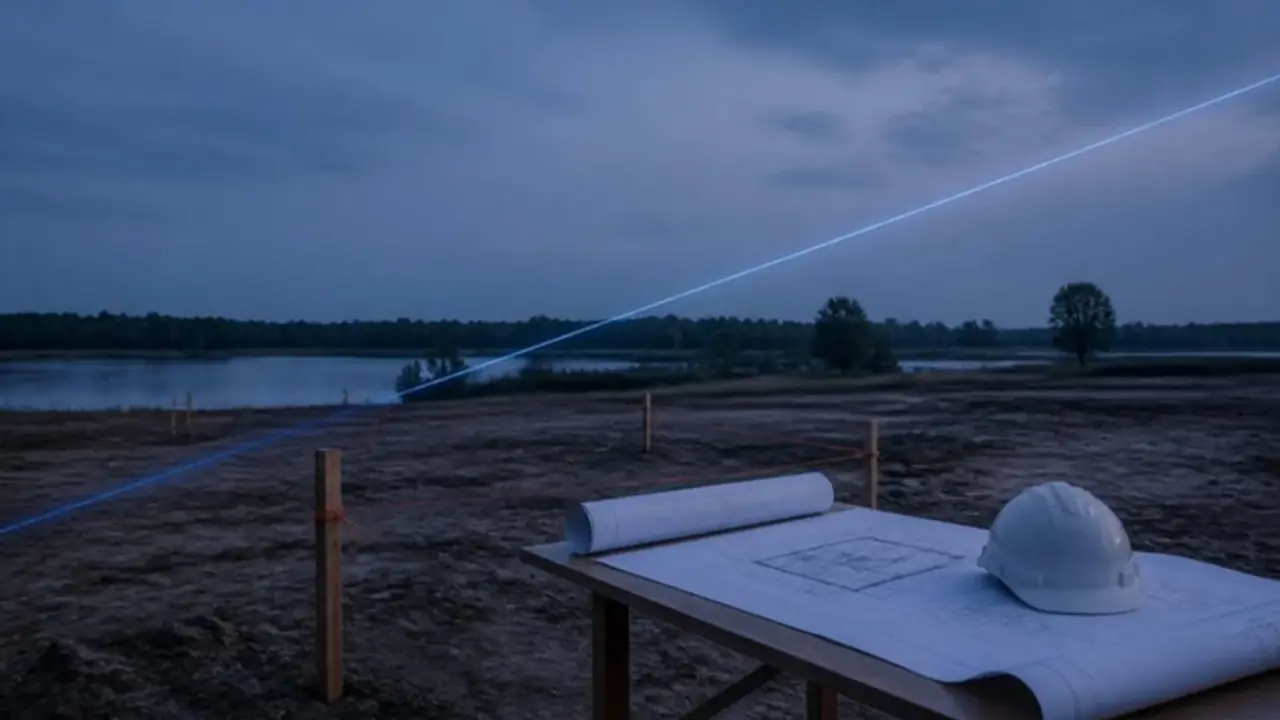
Planning certificates for information and for construction, PUZ or PUD if needed, approvals, permit, start notice, acceptance on completion, final acceptance.
From a complete file, the permit is issued within 30 calendar days, and in the urgent procedure within 7 working days for a special fee (Article 273).
A permit is valid 3 years from issue and extends to the construction period after a notice of start of works. The 3 years cannot be extended (Article 309).
Dividing land into three or more plots for new construction requires a planning certificate for preparing a PUZ (Article 216).
A building permit in Romania for developers: the short answer
Since 25 August 2026, a developer's whole path in Romania, from the land to handing over the home, is governed by one law: the Planning and Construction Code, Law 169/2026. The Code repealed Law 50/1991 on building permits and Law 350/2001 on planning (Article 576(3)). We gathered the full comparison between the laws on the Law 169/2026 page.
The path is fixed: a planning certificate (certificat de urbanism), approvals and opinions (avize și acorduri), sometimes a PUZ or a PUD, a building permit (autorizație de construire), a verified execution design and a notice of start of works, and at the end two acceptances: acceptance on completion of works and final acceptance at the end of the warranty period.
For some stages, the law sets the authority a maximum deadline. For the stages that depend on you, such as design, the PUZ and construction itself, the law has no clock. Anyone building a timeline and a budget for a project needs to separate these two kinds of time.
The stages at a glance
| Stage | What it is | Deadline in the law | Article |
|---|---|---|---|
| 1. Planning certificate for information | A snapshot of the plot, for any applicant | Up to 10 working days, and up to 5 when the authority has a computerised system | 254(2), (6)–(7) |
| 2. Planning certificate for construction | The conditions and the list of approvals for your project | Up to 15 working days. Validity: 12 to 36 months | 257(4), (15) |
| 3. PUZ or PUD, if required | A plan that details or changes the rules | Initiation opinion for a PUZ: up to 30 calendar days. Duration of the whole PUZ: not fixed | 69(8) |
| 4. Approvals and opinions | According to the list in the planning certificate | 30 calendar days in the unified approvals committee, or 15 days from each body separately | 269(3), (9) |
| 5. Building permit | The authorisation to build | Up to 30 calendar days from a complete file. Urgent procedure: up to 7 working days | 273(1)–(2) |
| 6. Before the first excavation | Verified execution design, notice to the authority and to ISC, a sign on site | Before works start | 278 |
| 7. Acceptance on completion of works | With the mandatory participation of an authority representative | After construction is finished | 280(3), 528 |
| 8. Final acceptance | At the end of the warranty period | Within 10 days of the end of the warranty | 532(4) |
Before you buy land: what to check
A costly developer mistake happens even before the permit: you buy a plot, and only then check what may be built on it.
- Planning certificate for information. Anyone may request it, even for a plot that is not theirs (Article 254(2)). It covers the plot's legal regime (ownership according to the land register, easements, whether it is inside the built-up area, intravilan, and building bans), the permitted uses, and the technical rules: POT, CUT, height, plot size, access, parking and utilities (Article 253(4)). It is the first document you request, before signing for the land.
- Intravilan or extravilan. Bringing a plot from outside the built-up area into it requires a PUZ (Articles 62(4) and 66(1)(b)). On such a PUZ, the authority may impose local development charges (Article 63(3)).
- Dividing into plots. Dividing land into three or more plots for new construction is "parcelare", and it first requires a planning certificate for preparing a PUZ (Article 216(1)). For anyone planning several houses on one piece of land, this is usually the decisive question.
- Utilities. In a PUZ, the developer's minimum obligation is water, sewerage and electricity networks, and access roads (Article 63(4)). In residential developments, acceptance on completion of works takes place only together with acceptance of the utility connections (Article 528(4)). A cheap plot without networks is not necessarily cheap.
- The extract. A planning certificate for construction is issued to whoever holds a real right over the plot (Article 257(1)), and the permit file requires a land register extract no older than 30 days (Article 262(1)(b)). How to read it: in the guide to the extract. In Ilfov, also check for restitution claims on the land.
- Neighbours. If the construction requires strengthening or securing a neighbouring building, you need the neighbours' consent in a notarial document (Article 261(1)–(2)).
When you need a PUZ, and when a PUD is enough
A PUZ is required when the locality's PUG requires it for a specific area, for example protected areas, areas brought into the built-up area or a change in plot division (Article 62(6)), and when you want to change approved rules. A private developer starts with an application for an initiation opinion (aviz de inițiere), which is issued within 30 calendar days (Article 69(8)). The PUZ is approved by the local council by an absolute majority (Article 76(1)). The process as a whole has no deadline in the law.
A PUD is a narrower tool: it only details the PUG or the PUZ for a specific project (Article 81(1), (3)). The chief architect gives an opinion within 15 days of a complete file (Article 84(5)), and the head of the authority approves it within 15 calendar days of that opinion (Article 85(1)).
When a PUZ is required, the planning certificate is issued with the obligation to prepare it (Article 257(9)(c)), and the permit process is suspended until it is approved, then continues on the basis of the same certificate (Article 249(2)). After approval, the certificate is valid for another 12 months (Article 257(10)). We wrote about what a PUZ means for buyers in the guide to building permits and the PUZ. For a developer, the important line: land that requires a PUZ is land without a known start date.
The authority's time, and yours
Approvals. In the unified approvals committee they are issued within 30 calendar days of a complete file (Article 269(3)). Outside the committee, each body answers within 15 days, with exceptions for the environment, heritage sites and aviation (Article 269(9)). A body may request additional information only once (Article 269(10)), and you answer within 60 days at most (Article 269(11)). A body that stays silent after the deadline is deemed to have approved (Article 269(14)), except for defence and security institutions (Article 269(15)).
The permit. If the file is incomplete, the authority notifies you within 10 working days and gives you up to 3 months to complete it (Article 271(1)–(2)). From a complete file, the permit is issued within 30 calendar days, and in the urgent procedure within 7 working days for a special fee (Article 273(1)–(2)).
What the law does not time: the surveys, the design, the PUZ and the construction. Those you plan, and you budget the margin on them.
After the permit: the 3-year clock
A building permit is valid for 3 years from the day it is issued (Article 309(1)). After a notice of start of works, validity extends to the whole construction period in the permit. Without a notice, the construction period is counted from the day of issue (Article 309(2)–(3)). The 3 years cannot be extended (Article 309(5)), and they may be suspended once, for at most 12 months (Article 309(4)). A permit lapses if the works did not start in time, or if they are suspended for more than 24 months (Article 310(1), (3)). The construction period can be extended once, by up to 12 months, for 30% of the original fee (Article 310(5)).
Land that requires a PUZ is land without a known start date. The check starts before the purchase.
Before you start building: a detailed execution design checked by a certified verifier, and responsibility for the check is yours (Articles 264(5)–(6) and 277(5)). You notify the authority and the State Construction Inspectorate (ISC) of the start date, upload the documents to the national construction register and put up a sign on site (Article 278(3), (5)–(6)). You build through contractors, and all the players, including the developer, must be insured (Article 279(1)–(2)).
Our recommendation: do not take a permit before the financing and the contractor are ready, because the clock starts on the day of issue.
Selling before construction is finished
A developer may commit to selling a future home only after the permit has been registered in the land register and an extract has been opened for the future unit. The preliminary contract is signed only before a notary (Article 422(6)–(7)). The advance payments go into a separate project account, and are released with the site supervisor's approval: up to 25% of the price for the structure stage, and after it up to 20% for the systems stage (Article 422(10)). What this means for the budget: the land, the design and the permit are financed without buyers' money. What happens when you sell before a permit, see the deal that failed without a permit.
Acceptance: the end of construction, not of the project
Works count as finished only after acceptance on completion of works. A building built without a permit, or contrary to it, will not pass acceptance (Article 280(1), (8)). A representative of the authority that issued the permit must take part (Article 280(3)). Between the end of construction and acceptance, you settle with the authority the final value of the works and the payments derived from it (Article 280(9)). The home is handed over to the buyer only after acceptance and after the permanent utility connections are working (Article 422(5)(k)).
Then the warranty period begins, from the day of acceptance (Article 531(9)). The minimum depends on the type of building: one year, 3 or 5 years (Article 531(6)), and structural defects carry a warranty for the whole life of the building (Article 531(10)). At its end, you must convene final acceptance within 10 days (Article 532(4)). The old acceptance regulation, Government Decision 273/1994, still applies (Article 577(6)).
From the field: the Compass on the Lake permit
The permit we show buyers was issued in June 2026, under Law 50/1991, before the new Code came into force. It states two deadlines: 12 months from issue to start the works, and 12 months of construction from the actual start. The project is made up of 24 semi-detached villas, 2 detached villas and 3 luxury villas, and each building gets its own permit. The lesson for a developer: in a project with several buildings, each permit has its own clock. You plan the timeline per building, not per project. The details are in the article on our permit.
The guide for developers abroad, in five parts
This article is part of a series on moving from investing to real estate development abroad:
- Real estate investor or developer abroad: the 7 differences
- Checking land in Romania before you buy it for development
- A Romanian company (SRL) for a foreign developer: the structure
- Off-plan sales and the developer's cash flow in Romania
Frequently asked questions
How long does it take to get a building permit in Romania?
The authority has deadlines: a planning certificate for construction within 15 working days, approvals in the unified committee within 30 calendar days, and the permit within 30 calendar days of a complete file (Articles 257(4), 269(3) and 273(1)). The total duration depends on you: on the design, the surveys and whether a PUZ is needed. For that, the law sets no deadline.
Can I request a planning certificate for land I have not bought yet?
Yes. A planning certificate for information is issued to any applicant (Article 254(2)). A planning certificate for construction is issued to the holder of a real right over the plot (Article 257(1)).
When do you need a PUZ?
When the PUG requires it for the area, when you divide land into three or more plots for new construction, when you bring land into the built-up area, and when you change approved rules (Articles 62, 66 and 216).
Can a building permit be extended?
The 3 years to start the works, no (Article 309(5)). One suspension of up to 12 months is allowed (Article 309(4)), and one extension of the construction period, by up to 12 months (Article 310(5)).
When may you sell a home before it is built?
Only after the permit has been registered in the land register and an extract has been opened for the future unit, and only with a notarial preliminary contract (Article 422(6)–(7)).
The bottom line
A building permit in Romania is not one document. It is a path of eight stages, and some of them are timed by law. The untimed part, the design, the PUZ and the construction, is where projects run long and budgets stretch. So the check starts before the land: a planning certificate for information, the PUZ question and the utilities.
If you are checking a plot or a project in Romania, book a 30-minute call with me. We will go through the permit path for your plot and the questions for your lawyer and your architect. Before that, run the deal through the three filters in our free deal check.
Moti Azulay, Compass Group Romania
Sources: Law 169/2026, Planning and Construction Code (Monitorul Oficial no. 661, 10.8.2026), Articles 62, 63, 66, 69, 76, 81, 84, 85, 216, 249, 253, 254, 257, 261, 262, 264, 269, 271, 273, 277, 278, 279, 280, 309, 310, 422, 527, 528, 531, 532, 575, 576, 577 and 582 · Law 169/2026: what moved where
This article is for general information only and is not legal advice. The rules are correct as of 18 October 2026, according to the text published in the Monitorul Oficial. The Code is new, and its implementing rules are still being updated. Before buying land or filing an application, check the specific plot with a local lawyer and architect.
Now you know more.

This article is general information, not legal, tax or financial advice. Consult local professionals before any transaction.

