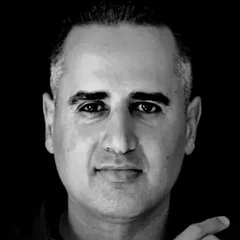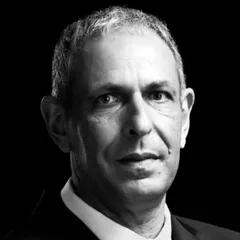
Guy sat across from me with the confidence of a man who has already won once.
"Ilan, I've done three projects in Israel. I built, I sold, I made a nice profit. Now I want to go abroad. How different can building in Limassol be from Ra'anana?"
He smiled as he asked. The question was rhetorical. As far as he was concerned, he already knew the answer. He came to me to sort out his paperwork, not to have his assumption challenged.
Clients like Guy come to me at least once a year. The faces change, the story is the same. A successful Israeli developer, genuinely successful, with real money and real successes behind him, who walks in and announces he wants to be a real-estate developer abroad. He's fed up with the bureaucracy at home, with the clients, with how hard it is to find workers, with the prices. And he comes with the feeling that this is a natural extension of what he already knows how to do. Another plot, another permit, another sale. Just with the signs in a different language.
And I always stop him at the same point. Because the most dangerous thing an Israeli developer brings with him abroad isn't a lack of experience. It's the experience. The confidence he built at home is exactly what will bring him down out there.
I explained to Guy that real estate in Israel and real estate abroad are not the same profession with a different accent. They're two different professions. Same name, different skills.
At home, Guy knows everything without thinking. He knows how a contractor behaves, how the bank works, what a lawyer means when he says "I'll look into it," when "another week" really means a week and when it means a month. He knows how to read people. He smells when something is wrong before he can explain why. That knowledge took him years to build, and it's invisible precisely because it has become intuition.
And abroad? That intuition simply doesn't work. Worse, it misleads.
I gave him concrete examples, because without them it sounds like a sermon. The materials are different. The construction methods are different. In parts of Europe they build with methods Guy has never heard of, with subcontractors who operate completely differently from what he's used to. Timelines stretch in ways that are normal there and insane from an Israeli point of view. Regulation, permits, approvals, local authorities, runs at its own pace and by its own logic. What you close with a phone call at home takes three months and a notary there. And anyone who doesn't understand that in advance doesn't just get frustrated. He loses real money, because every month of delay is a month of financing, taxes and salaries that keep running.
Then I got to the buyers, and here Guy paused for a moment.
Because at home he knows exactly who his buyer is, what he can ask of him, how to talk to him, and what will get him to buy. Abroad, every one of those variables is different. Buyers' rights, the culture, the customs and needs, what you're allowed to say and what you're not, what happens when a buyer misses payments: it's all a different game, with different rules, sometimes tilted in the buyer's favor in ways that would surprise any Israeli developer.
And then I told him the sentence he had really come to me for, even if he didn't know it.
In Israel there's a saying developers love: "What can you really lose in real estate?" The land stays, the market rises in the long run, and even if you get stuck, you come out fine in the end. At home there's something to it. Abroad, it's simply not true. Abroad you can lose everything. All your equity, and sometimes more. And that's not a rare extreme scenario. It happens. I've seen it happen, to developers just as smart as Guy.
By this point Guy wasn't smiling anymore. He asked quietly: "So what are you saying, not to go in?"
No. That's not what I said.
I said that before we talk about a plot, about financing, about a contract, there are two questions to answer. And they're not legal questions. They're personal.
The first: do you really want to do this, as a profession, as something you'll give real attention to, or are you looking for a "side deal"? Because development abroad isn't passive income and it isn't a one-time adventure. It's a chain of decisions, day after day, each one requiring knowledge you don't have yet. Whoever goes into it "on the side," with half their attention, enters the most dangerous place there is: involved enough to put capital at risk, not involved enough to protect it.
And the second, the harder one: how involved are you going to be when something goes wrong? And notice, not "if." "When something goes wrong." Because it always goes wrong. A contractor who disappears, an approval that's delayed, a local partner who turns out to be different from what you thought. The only question isn't whether you'll hit a wall. The question is whether you'll be there, alert and involved, when you hit it, or whether you'll discover it three months too late, from Israel, when it can no longer be fixed.
Guy left the meeting without a decision. And that, as far as I'm concerned, was the most successful meeting we could have had.
Because he didn't come to me so I'd stop him. He came so I'd sort out his paperwork. Instead, I gave him the one thing no one had given him until then: the chance to ask himself, before he invested a single shekel, whether he even wants this job, or just the profit he imagined at the end of it.
Two months later he came back. This time without the confidence, and with a lot more of the right questions. That's when I knew we could start working.
If you're a successful developer in Israel considering the move abroad, take your success seriously enough to set it aside for a moment. What worked at home is not a passport. Sometimes it's exactly the confidence that will cost you dearly. Don't start with the plot. Start with the question of whether you really want to be there when you hit the wall.
This story first appeared in Ilan Leibovitch's weekly LinkedIn column, "Two International Real Estate Stories a Week", issue of 6.6.2026, in Hebrew.
More stories: Development, building and finance
Have a similar story?
Ilan speaks Hebrew, English and Romanian. Book a half-hour call, or send this story to someone who is about to sign.
This story is general information, not legal, tax or financial advice. Every deal is different; consult professionals before deciding.