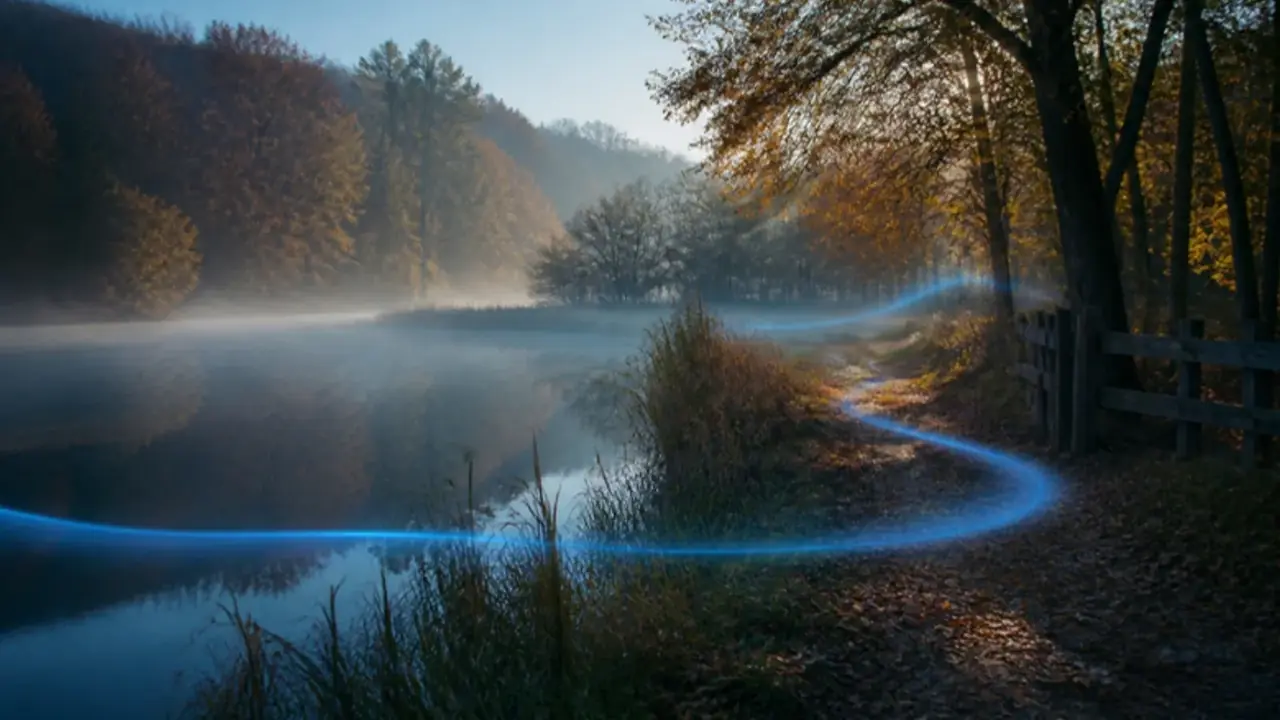
Two Natura 2000 sites on the same area, ROSCI0224 and ROSPA0140: oak and hornbeam forest, lakes and waterbirds, in Ciolpani and Periș.
Under Law 169/2026, a family house needs no environmental act unless it is inside a protected natural area or a reserve.
According to the site's data form, 21% of the area is privately owned. A private plot can sit inside a protected area.
Protected areas north of Bucharest: the short answer
Several lakes and forests north of Bucharest are protected. The largest are two Natura 2000 sites in the European Union's network: Scroviștea (ROSCI0224 and ROSPA0140, 3,347 ha each, on the same area), the forests and lakes in the communes of Ciolpani and Periș, and Grădiștea, Căldărușani, Dridu (ROSPA0044, 6,469.1 ha), around Lake Căldărușani. Lake Snagov is protected at national level.
Protection does not mean "no houses anywhere nearby". It means that plans and projects inside a protected area go through extra approvals. Under Romania's new Planning and Construction Code, Law 169/2026, a family house normally needs no separate environmental act, unless it is inside a protected natural area or a nature reserve (Article 268(2)(a)).
In plain words: the line on the map matters. Outside the protected area, a house follows the normal local rules. Inside it, expect environmental approvals, the area administrator's endorsement and possible limits on what can be built.
Lakeside rules from the Water Law, such as who owns the shore and the protection strip, are covered in our guide to living by a lake in Ilfov. This article covers nature protection.
The protected areas around the northern lakes
| Area | Type | Size | What it protects |
|---|---|---|---|
| Scroviștea, ROSCI0224 | Natura 2000, habitats (SCI, confirmed 2009) | 3,347 ha | Mostly oak and hornbeam forest (about 2,832 ha), lakes and wetlands; a remnant of the old Vlăsia forests |
| Scroviștea, ROSPA0140 | Natura 2000, birds (SPA) | 3,347 ha | Waterbirds such as the squacco heron and the ferruginous duck; covers Lake Scroviștea to Piscu and the Ciolpani, Cocioc and Clogila forests |
| Grădiștea, Căldărușani, Dridu, ROSPA0044 | Natura 2000, birds (SPA) | 6,469.1 ha | Protected bird species; includes Lake and forest Căldărușani, about 45 km from Bucharest, in Ilfov and Sud-Muntenia |
| Lake Snagov | National protected area | about 1.7 km² | The lake; parts of the surrounding forest are also protected |
Sources: the Natura 2000 standard data forms published by the European Environment Agency, and the World Database on Protected Areas for Lake Snagov. The list is not complete: smaller protected areas exist, and boundaries matter more than names.
One detail from the Scroviștea data form: about 64% of the site is in national public ownership, 15% local public and 21% private. Protected areas are not only state forest; private plots can sit inside them. The site's management plan, published by the Ministry of Environment, even lists the homes and holiday houses on the north-western shores of the Bălteni and Sticlăria lakes among the pressures on the site, especially at weekends and on holidays.
What protection means in the 2026 Code
The Planning and Construction Code, Law 169/2026, in force since 25 August 2026, treats natural protected areas as protected zones. The key rules for a home buyer:
| Rule | What it says | Law 169/2026 |
|---|---|---|
| Separate law | Management and interventions follow Emergency Ordinance 57/2007 and Law 95/2016, which set up the National Agency for Protected Natural Areas (ANANP) | Art. 197(2) |
| Administrator's endorsement | Plans and building projects for land inside a protected natural area must be endorsed by the area's administrator at every stage | Art. 197(4) |
| No incompatible change | Inside a protected natural area, changing the land's use and projects incompatible with the protection regime are prohibited | Art. 189(6) |
| Prior approval | Works on properties in protected zones need prior approval; for natural values, from the environmental authority | Art. 190(1) |
| Family house exemption, with an exception | No environmental act for a single-family house, unless it is in a protected natural area or a reserve | Art. 268(2)(a) |
| Natura 2000 paperwork | For properties in Natura 2000 sites, complementary documentation under the specific law is required | Art. 265(6) |
| Smaller zonal changes | A zonal plan (PUZ) may raise the building indicators in protected zones by at most 10%, once | Art. 66(1)(f) |
The environmental procedure itself, including when an "appropriate assessment" of the effects on a Natura 2000 site is needed, is decided by the environmental authority under Law 292/2018 on environmental impact assessment and Ordinance 57/2007. For Ilfov, that is the Environmental Protection Agency of Ilfov (APM Ilfov).
The line on the map matters.
Inside, next to, or near: three different situations
| Where the plot is | What usually applies | What to ask |
|---|---|---|
| Inside the protected area | Environmental procedure, administrator's endorsement, possible bans on new construction or land-use change | Is building allowed at all? What did the administrator and APM Ilfov say? |
| On the edge, outside the boundary | Normal local rules, but the planning certificate may still ask for an environmental opinion | What approvals does the planning certificate list? |
| Near, with a view of the water | The Water Law (shore, protection strip, flood zone) and the local plan | Where exactly is the boundary of the plot and of the lake? |
The planning certificate (certificat de urbanism) is the document that settles this for a specific plot: it lists the approvals required for a building permit (Art. 266(1)). Among them, depending on location: the environmental authority's opinion and the water management approval (aviz de gospodărire a apelor) (Art. 266(2)(f) and (h)).
How to check a plot: 6 steps
- Find the plot on the Natura 2000 map. The European Environment Agency's Natura 2000 viewer shows site boundaries. Compare them with the plot's survey plan.
- Check the national protected areas too. Not every reserve is Natura 2000. ANANP publishes information on the areas and their administrators.
- Ask for a planning certificate for information. Any person may request one (Art. 254). It shows the land use, the building indicators and the approvals required.
- Read the general urban plan (PUG). Protected natural areas must be shown in the urban plans (Art. 188(2)).
- For a plot inside a protected area, ask APM Ilfov in writing what procedure applies, before you pay a deposit.
- For a new development, ask the developer for the documents: the planning certificate, the environmental act or the opinion that none was needed, and the building permit.
We explain the planning certificate and the PUZ in our guide to checking the building permit and PUZ.
Why protection can be good news
For someone who lives next to it, a protected forest or lake is a neighbour that will not become a housing estate. The views, the quiet and the birds are protected by law, not only by the market. The trade-off is that your own plans, an extension or a jetty, may need more approvals than in an ordinary neighbourhood. We cover what you can add to a house without a permit in our guide to pools, pergolas and fences. For Snagov and its surroundings, see our Corbeanca and Snagov guide.
Frequently asked questions
Which lakes north of Bucharest are in Natura 2000?
Lake Scroviștea and its forests are in two Natura 2000 sites, ROSCI0224 and ROSPA0140. Lake Căldărușani is in the bird site ROSPA0044 Grădiștea, Căldărușani, Dridu. Lake Snagov is a national protected area. Check the exact boundaries on the official maps.
Can I build a house inside a Natura 2000 site in Romania?
Not freely. Under Law 169/2026, a family house inside a protected natural area needs an environmental act, plans must be endorsed by the area's administrator, and projects incompatible with the protection regime are prohibited. Whether a specific plot can be built on is decided case by case.
Does a house near a protected area need an environmental permit?
A family house outside protected natural areas and reserves normally needs no separate environmental act (Art. 268(2)(a) of Law 169/2026). The planning certificate may still list an environmental opinion, so read it.
How do I know if a plot is in a protected area?
Compare the plot's survey plan with the Natura 2000 viewer of the European Environment Agency and the national protected-area maps, and ask the town hall for a planning certificate for information. For a plot inside a protected area, ask APM Ilfov in writing.
Who manages protected areas in Romania?
The National Agency for Protected Natural Areas (ANANP), set up by Law 95/2016, together with the environmental authorities. In Ilfov, environmental procedures go through APM Ilfov.
The bottom line
The protected lakes and forests are one of the reasons the north of Bucharest is green. For a buyer, they bring two things: a neighbourhood that will stay green, and stricter rules for any plot inside the boundary.
Before you buy near Snagov, Scroviștea or Căldărușani, find the line on the map and read the planning certificate. If you would like to go through a specific plot together, book a 30-minute call with me. For the legal side of your situation, consult an independent lawyer. Our company lawyer represents the company only.
Moti Azulay, Compass Group Romania
Sources: Law 169/2026, Planning and Construction Code, Monitorul Oficial no. 661 of 10.08.2026 (PDF), Art. 66, 188, 189, 190, 197, 254, 265, 266, 268 · European Environment Agency, Natura 2000 standard data form ROSCI0224 Scroviștea · ROSPA0140 Scroviștea · ROSPA0044 Grădiștea, Căldărușani, Dridu · World Database on Protected Areas: Lacul Snagov · Ministry of Environment: Scroviștea management plan (PDF)
This article is for general information only and is not legal, tax or financial advice. The rules are correct as of 22 October 2026. Protected-area boundaries and procedures are set by the competent authorities; check the specific plot with the town hall and APM Ilfov, and consult an independent lawyer before you buy.
Now you know more.
This article is general information, not legal, tax or financial advice. Consult local professionals before any transaction.

