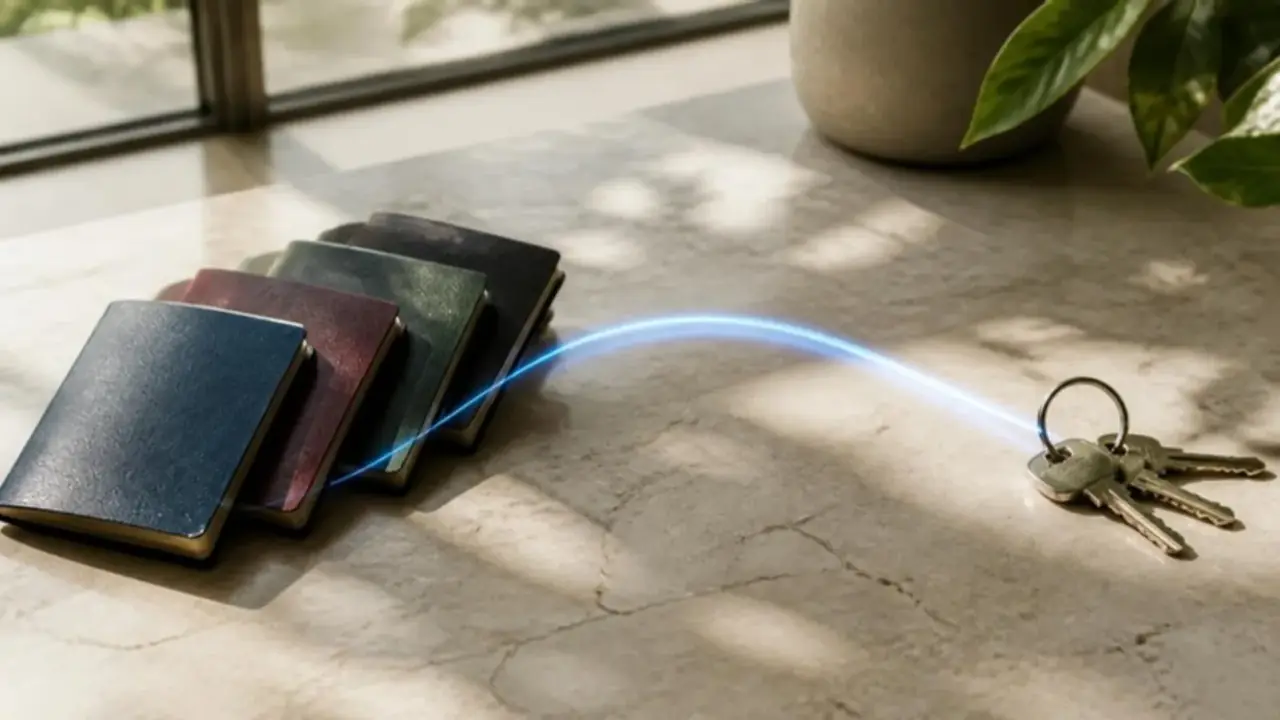
Emergency Ordinance 194/2002 has no residence purpose called "owning a home". A home can only prove accommodation on another route.
IGI assigns a CNP to a foreigner with a residence permit or long-term residence, and to an EU citizen on the registration document. Not to a buyer without a status.
ANAF gives a NIF to a foreigner who owes tax and has no CNP. Once a CNP is issued, it replaces the NIF in the tax records.
An EU citizen staying more than 3 months registers with IGI on a ground such as work, resources plus insurance, studies or family. A home is not a ground.
Managing partner in an SRL: an approved business plan, €100,000 in a Romanian bank, a €100,000 investment and 10 jobs within 12 months.
Residence and a CNP in Romania: the short answer
Owning a home in Romania does not give you residence, it does not give you a CNP (the Romanian personal numeric code), and it does not extend the number of days you may stay. That holds for every passport from outside the EU.
Emergency Ordinance 194/2002, which governs the status of foreigners in Romania, lists the purposes for which a long-stay visa, and then a residence permit, are granted: work, business, studies, family reunification and a few other defined purposes. "Owning property" is not on the list. For EU citizens too, a home is not a ground for a long stay.
What the property does give you is an address. On a route opened for another reason, a home registered in your name is good proof of accommodation.
Put simply: the home gives you a NIF and an address. A CNP only comes with a status.
NIF or CNP: two numbers, two jobs
| NIF | CNP | |
|---|---|---|
| Who issues it | The tax authority, ANAF | The immigration authority, IGI (for foreigners) |
| Who gets it | A foreigner with tax obligations in Romania and no CNP | Romanian citizens, and foreigners with a registered right of residence |
| What it is for | Registration with the tax authority, banks and notaries | The personal identification number in every state register |
| What it does not give | No residence, no right to live or work | It is the result of a status, not a way to get one |
According to ANAF's guide to registering non-residents, a foreigner who owes tax in Romania and has no CNP receives a NIF, through Form 030 (Article 82 of the Fiscal Procedure Code). Once the immigration authority issues the person a document with a CNP, the tax authority replaces the NIF with the CNP in its records.
All the details on the NIF, including the fast route through the notary, are in our NIF guide.
When a foreigner gets a CNP
Under the law, a foreigner's CNP comes with the registration of a right of residence:
- EU, EEA and Swiss citizens: everyone registered by IGI is assigned a CNP, and it is written on the document that certifies residence in Romania (Emergency Ordinance 102/2005, Art. 41).
- Non-EU foreigners: IGI assigns a CNP to those whose right of temporary residence has been extended, that is, those who received a residence permit, or who were granted long-term residence. The CNP is written on the residence permit (Emergency Ordinance 194/2002, Art. 144^1(1)).
- Exceptional cases: IGI may also assign a CNP to a foreigner without a right of residence, but only at the justified request of a public institution, for certain legal rights and obligations, and only with the person's express consent (Art. 144^1(2)). It is not a route a buyer can choose.
So the order is status first, CNP second. A buyer without a status works with a NIF.
What each passport can get, and how
| Passport | Entry and stay | Route to residence | CNP |
|---|---|---|---|
| Romanian (incl. dual nationals) | No limit | Not needed, you are a citizen | As a Romanian citizen |
| EU, EEA and Swiss | Free movement. Up to 3 months with no conditions | For a longer stay: work, sufficient resources plus health insurance, studies or family. Register with IGI within 3 months of entry | On the registration certificate |
| UK (after Brexit) | Up to 90 days in any 180, visa-free | A long-stay (D) visa for a set purpose, then a residence permit. Those living in Romania by 31.12.2020 keep their rights | With the residence permit |
| Israel, US, Canada, Australia | Up to 90 days in any 180, visa-free | A D visa for a set purpose, then a residence permit | With the residence permit |
| Moldova, without a Romanian passport | Up to 90 days in any 180, with a biometric passport | A D visa for a set purpose, then a residence permit | With the residence permit |
| Ukraine, with temporary protection | Temporary protection extended to 4.3.2028 | Protection itself is the ground for the stay. Once it ends, another ground is needed | IGI issues a residence permit with a CNP |
| Russia and Belarus | Visa required | A D visa for a set purpose, then a residence permit | With the residence permit |
| United Arab Emirates | Up to 90 days in any 180, visa-free | A D visa for a set purpose, then a residence permit | With the residence permit |
| Saudi Arabia, Qatar | Visa required | A D visa for a set purpose, then a residence permit | With the residence permit |
Three notes on the table:
- Israelis: the 90 days are counted across the whole Schengen area together. We set out the calculation in our article on 90 days in any 180. The EU expects to launch the ETIAS pre-travel authorisation in the last quarter of 2026; no exact date has been published.
- Ukrainians: buying a home does not turn temporary protection into an ordinary residence permit. Anyone who wants to stay after protection ends needs a separate route, such as work or family.
- Russians and Belarusians: there is no ban on buying a home. But under EU sanctions rules, a bank may not accept deposits from them above €100,000 per bank. That limit does not apply to people who hold a temporary or permanent residence permit in an EU or EEA state or in Switzerland. Here, status also changes the money side of the deal.
Every row, with its articles and sources, is in our passport table. It also covers the other half of the question: what each passport can register in its own name, the house or the land too.
The home gives you a NIF and an address. A CNP only comes with a status.
The routes that do exist for non-EU foreigners
A long-stay (D) visa is granted only for the purposes in Article 24(1) of Emergency Ordinance 194/2002. These are the routes most relevant to buyers:
| Route | Who it suits | Key condition |
|---|---|---|
| Work | People employed by a Romanian employer | A work permit requested by the employer |
| Commercial activity (Art. 43) | A partner or shareholder with management duties in a Romanian company | An approved business plan, €100,000 in a Romanian bank account, an investment of €100,000 and 10 new jobs within 12 months (limited liability company, SRL). For a joint-stock company (SA): €150,000 and 15 jobs |
| Family reunification | Family members of someone who already holds a status | Proof of the family link, accommodation and means of support |
| Studies | Students at a recognised institution | Admission to studies |
| "Other purposes" (Art. 49) | For example digital nomads, a company administrator, medical treatment, volunteering | The conditions of each case. It also includes a general clause where the applicant must justify the stay |
Note the commercial route. It is not a passive "investor visa". The conditions in Article 43 are cumulative and assessed against a business plan. A villa for private use, even one registered in the name of a Romanian company, is not the investment the article describes. Buying through a company can solve the land question, but not the residence question. We explain this in our article on buying through an SRL.
For remote workers employed by a foreign company, see our guide to the digital nomad visa. For the five routes, renewals and permanent residence after 5 years, see our residence permit guide.
Where the home does help
- Proof of accommodation. Almost every visa or permit application requires a document showing where you will live. A home registered in your name in the Romanian land register is the cleanest proof.
- A NIF. To sell, rent out or open a bank account you will need a NIF. Without a status, it is your number with the state.
- Continuity. Living at the same address for years makes it easier to show continuous residence when the time comes to apply for long-term residence.
And one more thing: residence is not needed to buy, or to apply for a mortgage. A Romanian bank can finance up to 70% of the price, so your equity is at least 30%. We explain the process in our mortgage guide.
Four myths worth forgetting
- "A €1 million property gives you residence." No. Romania has no amount above which a home gives a status. A bill for a €400,000 investor visa was withdrawn from the Senate in December 2025.
- "I have a NIF, so I am a resident." No. A NIF is a tax number, nothing more.
- "You need a CNP to buy." No. You buy with a passport, and in practice many notaries also ask for a NIF.
- "A Romanian company gives you residence." Not by itself. Only the commercial-activity route, with all the conditions of Article 43.
A residence permit is not tax residency
A residence permit and a CNP are an immigration status. Tax residency is a different question, decided by days of presence and the centre of your life, under each country's own rules. Anyone planning to move to Romania needs to check both. We cover it in our article on tax residency in Israel and Romania.
Frequently asked questions
Does buying an apartment or villa in Romania give you residence?
No. Emergency Ordinance 194/2002 has no residence purpose based on owning property, and Romania has no golden visa. The home can serve as proof of accommodation on another route, such as work, business or family.
What is the difference between a NIF and a CNP?
A NIF is a tax number that the tax authority gives to a foreigner who owes tax in Romania and has no CNP. A CNP is the personal identification number. A foreigner receives it from the immigration authority, with a residence permit or with registration as an EU citizen. Once a CNP is issued, it replaces the NIF in the tax records.
Can an Israeli get a CNP without living in Romania?
Usually not. A foreigner's CNP comes with a residence permit. The law allows a CNP for a foreigner without a right of residence only at the justified request of a public institution and with the person's consent, and that is not a route buyers can choose. A buyer without a status works with a NIF.
Does an EU citizen who bought a home in Romania need to register?
Only if they stay in Romania for more than 3 months. They then need a ground such as work, sufficient resources plus health insurance, studies or family, and must apply to IGI within 3 months of entry. The home itself is not a ground. The registration certificate carries a CNP.
Does a Ukrainian with temporary protection get residence by buying a home?
No. Temporary protection has been extended to 4.3.2028, and IGI issues its holders a residence permit with a CNP. But the home does not turn temporary protection into residence. Staying on after it ends needs a separate ground.
The bottom line
In Romania the order is a reason first, then a status, and only then a CNP. The home is not part of that chain. It is the address that supports each of its steps.
If you are buying in order to live there, choose the route and an immigration lawyer first. If you are buying a home without moving, a NIF is all you need.
Want to check what your passport allows? Book a half-hour call with me. We will go through your goal, and I will connect you with an independent lawyer when needed. The company's lawyer represents the company only.
Moti Azulay, Compass Group Romania
Sources: Emergency Ordinance 194/2002 on foreigners, consolidated text by the Romanian Ministry of Foreign Affairs (6.3.2024), Art. 24, 43, 49 and 144^1 · Emergency Ordinance 102/2005 on EU citizens, consolidated text (6.3.2024), Art. 11–13 and 41 · ANAF: tax registration of non-residents and the NIF · IGI: temporary protection for people displaced from Ukraine · Council Implementing Decision (EU) 2026/1912 extending temporary protection · IGI: Brexit · Regulation (EU) 2018/1806 on Schengen visas · Regulation (EU) 833/2014, consolidated 24.7.2026, Art. 5b · European Union: ETIAS
This article is for general information only and is not legal, immigration or tax advice. The rules are correct as of 17 October 2026, and immigration rules change. Before applying, consult an immigration lawyer in Romania.
Now you know more.

This article is general information, not legal, tax or financial advice. Consult local professionals before any transaction.

