Title is determined solely by registration in the Cartea Funciară, the Romanian Land Register. No contract or receipt replaces it.
A non-EU buyer may register an apartment or villa in their own name, but may not acquire land directly in their own name.
For the villa's lifetime: exclusive use of the land, no rent, use for normal needs, and the right to sell, bequeath and mortgage it.
Only full Intabulare protects you against third parties and creditors. A temporary caveat alone is not the same thing.
Full Intabulare in the contract, Superficie in the documents, an independent Romanian lawyer, and an original Extract CF for you.
Before price, before location, before a "good deal" – there is only one question that decides everything. In Romania, if the property isn't properly registered in the land register, it simply isn't yours. Here's how to make sure your investment is a real asset, not an expensive mistake. The complete guide for Israeli investors buying real estate in Romania.
It's always the first question property investors ask. Before the price, before the location – the Israeli investor sitting across from us in a meeting wants to know one simple thing: "Hold on – will this property really be mine?"
And it's the right question. Especially when it involves a foreign country, a foreign language and a legal system we've never dealt with before. At Compass Group Romania, we encounter this concern every day – and that's exactly why it matters to us to explain it fully. Because once you understand how ownership works in Romania, the worry gives way to well-founded confidence.
Rule number one: what isn't registered simply doesn't exist
Romania has one legal principle you need to internalise, and it underpins everything else: title to a property is determined solely by its registration in the Cartea Funciară – the Romanian Land Register, the equivalent of Israel's Tabu.
What does this mean in practice? If your name is registered there, you are the owner. Full stop. No contract, no receipt, no verbal promise and no notarised document can take its place. Only the formal entry in the register counts. It is a public, computerised system that anyone can check (you, your lawyer, and the bank that may grant you a mortgage in the future).
The good news is that this rule works in your favour as a buyer: once registration is complete, no one can come forward and claim the property belongs to them. You hold a government record that says otherwise. What happens when nobody checks the register? Read how one apartment was sold twice.

The subtle point: an Israeli is not an EU citizen
This is a distinction you have to understand – and one that many of our competitors simply blur:
- A Romanian or EU citizen may buy land and buildings in Romania directly, in their own name, without any restriction.
- A non-EU citizen – and that includes you, the Israeli investor – may buy and register a building (an apartment or a villa) in their own name, but may not acquire land directly in their own name.
This isn't some odd prohibition. It is a provision enshrined in Romanian law, with a historical and economic rationale. What matters, though, is that it isn't a problem – it is simply a point that calls for the right legal mechanism.
There are several accepted ways of dealing with this in the market: buying through a Romanian company you own (an SRL), a trust, or using a special property right called Superficie (the right of superficies). Each option has its advantages and drawbacks, and the choice depends on the size of the investment, the nature of the property and your goals. We unpack who owns the land under a villa in our article on land ownership in Romania.
How does this work at Compass on the Lake?
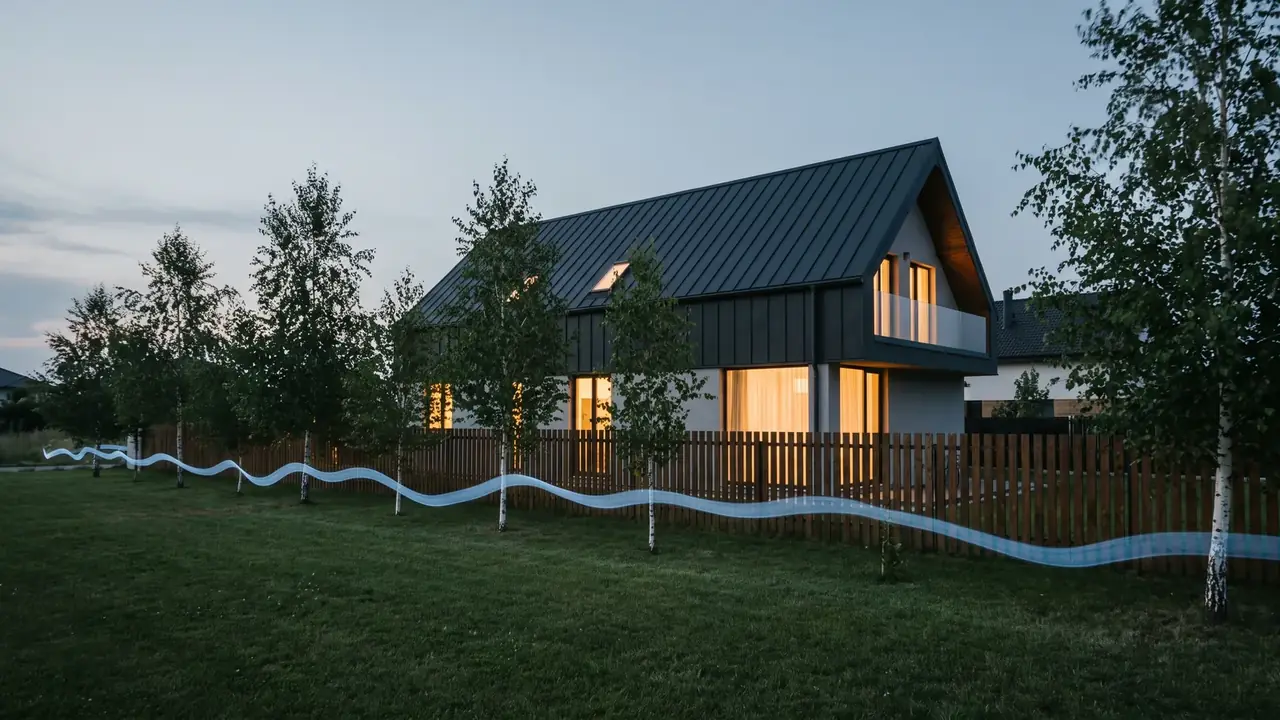
In our project (featured, in Hebrew, by Walla Nadlan), we chose the mechanism we believe is the most suitable for an Israeli investor buying a villa to live in or as an investment: the building (the villa) is registered directly in the buyer's name in the Romanian Land Register, and a Superficie right over the land is also registered in the buyer's favour.
Let's break it down:
The villa itself – is registered in your name in the Cartea Funciară, exactly as it would be for a Romanian citizen. You are the full owner of the building.
The land beneath the villa – this is where the Superficie right comes in. Under Romanian law, this right grants you, for the entire lifetime of the villa, the following rights:
Proper registration makes a property abroad behave like a property at home.
- Exclusive use of the land associated with the villa – meaning no one else can use it.
- No rent or usage fees – this is not a lease. It is a property right.
- To the extent required for normal use of the property – the garden, the parking, the adjoining area.
- A transferable right – you can sell the villa (including the right) to whomever you wish.
- An inheritable right – your children will receive it exactly as they would inherit a property in Israel.
- A right that can be encumbered – you can take out a loan or a mortgage against it.
In other words: for you, as an investor, the economic and legal outcome is almost identical to full ownership. You use it, you rent it out, you sell it, you bequeath it, you mortgage it.
The real protection: one word worth its weight in gold – Intabulare
Everything we've described so far rests on one decisive condition: that the registration has been completed in full. In Romanian, full registration is called Intabulare.
This is no formality. It is the difference between an investor who has an asset and an investor who has a problem.
We sometimes meet investors who bought a property through another party, signed a contract, paid the money – but the registration was never completed, or was completed only partially (for example, just a temporary caveat). On paper it may look similar; in practice it is not the same thing. Only Intabulare provides full property-law protection against third parties, against creditors and against any future claim. How to confirm a property is free of debts and liens is explained in our guide to debts and liens.
At Compass Group Romania, we commit to this upfront in the contract: every villa is handed over to the client with full Intabulare registration, and it is a condition we make sure to fulfil for you – we don't leave you to chase it on your own.
From the field: the plot that was sold without the owner knowing
Attorney Ilan Leibovitch recalls:
A client asked me, puzzled, how his company’s plot could no longer be registered in its name. The current land register extract showed another company as the owner. I ordered a historical extract, and it turned out the plot had been sold in an enforcement procedure.
Our local office copied the files at the court and at the bailiff’s office. A company claiming it had provided management services and had not been paid had sued the client’s company. The claim was duly served at the company’s registered office, nobody defended it, judgment was given, and the plot was sold at auction. Nothing was left for the client’s company.
Years earlier the company had given a power of attorney to an Israeli accountant to run its affairs. The accountant had died some years ago, and his son-in-law carried on managing things. We found that the company that sued was wholly owned by that son-in-law. The client had not visited Romania in 15 years and had never signed any management agreement. The appeal deadlines had long passed, and what remained was to consider a police complaint and a personal claim.
Registration in your name is the strongest protection, but only if someone keeps an eye on it. A fresh extract every so often, and regular reporting from whoever holds a power of attorney on your behalf, are what turn a correct registration into secure ownership over the years.
Michael, an accountant from Tel Aviv, bought a villa in our project in 2025. His lawyer carried out due diligence, the contract was signed before a Romanian notary public, and the registration was completed within a few weeks. Michael's name appears in the Cartea Funciară as the owner of the villa and as the holder of a Superficie right over the land.
Three years later, Michael decides to sell. The new buyer – a Romanian family from Bucharest – goes to the land registry, pulls the Extract CF (the land register extract), clearly sees Michael's name, and knows exactly who they are signing with. The deal closes within a few days. Michael could just as easily have left the property to his son, or taken out a loan against it from a Romanian bank, which would have looked at exactly the same registration.
That's the point: proper registration makes a property abroad behave like a property at home. The full list of what to check, when, and who checks it is in our pre-signing legal check guide.
So what do you need to check before you sign?
- That the contract explicitly states the registration will be carried out as full Intabulare, and not merely as a caveat.
- That the Superficie right over the land is set out in the contract and in the registration documents.
- That an independent Romanian lawyer acting for you carries out the checks (we always encourage this – we don't shy away from it).
- That you (the buyer) receive an original copy of the Extract CF once registration is complete.
Frequently asked questions
Can a non-EU buyer register property in Romania in their own name?
Yes, for the building. A non-EU citizen may buy and register an apartment or villa in their own name in the Cartea Funciară, but may not buy land directly in their own name. That is why a legal mechanism is used, such as a Romanian company (SRL), a trust or a Superficie right.
What is a Superficie right?
A property right over the land beneath the villa, for the entire life of the villa. It grants exclusive use of the land with no rent, and it can be transferred, inherited and mortgaged.
What is the difference between a caution notice and Intabulare?
A caution notice is only a temporary, partial registration. Only Intabulare, the full registration in the Cartea Funciară, gives complete property protection against third parties, creditors and any future claim.
What should I check in the contract before signing?
That the contract explicitly provides for full Intabulare and not just a caution notice, that the Superficie right over the land is set out in the contract and the registration documents, and that an independent Romanian lawyer acting for you reviews the deal. After registration, you receive an original copy of the Extract CF.
Can I sign the deal remotely?
The contract is signed before a Romanian notary, and notarial signing cannot be done remotely. If you cannot attend, you can sign through a power of attorney.
Your ownership of the property is the most important thing in the transaction – more important even than the price. When it is structured correctly, it is the foundation for everything else: renting it out, your peace of mind and the property's value over time. At Compass Group Romania, this isn't just a clause in the contract – it is the core of everything we do.
This article is for general information purposes only and does not constitute tax, legal or financial advice.
Before entering into any transaction, we recommend consulting local experts.
Compass Group Romania – guiding Israeli investors in Romanian real estate, from the first idea to the keys.
Now you know more.

This article is general information, not legal, tax or financial advice. Consult local professionals before any transaction.