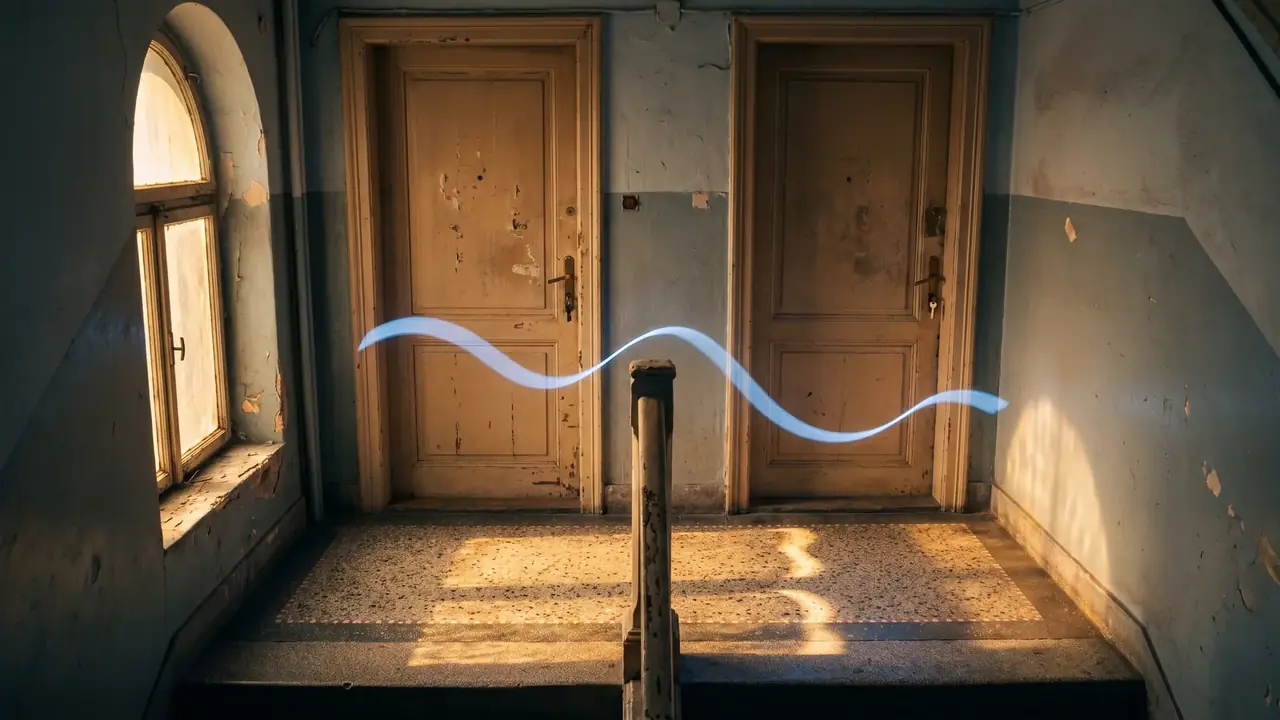
A private agreement never entered in the land register is one nobody can see. That is how the same apartment could be sold twice.
Unregistered private agreements, large advances with no security, and money moved between projects. Each magnified the others.
Published on 8 December 2025, in force from 11 December 2025. It closes the three loopholes, one by one.
The preliminary contract is signed only before a notary, who registers it within one business day. A second sale shows up at once.
Which bank holds the dedicated account, and which engineer approves withdrawals? A serious developer answers in a second, in writing.
The Nordis scandal: the question I hear most since December
Investors ask me about many things. Price, tax, mortgages. But since December 2025, one question comes up in almost every first conversation.
"Moti, what if the developer I'm buying from turns out to be the next Nordis?"
It is exactly the right question. And to answer it, you first need to understand what happened in the Nordis scandal, and how one apartment can be sold twice in the first place.
This is a story about three loopholes, and one law that closed all three.
Imagine this: the apartment that was sold twice
You sign for an off-plan apartment in a promising project on the Black Sea coast. In a polished sales office, on an agreement that looks completely official.
You pay a deposit that took years to save. You get renderings, a timeline and a handshake.
Then you find out that someone else signed for the very same apartment. Your agreement was never entered in the land register. And the money? Long gone from your project.
That is how it could work in Romania until December 2025. Thousands of buyers in projects of the Nordis group learned it the hard way. The shock was so great that the Romanian parliament, a body that agrees on almost nothing, passed the fix unanimously.
When every party, from every side of the map, votes the same way, it is no longer just legislation. It is the correction of an injustice.
The three loopholes behind the Nordis scandal
The scandal did not come from a single failure. It came from three loopholes working together, each one magnifying the damage of the others.
1. Private agreements that were never registered
Sale promises were signed as private agreements, with no notary and no registration. An agreement that is not in the register is an agreement nobody can see: not the next buyer, not the bank, and not you.
That is how the same apartment could be sold twice without anyone knowing.
2. Large advances with no security
Buyers paid significant sums before the building had progressed, with nothing tying their money to their own apartment.
3. Money moved between projects
The money did not stay in the project it was paid for. It moved between projects. And when everyone's money sits in one pot, the collapse of one project drags down all the others.
| Loophole | What it allowed | What the law says today |
|---|---|---|
| Unregistered private agreement | Double sale of the same apartment | Preliminary contract before a notary only, entered in the register within one business day |
| Advances with no cap | Large sums at risk before anything was built | Reservation fee up to 5%; advances up to 25% at the structure stage and up to a further 20% at the installations stage |
| Moving money between projects | One collapse brings down every project | Dedicated project bank account, withdrawals approved by a site engineer, a fine of 1% of turnover for diverting funds |
How Law 207/2025 shut the door
Law 207/2025, which everyone calls the "Nordis law", was published in Romania's Official Gazette (Monitorul Oficial) on 8 December 2025 and came into force on 11 December 2025. It closes the three loopholes, one by one.
Did your developer work this way before the law forced them to, or only once there was no choice?
I will not go through every article here. We covered the full mechanisms in our article on what the Nordis law changes for off-plan buyers, and the protection of the money itself in our article on the dedicated account and construction stages. What matters for this story is the principle:
- No signing before registration. A developer cannot sign you up for a future unit until the building permit is registered and every apartment, even one not yet built, has its own property sheet in the register.
- The preliminary contract is signed only before a notary, who enters it in the register within one business day. Any attempt to sell the same apartment a second time shows up immediately.
- The money moves only when the building moves. Advances are staged by construction phase and paid into a dedicated project account, released only with the approval of a supervising engineer.
At the end of the road you still reach the final contract and registration in your name. The difference is that now the whole road is registered and supervised.
After the Nordis scandal: a filter, not just a shield
Beyond the articles, this law does something deeper.
It was not written to protect developers. It was written to filter out the weak ones.
Leveraged developers, who lived on buyers' advances and on moving money between projects, struggle to operate under the new rules. Well-capitalised developers, with proper registration and their own equity, keep working, and suddenly face fewer competitors.
Whoever is still in the market after December 2025 has passed through a filter. So you are left with one question, worth more than any clause in the contract: did your developer work this way before the law forced them to, or only once there was no choice?
The one-second question
You will find out very quickly. One question settles most of the story:
"In which bank is the project's dedicated account held, and who is the supervising engineer who approves withdrawals?"
A serious developer answers in a second, and sends it in writing. A developer who hesitates? Move on.
In our own project in Balotești (featured, in Hebrew, by Walla Nadlan), this is the first question I expect you to ask. Buyers' funds in every project that complies with the law, ours included, sit in a supervised dedicated account and are released only against verified construction progress.
The other checks, a land register extract for the specific unit, a registered permit, the notary and the advance caps, are gathered in the Nordis law checklist: six checks before you sign. The law is on your side now, but only if you use it.
In fairness: safety has a price
I will not show you only the comfortable side.
This safety has a price, and it is structural, not temporary. Developers need more equity and face compliance costs, launches slow down, and those costs roll into prices. Less new supply, and more expensive.
One more thing: if you are buying a finished, registered resale apartment, this law is barely relevant to you. There, your protection is a clean title extract and a lien check, not "Nordis". We covered that in our due diligence guide.
Frequently asked questions
What is the Nordis scandal?
An affair in which thousands of off-plan buyers in projects of the Nordis group in Romania discovered that their agreements had not been registered, that apartments had been sold more than once, and that money had moved between projects. In its wake, the Romanian parliament unanimously passed Law 207/2025.
How can an apartment be sold twice at all?
When the agreement is signed privately and never entered in the land register, there is no public record showing that the apartment has already been sold. Today the preliminary contract is signed before a notary and registered within one business day, so a second sale is exposed immediately.
So is buying off-plan in Romania still risky?
The risk has not disappeared, but it has changed. Today it lies mainly with buyers who skip the checks: signing without a unit extract, paying above the caps, or never asking where the money sits. Going through the checklist reduces it considerably.
Does the law protect foreign buyers too?
Yes. The protections of Law 207/2025 attach to the transaction, not to citizenship. The notary, the registration, the advance caps and the dedicated account apply to every buyer, local or foreign.
I am buying a finished apartment. Is this relevant to me?
Mostly not. The law targets off-plan purchases. For a finished, registered property, your protection is a clean land register extract, a lien check and an independent lawyer. Same principle, different tools: what is not registered does not exist.
The bottom line
The Nordis scandal does not teach that buying off-plan in Romania is dangerous. It teaches that buying without registration, without caps and without a dedicated account is dangerous. And that is exactly what the law closed.
If you are looking at a project under construction right now, ours or anyone else's, book a 30-minute call with me. We will go through the questions worth asking before a single euro leaves your account.
Moti Azulay, Compass Group Romania
Sources and data: Law 207/2025, Romanian Ministry of Justice legislation portal · Monitorul Oficial, issue 1133, 8 December 2025 · National Agency for Cadastre and Land Registration (ANCPI) · National Union of Romanian Notaries (UNNPR) · Walla Nadlan (in Hebrew): Compass on the Lake · Legal analyses: TPA Romania, AmCham Romania, Hategan Attorneys, GGI / Mondaq.
This article is for general information only and is not legal, tax or financial advice. The description of Law 207/2025 is a general summary; the binding text is the one published in Monitorul Oficial. Before any transaction, consult an independent local lawyer.
Now you know more.
This article is general information, not legal, tax or financial advice. Consult local professionals before any transaction.