According to the 1930 census, 756,930 Jews lived in Romania, 4.2% of the population and one of the largest communities in Europe.
The 1866 constitution allowed only foreigners of Christian faith to be naturalised. Full citizenship for Jews came only in 1919 and 1923.
The international commission chaired by Elie Wiesel found that 280,000 to 380,000 Jews were murdered or died in territories under Romanian control.
According to Israel's CBS, about 270,000 people born in Romania immigrated to Israel in 1948 to 1989, 117,950 of them already in 1948 to 1951.
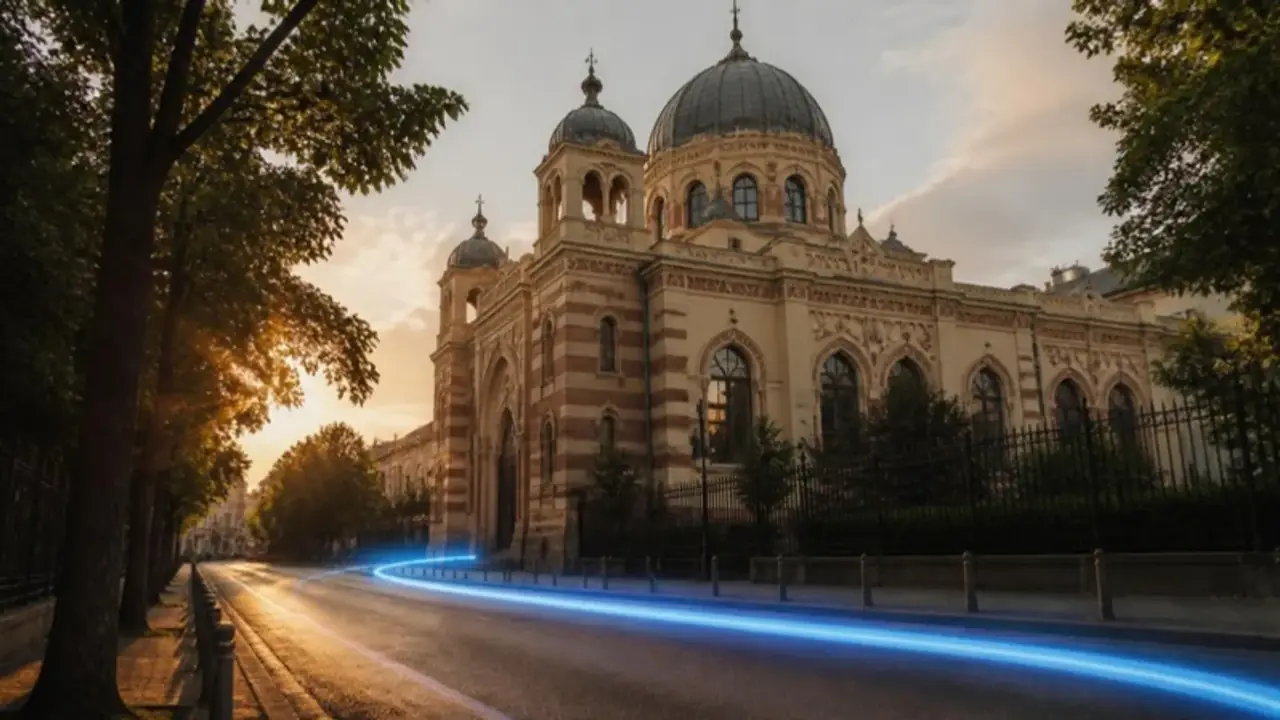
The tailors' synagogue on Mămulari Street, built in 1836, has housed the Museum of the History of the Jews of Romania since 1978.
The Jews of Romania: the short answer
According to the 1930 census, 756,930 Jews lived in Romania, 4.2% of the population and one of the largest Jewish communities in Europe. Bucharest alone had about 80,000. This community went through a century-long struggle for citizenship, then the Holocaust, in which, according to the international commission chaired by Elie Wiesel, between 280,000 and 380,000 Jews were murdered in territories under Romanian control, and then a great wave of aliyah to Israel. According to Israel's Central Bureau of Statistics, about 270,000 people born in Romania immigrated to Israel between 1948 and 1989.
Today the community in Romania is small. Jewish life in Bucharest now, with its synagogues, kosher food and school, is covered in our article on the Jewish community in Bucharest. The ties between the two countries, from 1948 to today's agreements, are covered in our article on Romania-Israel relations. This article tells what came before, and shows where that story still stands in the streets.
In plain terms: much of Bucharest's Jewish story now lies under the apartment blocks of the city centre. Once you know it, you read both the city and your family's documents differently.
Timeline
| When | What happened | Source |
|---|---|---|
| 1836 | The Unirea Sfântă synagogue is built on Mămulari Street by the tailors' guild. Today it houses the Museum of the History of the Jews of Romania | Jewish History Museum in Romania |
| 1866 | Article 7 of the constitution: only foreigners of Christian faith may be naturalised | Romanian Senate |
| 1878 | The Treaty of Berlin makes recognition of Romania's independence conditional on citizenship and rights for Jews | Wiesel Commission report |
| 1879 | The article is amended, but citizenship goes only to 880 Jews who fought in the War of Independence; the rest must apply individually, with a vote in Parliament | Prof. Ioan Scurtu |
| 1919 | A decree: Jews born in the old kingdom become citizens by simple declaration | Prof. Ioan Scurtu |
| 1923 | The new constitution: differences of religion and origin do not bar civil and political rights | Romanian Senate |
| 1930 | The census: 756,930 Jews, 4.2% of the population | Wiesel Commission report |
| 22.1.1938 | Decree-law 169 orders a "review" of Jews' citizenship | Wiesel Commission report |
| 21 to 23.1.1941 | The Bucharest pogrom: according to the commission, 121 Jews were murdered, and 25 synagogues were burned, destroyed or looted | Romanian Cultural Institute |
| June 1941 | The Iași pogrom: at least 4,000 Jews murdered in the city | US Holocaust Memorial Museum |
| 1948 to 1951 | 117,950 people born in Romania immigrate to Israel | Israel CBS, Statistical Abstract 2010 |
| 1978 | Chief Rabbi Moses Rosen founds the Museum of the History of the Jews | Jewish History Museum in Romania |
| 1980s | The historic Jewish quarter, between Calea Văcărești and Calea Dudești, is almost entirely demolished | HotNews |
| 2004 | The Wiesel Commission submits its final report on the Holocaust in Romania | Wiesel Commission report |
The story: Article 7
In 1866 Romania adopted a modern constitution. Its Article 7 contained one short sentence: only foreigners of Christian faith may be naturalised. In practice, Jews born in Romania, whose parents and grandparents had been born there too, were treated as foreigners in the country they lived in.
In 1878, in the Treaty of Berlin, the European powers made recognition of Romania's independence conditional on citizenship and rights for Jews. According to the historian Ioan Scurtu, the amendment that followed in 1879 granted citizenship to 880 Jews who had fought in the War of Independence. Everyone else had to file an individual application that required a vote in Parliament. By 1918 only a few hundred had become citizens this way, while the 1899 census had recorded 269,015 Jews in Romania.
Only after the First World War did this change. A 1919 decree made Jews born in the old kingdom citizens by simple declaration, and the 1923 constitution stated that differences of religion and origin do not bar rights. But according to the Wiesel Commission report, that citizenship remained contested. In January 1938, Decree-law 169 ordered a "review" of Jews' citizenship, and anyone who did not submit papers in time, or whose papers were rejected, was declared a foreigner.
I tell this because the story did not end in the history books. It is part of the reason that Romanian law today allows people who lost their citizenship involuntarily, and their descendants, to apply to have it restored.
War and Holocaust: the factual picture
I keep this chapter short and careful, and I follow the official sources.
In 1940, after Romania lost territory, a regime led by General Ion Antonescu and the Iron Guard movement came to power. On 8 August 1940 the first law setting out a separate legal status for Jews was signed, followed by "Romanianisation", the expropriation of Jewish property and businesses. In January 1941, during the Iron Guard rebellion, a pogrom took place in Bucharest. According to the Romanian Cultural Institute, 25 synagogues, 616 shops and 547 homes were burned, destroyed or looted in those days. The Great Sephardic Synagogue, Cahal Grande, burned to the ground on the evening of 22 January.
In June 1941, with the invasion of the Soviet Union, a pogrom took place in Iași. From then until 1943, Jews were deported and murdered in Bessarabia, Bukovina and Transnistria. The Wiesel Commission, appointed by Romania's president, concluded in the report it presented to President Ion Iliescu in November 2004 that between 280,000 and 380,000 Jews were murdered or died in territories under Romanian control, and that the Romanian authorities were the main perpetrators. The commission also found that after the policy changed, at least 290,000 Romanian Jews survived.
Much of Bucharest's Jewish story now lies under the apartment blocks of the city centre.
Aliyah: from Romania to Israel
After the war, most survivors chose to leave. According to Israel's Central Bureau of Statistics, 117,950 people born in Romania immigrated to Israel between 1948 and 1951, and about 270,000 in total by 1989. Emigration continued in the communist period, under arrangements between the governments; the diplomatic side of that story is told in our article on Romania-Israel relations.
| Period of immigration | Romania-born immigrants to Israel |
|---|---|
| 1948 to 1951 | 117,950 |
| 1952 to 1960 | 32,462 |
| 1961 to 1971 | 86,184 |
| 1972 to 1979 | 18,418 |
| 1980 to 1989 | 14,607 |
Source: Israel CBS, Statistical Abstract of Israel 2010, table 4.4.
That is how the family bridge we meet in almost every conversation came about: Israelis with a grandfather from Iași, a grandmother from Bucharest, and a surname once written in Latin letters.
Where to see the history in Bucharest
Bucharest's historic Jewish quarter, according to HotNews, stretched between Calea Văcărești, Calea Dudești and today's Piața Unirii. In the 1980s it was almost entirely demolished, together with large parts of the old city, to make way for Ceaușescu's Civic Centre. That story is told in the episode on Ceaușescu. What remains is a handful of buildings, and each one is also a witness.
| The place | What it tells you |
|---|---|
| Museum of the History of the Jews of Romania, Str. Mămulari 3 | A tailors' guild synagogue from 1836. A museum since 1978, founded by Chief Rabbi Moses Rosen |
| The Choral Temple (Templul Coral) | The community's main active synagogue. On services and community life, see the community article |
| The Great Synagogue (Sinagoga Mare) | 19th century, today also a museum |
| Yeshua Tova Synagogue, near Piața Amzei | Completed in 1827, one of the oldest in the city. It is north of the centre, not in the Jewish quarter |
| The Memorial to the Victims of the Holocaust | In the city centre, inaugurated in 2009 |
If you come to Bucharest to view properties, set aside half a day for this route. It also teaches a lot about the city itself: where it was rebuilt, and why.
What this means for you as a buyer
- Romanian roots are also documents. If you have a parent or grandparent born in Romania, gather birth and marriage certificates and any old Romanian paper now. Without them there is no application to restore citizenship. The details are in our article on Romanian citizenship for Israelis.
- Citizenship changes land registration, but do not plan around it. A citizen of an EU country registers land in Romania in their own name. Anyone else buys in other ways, which we explained in our article on land ownership. Citizenship is a long process with no guarantee, so do not build a deal around a passport that has not arrived.
- Your name must match across documents. The surnames of Romanian Jews were spelled in several ways over the years. What your passport says must match what goes into the contract and the land register.
- Read the city by era. Around Piața Unirii and Calea Văcărești most buildings are 1980s blocks, built where the quarter was demolished. The construction year says a lot about the structure. We explained this in our article on earthquake risk.
- If community matters to you, choose a neighbourhood partly by distance to the synagogue, the school and the kosher restaurant. The map is in our article on the Jewish community.
- A balanced picture. Romania acknowledges and commemorates its past, and at the same time surveys also show antisemitic attitudes. The data is in our article on Romania-Israel relations.
Frequently asked questions
How many Jews lived in Romania before the Second World War?
According to the 1930 census, 756,930 Jews, 4.2% of the population. More than two thirds of them lived in towns and cities. Bucharest then had about 80,000 Jewish residents.
What happened to Romania's Jews in the Holocaust?
According to the international commission chaired by Elie Wiesel, between 280,000 and 380,000 Jews were murdered or died in territories under Romanian control in 1940 to 1944, most of them in Bessarabia, Bukovina and Transnistria. At least 290,000 Romanian Jews survived.
How many Jews immigrated from Romania to Israel?
According to the Statistical Abstract of Israel's Central Bureau of Statistics, about 270,000 people born in Romania immigrated to Israel between 1948 and 1989, almost 118,000 of them already in 1948 to 1951.
Where can I see Jewish history in Bucharest?
The Museum of the History of the Jews of Romania on Mămulari Street, the Choral Temple, the Great Synagogue, the Yeshua Tova Synagogue and the Memorial to the Victims of the Holocaust. Most of the historic Jewish quarter was demolished in the 1980s.
My grandfather was born in Romania. Does that help me buy a home?
Perhaps, in the long run. Romanian law allows descendants of people who lost their citizenship involuntarily to apply to restore it, and an EU citizen registers land in their own name. But the process is long, requires documents and knowledge of Romanian, and is not guaranteed. Do not plan the deal around it.
The bottom line
The story of Romania's Jews runs from Article 7, which denied them citizenship, through the Holocaust, to the aliyah of hundreds of thousands to Israel. What remains of it in Bucharest is a few synagogues, one museum on a small street, and hundreds of thousands of families in Israel with roots here.
If you have Romanian roots and are thinking about buying a home here, book a half-hour call with me. We will go through the documents you have and see what is worth sorting out before the deal.
Moti Azulay, Compass Group Romania
Sources: Wiesel Commission report, executive summary (USHMM) · US Holocaust Memorial Museum: Romania · Yad Vashem, the Bucharest pogrom, January 1941 · Romanian Cultural Institute, 80 years since the Bucharest pogrom · 1866 Constitution (Romanian Senate) · 1923 Constitution (Romanian Senate) · Prof. Ioan Scurtu, the legal status of Romania's Jews 1858 to 2004 · Israel CBS, immigrants by period of immigration and country of birth · Jewish History Museum in Romania · Federation of Jewish Communities, the Unirea Sfântă synagogue · Bucharest Jewish Community Centre, Yeshua Tova Synagogue · HotNews, the demolition of the Jewish quarter, 26.4.2026 · Yad Vashem, press release on the commission's report, 11.11.2004 · Elie Wiesel National Institute for the Study of the Holocaust in Romania
This article is general information only and is not legal advice. Historical figures come from the sources above, and for some events the sources give a range or differing estimates. Citizenship rules are correct as of 17 October 2026. Before any decision, consult an independent lawyer.
The series: a history lesson
- From Rome and Dacia: why Romanian is a Latin language
- Three principalities and two unions: 1859 and 1918
- Nationalisation and restitution: why land claims still exist
- The rise and fall of Ceaușescu
- 1989 and the move to a market economy
- The EU and Schengen
- Faith, holidays and business
- The Jews of Romania and the bond with Israel (you are here)
- Bucharest, "Little Paris"
Now you know more.
This article is general information, not legal, tax or financial advice. Consult local professionals before any transaction.

