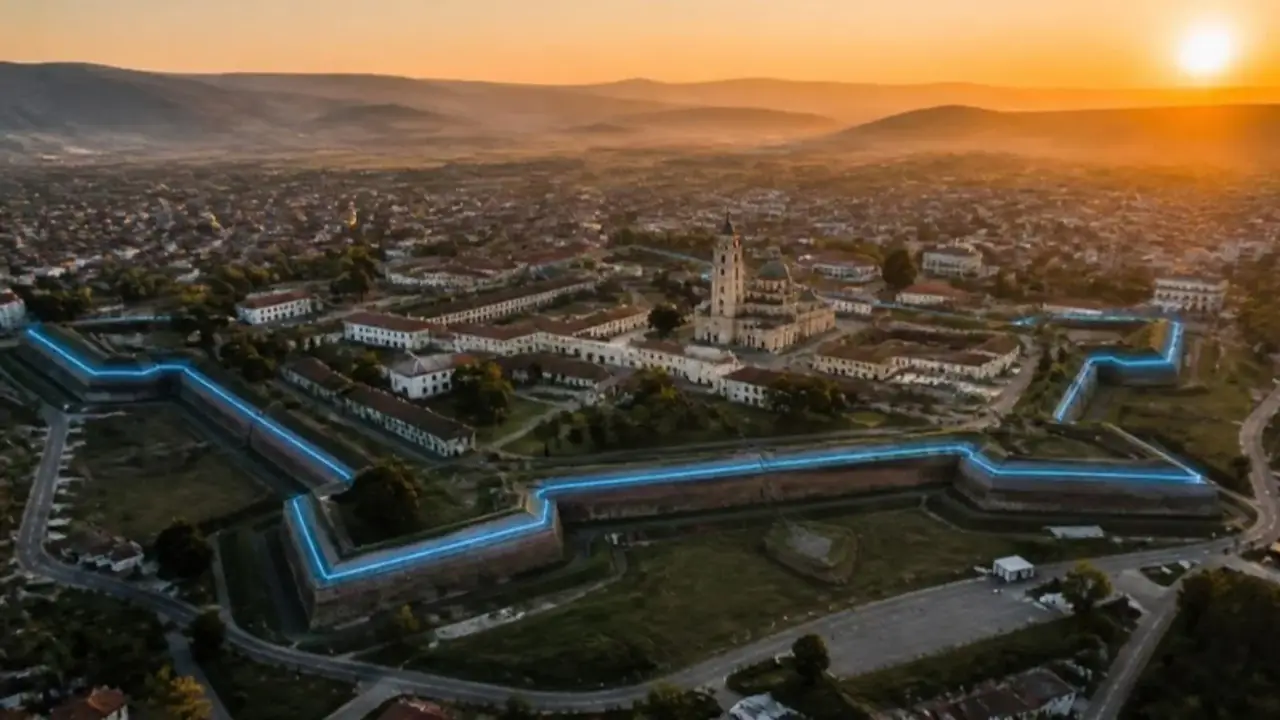
In January 1859 Moldavia and Wallachia both chose the same man, Alexandru Ioan Cuza, as prince. In 1862 they formally united with one capital, Bucharest.
On 1 December 1918, 1,228 elected delegates at Alba Iulia proclaimed the union of Transylvania with Romania. Since 1990 it has been the National Day.
Transylvania had Austrian-style land books; Bucharest and Ilfov used another system. Law 7/1996 created a single one.
According to the 2021 census, Bucharest has 1,716,961 residents in six sectors, each with its own city hall. Local tax goes to the sector where the property is.
Under the Administrative Code, where a national minority exceeds 20% of the population, its language is used locally. The deed stays in Romanian.
1859 and 1918: the short answer
Today's Romania was built in two stages. In 1859 Moldavia and Wallachia each chose the same man, Alexandru Ioan Cuza, as their prince, and in 1862 they formally united with a single capital: Bucharest. In 1918, at the end of the First World War, Bessarabia, Bukovina and Transylvania joined. 1 December, the day of the union with Transylvania, is Romania's National Day.
That is why Romania's regions have different histories, and sometimes different leftovers in their registration systems. Transylvania lived for centuries under Habsburg and Hungarian rule, and that is where the land book system came from. Bucharest and Ilfov, in the heart of Wallachia, moved fully onto that system only with Law 7/1996.
Put simply: Romania is one country with one law, but three histories. If you buy an older property, it helps to know which history it comes from.
The timeline: from principalities to a state
| When | What happened | Source |
|---|---|---|
| 20 September 1459 | First mention of the "fortress of Bucharest", in a charter of Vlad Țepeș, ruler of Wallachia | AGERPRES, 2024 (Romanian) |
| 5 January 1859 | Moldavia elects Alexandru Ioan Cuza as prince (Julian calendar) | AGERPRES, 2018 (Romanian) |
| 24 January 1859 | Wallachia unanimously elects the same man. The "Little Union" | AGERPRES, 2018 (Romanian) |
| 1862 | The United Principalities get one government, one assembly and one capital: Bucharest | AGERPRES, 2025 (Romanian) |
| 1866 | Carol of Hohenzollern-Sigmaringen becomes prince | Peleș National Museum |
| 1878 | The Congress of Berlin recognises Romania's independence | AGERPRES, 2023 (Romanian) |
| 1881 | Romania becomes a kingdom, and Carol I its king | Peleș National Museum |
| 27 March 1918 | The Sfatul Țării in Chișinău votes for the union of Bessarabia with Romania | AGERPRES, 2023 (Romanian) |
| 28 November 1918 | The General Congress of Bukovina decides on union | AGERPRES, 2023 (Romanian) |
| 1 December 1918 | The Great National Assembly at Alba Iulia, with 1,228 delegates, proclaims the union of Transylvania with Romania | Alba24 (Romanian) |
| 4 June 1920 | The Treaty of Trianon gives international recognition to the Alba Iulia decision | AGERPRES, 2026 (Romanian) |
| 1938 | Decree-Law 115/1938 unifies the land book rules in Transylvania, Banat, Crișana, Maramureș and Bukovina | Decree-Law 115/1938 (Romanian) |
| 31 July 1990 | Law 10/1990 makes 1 December the National Day | Law 10/1990 (Romanian) |
| 13 March 1996 | Law 7/1996 creates a single cadastre and land register system for the whole country | Law 7/1996 (Romanian) |
The story: January 1859, one man for two thrones
After the Crimean War, the European powers decided the fate of the two Romanian principalities, Moldavia and Wallachia, which were under Ottoman suzerainty. The convention signed in Paris in 1858 gave each of them its own prince, its own assembly and its own government. The full union the Romanians wanted was not in it.
But the convention left one detail open: it did not say the two princes had to be two different people. On 5 January 1859 the Moldavian assembly elected Colonel Alexandru Ioan Cuza. On 24 January, in Bucharest, deputy Vasile Boerescu proposed the same man, and the Wallachian assembly elected him unanimously. According to the national news agency AGERPRES, the Ottoman Porte and Austria saw this as a breach of the convention. Even so, in April 1859 the powers recognised the election.
In my view this story says something about the legal culture here: Romanians know how to read a contract. What is not written in it is not forbidden. That works both ways, which is why everything important in your contract must be written down explicitly.
In 1862 the process was completed: one government, one assembly and one capital, Bucharest. Romania still marks 24 January as the "Day of the Union of the Romanian Principalities", and it is a public holiday.
1918: three votes in one year
The First World War broke up the empires around Romania, and in less than a year three regions voted to unite with it. On 27 March 1918 the council of Bessarabia voted in Chișinău. On 28 November the congress of Bukovina decided. And on 1 December, 1,228 elected delegates from Transylvania, Banat and the areas that had been part of Hungary met at Alba Iulia and proclaimed union with Romania. International recognition of the border with Hungary came with the Treaty of Trianon, on 4 June 1920.
Since 1990, under Law 10/1990, 1 December has been Romania's National Day. It is not an "independence day"; it is a union day. That difference matters if you want to understand how Romanians think about their country.
Three regions, three histories
Wallachia (Muntenia and Oltenia): the south. This is where Bucharest is, and Ilfov county around it, including Balotești. It is the heart of the "Old Kingdom" created in 1859.
Moldavia: the east, with Iași as its main city. Not to be confused with the Republic of Moldova: much of that country's territory is Bessarabia, which united with Romania in 1918 and was separated from it in the Second World War.
Romania is one country with one law, but three histories. If you buy an older property, it helps to know which history it comes from.
Transylvania: the centre and north-west, beyond the Carpathians, with cities such as Cluj and Brașov. For centuries the region belonged to the Habsburg and Hungarian world, and it is still home to most of Romania's Hungarian minority. In the 2021 census about one million people declared themselves Hungarian, 6.0% of those who declared their ethnicity.
Bucharest: why the capital is here
Bucharest is first mentioned in a charter dated 20 September 1459, signed "in the fortress of Bucharest" by Vlad Țepeș, ruler of Wallachia. It was Wallachia's capital, and when the principalities united in 1862 it became the capital of both.
According to the 2021 census, Bucharest has 1,716,961 residents. It is divided into six sectors, each with its own city hall. Around it, Ilfov county surrounds the city on every side. We wrote about the differences between districts in the guide to the best neighbourhoods in Bucharest and in the article on north versus south Bucharest, and about the surrounding county in the article on Ilfov's growth.
Why it matters when you buy
The land register: an Austrian legacy
In Transylvania, Banat, Crișana, Maramureș and Bukovina, a land book system (cărți funciare) of Austrian inspiration had been in place since the 19th century, one in which registration itself creates the right. Decree-Law 115/1938 unified its rules in those regions. In the "Old Kingdom", meaning Wallachia and Moldavia, a different system of French inspiration applied: registers of transcriptions and inscriptions kept by the person's name. A single system for the whole country came only with Law 7/1996.
What does that mean for you? In Bucharest and Ilfov, the history of an older property from before 1996 sometimes sits in records from the earlier system, not only in today's extract. For a new home in an organised project this hardly matters. For an older property or land with a long chain of ownership, ask your lawyer to trace the history back to its origin. How to read an extract is in the land register extract guide.
Six sectors, six city halls
In Bucharest, building tax and land tax go to the budget of the sector where the property is located, and each sector has its own local tax directorate. After buying, you register the property with the right sector's directorate. For a house in Ilfov, you register with the commune's city hall, Balotești for example. Details are in the article on annual property tax.
Language and administration in areas with a Hungarian minority
Under Article 94 of the Administrative Code (OUG 57/2019), in an administrative unit where a national minority makes up more than 20% of the population according to the last census, local authorities allow the minority language to be used in dealings with residents. If you buy in such an area of Transylvania, you will see signs and service in two languages. The notarial deed is still written in Romanian, as we explained in the first episode of the series.
Union days in the signing calendar
24 January and 1 December are public holidays under Article 139 of the Labour Code, and so is 30 November, St Andrew's Day. At the end of November and start of December there is sometimes a "bridge" of several days when offices, banks and notaries work less. If your signing or bank transfer falls around these dates, arrange it in advance.
What this means for you as a buyer
- Know which region the property comes from. Bucharest and Ilfov are Wallachia, the "Old Kingdom". Cluj and Brașov are Transylvania.
- For an older property: the ownership chain back to the origin. Especially in Bucharest and Ilfov, where the single land register system arrived only after 1996.
- Register the property in the right sector. In Bucharest, local tax is paid to the sector where the property is.
- The contract is in Romanian in every region. Even in a bilingual area.
- Check the holiday calendar. 24 January, 30 November and 1 December are public holidays.
- Do not confuse Moldavia with the Republic of Moldova. They are two different things, on documents too.
Frequently asked questions
What is the difference between the 1859 union and the 1918 union?
In 1859 two principalities, Moldavia and Wallachia, united by electing the same prince, and the union was completed in 1862. In 1918 Bessarabia, Bukovina and Transylvania joined Romania after the First World War. The first is called the "Little Union", the second the "Great Union".
Why is Romania's National Day on 1 December?
Because on 1 December 1918 the National Assembly at Alba Iulia proclaimed the union of Transylvania with Romania, completing the "Great Union". Law 10/1990 made that date the National Day.
Is the law different in Transylvania and in Bucharest?
No. Romania is one country with one law, one Civil Code and one land register under Law 7/1996. The difference is historical: in the former Habsburg regions land books existed earlier, and that can affect what the history of an older property looks like.
Why does Bucharest have six sectors?
The city is divided into six administrative sectors, each with its own city hall alongside the General City Hall of Bucharest. For a buyer this matters mainly because of local taxes, which are paid to the sector where the property is located.
Should I avoid signing around 1 December?
You do not need to avoid it, you need to plan for it. 30 November and 1 December are public holidays, and sometimes there are bridge days around them. Fix the signing date and the bank transfer in advance with the notary and the bank.
The bottom line
Romania was born from a clever election in 1859 and three votes in 1918. The result is one country with one law, but with regions that remember a different history, and sometimes a different registry. If you buy in Bucharest or Ilfov you are buying in the heart of the "Old Kingdom", and for an older property it is worth tracing its history back to the origin.
If you are weighing where to buy, in Bucharest, in Ilfov or in another city, book a half-hour call with me and we will go through the options and the checks together.
Moti Azulay, Compass Group Romania
Sources: AGERPRES: Union of the Principalities Day, 24 January 1859 (Romanian) · AGERPRES: 24 January, 2025 (Romanian) · AGERPRES: 27 March, Bessarabia Union Day (Romanian) · AGERPRES: first mention of Bucharest (Romanian) · Alba24: 1 December 1918 at Alba Iulia (Romanian) · AGERPRES: the Congress of Berlin, 1878 (Romanian) · AGERPRES: Trianon Treaty Day (Romanian) · Peleș National Museum: King Carol I · Law 10/1990 (Romanian) · Decree-Law 115/1938 (Romanian) · Law 7/1996 (Romanian) · Juridice.ro: the historical registration systems (Romanian) · INS Bucharest: 2021 census results (Romanian) · Mediafax: 2021 census, ethnic composition (Romanian) · Administrative Code, OUG 57/2019 (Romanian) · Labour Code, Article 139 (Romanian) · Bucharest City Hall: sector tax directorates (Romanian)
This article is general information only and is not legal or tax advice. The rules are correct as of 17 October 2026. Before deciding, consult an independent lawyer.
The series: a history lesson
- From Rome and Dacia: why Romanian is a Latin language
- Three principalities and two unions: 1859 and 1918 (you are here)
- Nationalisation and restitution: why land claims still exist
- The rise and fall of Ceaușescu
- 1989 and the move to a market economy
- The EU and Schengen
- Faith, holidays and business
- The Jews of Romania and the bond with Israel
- Bucharest, "Little Paris"
Now you know more.
This article is general information, not legal, tax or financial advice. Consult local professionals before any transaction.

